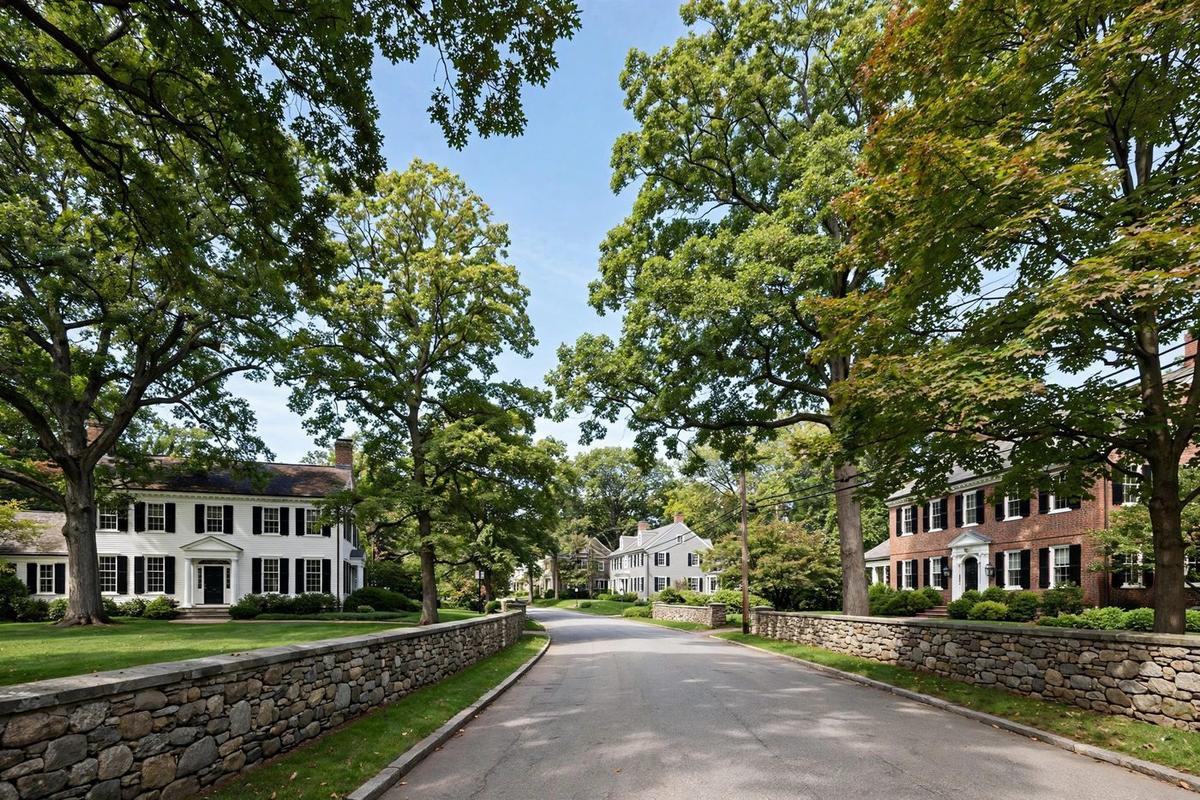
In the sample compiled for this report, 7 of 18 older homes in Scarsdale's 10583 were acquired by builders and redeveloped, a 38.9% builder-demand rate, ranking the ZIP 120th in the 189-neighborhood study (Legacy Off-Market, 2026). The older homes sold for, on average, 32.5% of new-build prices on comparable lots. That combination, the highest builder-demand rate in this batch paired with a low price ratio, is the whole story in one pair of numbers: in this Westchester village, the off-market builder trade is not a fringe but a central feature of the market for older homes. And where builder demand runs hot, the off-market space fills with both legitimate land buyers and intermediaries trading on the narrative, which is why telling them apart is the highest-value skill a Scarsdale seller can have.
Key Findings
- 38.9% builder-demand rate, ranked #120 of 189 neighborhoods: 7 of 18 sampled homes built in 1980 or earlier in 10583 were acquired by builders and redeveloped; the highest rate in this batch.
- 32.5% price ratio: older homes sold for roughly one-third of new-build prices, which means the market prices land decisively.
- 4,792 sq ft minimum lot: the smallest parcel in the sample; Scarsdale lots are compact, which concentrates land value per square foot.
- Hot off-market builder markets attract wholesalers: where land demand is visible, intermediaries shop contracts; verification is non-negotiable.
- Three tests separate buyers from intermediaries: proof of funds, recorded closings, and a non-assignable contract with a real deposit.
What does the builder-acquisition record in 10583 actually show?
It shows the most active off-market builder market in this batch. Of 18 homes in the 10583 sample built in 1980 or earlier, 7 were acquired by builders, a 38.9% rate, and the ZIP ranks 120th of 189 neighborhoods. Nearly two in five older homes that changed hands were bought for their lots. In a village known for its schools, its Metro-North connection to Manhattan, and its established streets, that figure says builder demand for Scarsdale land is intense and sustained.
The price ratio confirms the intensity. At 32.5% of new-build prices, the structure is a modest fraction of the transaction, and the buyer pool has sorted itself: builders buying land dominate the older-home inventory. The minimum lot in the sample, 4,792 sq ft, is compact, which means the per-square-foot land bid runs high: on smaller parcels, the buildable envelope is everything, and builders pay for every foot of it.
Two cautions keep this honest. First, the sample is 18 older homes, not the whole ZIP, so the true ZIP-wide builder-acquisition share is below 38.9%. Second, the rate describes what buyers did with homes they bought, not what any individual seller's home will fetch (Village of Scarsdale, Assessor's office, 2026). The honest read: in 10583, the off-market builder trade is a central market feature, which is precisely why the buyer-verification question that headlines this report matters so much here. The same dynamic runs in Wellesley, ranked 118th of 189 neighborhoods with a 33.3% builder-demand rate, where estate-lot demand draws the same scrutiny.
How wide is the gap between an older home and a new build?
Wide, and the width is the wholesaler's opportunity. In the 10583 sample, older homes sold for an average of 32.5% of new-build prices on comparable lots: where a new build sells for $3,000,000, the older home nearby changed hands for roughly $975,000. The $2.02 million difference is explained by the fact that one buyer purchased a house and the other purchased a village homesite a train ride from Manhattan.
The gap is where intermediaries operate. A wholesaler's business model is the spread between the land's value to a builder and the price the seller accepts. The wider the gap, the more room for an intermediary to insert themselves: contract with the seller at a discount to the residual, assign to the builder at the residual, keep the difference. In a 32.5% ratio market, that spread can be several hundred thousand dollars, which is why Scarsdale sellers field more off-market solicitations than sellers in quieter markets, and why every one of them needs verification.
The ratio does not prove a seller's home is worth 32.5% of the new build next door; lot size, street, and condition move the number. Nor does it prove every solicitation is a wholesale play; legitimate direct buyers are active here too. Large gaps and hot off-market builder trades appear elsewhere too: North Center / Roscoe Village, ranked 121st of 189 neighborhoods with a 43.8% builder-demand rate, runs on the same land-first math. In 10583, the land value is large, the gap is large, and the seller who does not verify is negotiating with a handicap.
What is the lot itself worth?
It can be estimated before any buyer calls, and in Scarsdale the estimate is the seller's best defense. This is the question sellers ask most in every market in this study: how do off-market buyers actually price land? The method is public, and a seller who runs it cannot be lowballed by someone who has.
Start with the new-build sale price on a comparable lot. In Scarsdale's 10583, recent new construction on standard lots has sold in the $2.6M to $4.2M range depending on street, lot size, and school neighborhood (Redfin, 2026). Subtract construction cost, permits, financing, and the builder's margin, then site preparation. What remains is the residual land value: the most a rational builder can pay for the dirt.
Worked as an illustration, not a promise: a $3,000,000 new-build sale, minus roughly $1,150,000 in construction costs, minus a builder margin near 20%, leaves a residual land value near $1,250,000, before $40,000 to $60,000 in site preparation. That residual is the number a legitimate land buyer negotiates against, and it is the number a wholesaler hopes the seller never computes, above the roughly $975,000 average older-home price at the 32.5% ratio.
Three things move that number. The buildable envelope is first: on 4,792 sq ft minimum lots, width, setbacks, and village zoning determine the floor plan. Second is the street and neighborhood within the village, which carry premiums in the new-build comps. Third is the builder-acquisition threshold: the more obsolete the structure, the closer the home's value converges on the residual. A seller who knows this math can spot a lowball instantly; a seller who doesn't is the wholesaler's ideal counterparty.
Should you sell as-is or fix it up?
In 10583, the data answers this sharply. The 32.5% price ratio settles it for most Scarsdale sellers: when older homes change hands at roughly one-third of new-build prices, the buyer pool has already told you what the structure is worth.
A $150,000 update on a 1960s colonial, kitchen, baths, systems, might lift the sale price by $90,000 to $110,000 if the buyer intends to live in it. If the buyer intends to rebuild, the same $150,000 buys exactly $0. In a sample where 38.9% of older homes were acquired by builders, the highest rate in this batch, the probability-weighted return on pre-sale renovation is poor, because the modal buyer assigns the improvements no value at all.
The exception is the genuinely livable home: updated systems, no functional obsolescence, a property a family will buy as a house. Scarsdale's live-in buyer pool is deep, and for those homes targeted updates can pay, but the seller needs a candid assessment before spending, because the 32.5% ratio says most 10583 buyers of older homes are not live-in buyers. An off-market sale is, by definition, an as-is sale: no repairs, no staging, no pre-listing punch list. For a home that is a candidate for a builder acquisition, that is the correct format. The buyer never wanted the finishes anyway. The same holds in Studio City, ranked 117th of 189 neighborhoods with a 30.4% builder-demand rate, where builders are selective but the as-is logic is identical.
What does listing on the open market really cost?
More than the commission rate suggests, once time is priced in. The full ledger:
First, the commission: typically 5% to 6% of the sale price in the Westchester market, split between listing and buyer's agents. On a $975,000 sale, that is $48,750 to $58,500 off the top (National Association of Realtors, 2025). Second, seller closing costs, title, transfer taxes, prorations, commonly another 1% to 2%; New York transfer taxes add their own line. Third, concessions: buyers inspecting 60-year-old homes routinely negotiate $15,000 to $40,000 in credits after inspection.
Fourth is carrying cost over market time. Every month a listing sits, the seller pays the mortgage or equity cost, insurance, and taxes, and Westchester property taxes are among the highest in the nation, which makes every month of market time punishing. A home that is a candidate for a builder acquisition and sits for four to six months while the live-in pool passes can accumulate $30,000 to $60,000 in pure hold expense, before the stale-listing discount.
Add the midpoints and a $975,000 list price nets in the high $800,000s after a normal cycle, before any reduction: not the list price, but the net proceeds after the full cost of achieving it. For a home that is a candidate for a builder acquisition, where the listing ends at land value anyway, the seller pays the full cost of the process to arrive at the price the off-market buyer offered on day one.
How do Scarsdale sellers tell a direct buyer from a wholesaler?
Three tests, applied every time, no exceptions. This is the headline question of this report, because in the hottest off-market builder market in this batch it is also the most financially consequential. Here is the full procedure.
Test one: proof of funds in the buyer's name, dated within the last 30 days. Not a "pre-approval," not a letter from a "private lender," not a screenshot with the name cropped out. Legacy Off-Market is a wholesaler, and we say so upfront: we buy your home directly off-market with our own capital, then place the deal with a vetted builder. So our offers carry current, named proof of funds, and the contract names us as the buyer with no assignment clause. A wholesaler who cannot show funds in its own name is telling you it never intends to close. If the proof is vague, the buyer is vague.
Test two: a record of actually closed purchases. Recorded deeds in the buyer's entity name, checkable in county records (Westchester County Clerk, 2026). A legitimate wholesaler has a trail of properties it bought and closed in its own name; a contract-flipper has a trail of assigned contracts, which shows up differently or not at all. Ask for addresses and look them up: twenty minutes of diligence with the highest return in the sale.
Test three: the contract itself. A direct buyer closes in the name on the contract, with no assignment clause, and puts up a meaningful earnest-money deposit, typically 1% or more, that it forfeits if it walks away. An assignment clause plus a token deposit is the signature of a contract never meant to close: an option on your equity, purchased for $100. If assignment is in there and the deposit is trivial, you are not talking to a buyer.
The wholesaler's pitch is designed to feel like a buyer's: fast, cash, as-is, no hassle. In 10583, where the land value is large and the solicitations are many, the three tests are the difference between capturing the residual and funding someone else's spread. Ask all three; the real buyers will welcome them.
How fast can an off-market sale close?
In 7 to 21 days, and the seller sets the date. A direct cash buyer can close in 7 to 21 days from an accepted offer, versus 60 to 120-plus days for a listed older Scarsdale home. The seller chooses the closing date and can often stay past closing under a leaseback. On a high-tax Westchester asset, every month saved is thousands of dollars not paid in carrying costs.
Speed also changes the negotiation. A home that is a candidate for a builder acquisition, listed on the MLS, accumulates a visible days-on-market count that every buyer discounts. An off-market sale has no public clock: no stale listing, no price-reduction history, no signal that the seller is waiting. The verified direct buyer's bid is anchored to the residual math, not to the listing history.
The honest caveat: 7 to 21 days assumes clear title and a straightforward close. Older Scarsdale parcels sometimes carry easement or setback questions that take longer to resolve, and a direct buyer with local experience prices those in rather than walking away.
What does the off-market format give a Scarsdale seller?
Five measurable things: total privacy, a closing date you set, no commission, no closing costs, and no inspection bill.
First, privacy. An off-market sale means zero showings, zero open houses, and no public marketing period. No lockbox, no weekend open-house traffic, no village discussion of your sale. In a close-knit village where every listing is noticed, the transaction stays between you and the buyer from the first call to the recorded deed.
Second, a closing date you control. A direct buyer can close in 7 to 21 days, compared with 60 to 120 or more days for a listed older Scarsdale home. And you choose the date: close fast, or set a later date and stay past closing under a leaseback while the next home is found. The schedule serves your plans, not the listing calendar.
Third and fourth, the two costs that never appear on an off-market settlement statement. No commission, none of the typical 5% to 6% (National Association of Realtors, 2025), which on a $975,000 sale is $48,750 to $58,500 paid to agents. And no seller closing costs, none of the typical 1% to 2%. Commissions plus closing costs commonly exceed $58,000 on a $975,000 transaction, and in a direct sale that entire amount stays with the seller.
Fifth, no inspections and no repairs. No inspection contingency, no $10,000 to $30,000 credit negotiation after a buyer's inspector works through a 60-year-old colonial, no price reduction for the systems or the roof. The sale is truly as-is: the condition on day one is the condition it sells in.
Methodology and limitations
Four kinds of evidence went into this report. The foundation is the builder-acquisition sample assembled for this 189-neighborhood study: 18 older homes in 10583, of which 7 were acquired by builders and redeveloped, with older homes selling at an average of 32.5% of new-build prices on comparable lots (Legacy Off-Market, 2026). Village of Scarsdale Assessor parcel data and building permits confirmed the direction of builder acquisition and replacement activity without being used to count it. Dated sold listings from Redfin and Zillow supplied the new-build price ranges. And the report's questions were chosen from a bank of 348 real questions asked by home sellers, used for topic selection only, never quoted as evidence.
No title search was run on any parcel, no home was inspected, and no new-build sale was verified beyond its listing record. The price ranges are illustrations, not appraisals, and the residual-land arithmetic is a simplified model that omits financing structure, entitlement risk, and builder carry costs.
The central limitation is sample composition. Eighteen older homes cannot describe every parcel in 10583, and the sample over-represents exactly the homes a builder buyer wants. Treat the 38.9% as evidence of the most active off-market builder market in this batch, corroborated by the 32.5% price ratio, not as a census of the ZIP code.
Conclusion
So how do Scarsdale sellers tell a direct buyer from a wholesaler? Proof of funds in the buyer's name. Recorded closings in the buyer's entity. A non-assignable contract with a real deposit. Three tests, twenty minutes of diligence, and the difference between capturing a seven-figure residual and funding someone else's spread. In the hottest off-market builder market in this batch, verification is the highest-return activity in the entire sale.
The portrait is consistent: a batch-leading builder-demand rate, a price ratio that says land dominates, and a gap between old and new where intermediaries hunt. Renovation is the most expensive way to learn what the lot is worth. The cost of a traditional listing is the number every off-market offer should be measured against. And the residual formula, run by the seller before any buyer calls, is the defense against every lowball.
Scarsdale sellers who want their off-market number can contact Legacy Off-Market's acquisitions team at 401-219-4207 or aidansowa@outlook.com. The company sources off-market deals to builders in 10583 and the other 188 neighborhoods in this study: it buys directly from sellers, with proof of funds behind every offer, places each deal with a vetted builder, and no listing is required.
When two in five older homes are bought for the dirt, the question is not whether the buyers will come. It is which one you let in the door.
Frequently Asked Questions
How do I know if Legacy Off-Market buys in my ZIP code?
Legacy Off-Market buys in 189 neighborhoods across 26 states, ranked by builder-acquisition activity, and Scarsdale's 10583 is ranked 120th. Check your ZIP in the coverage checker or call 401-219-4207 to confirm.
Will I get less selling off-market than listing with an agent?
Compare net proceeds, not headline prices. A $975,000 Scarsdale listing typically nets in the high $800,000s once the 5% to 6% commission, 1% to 2% seller closing costs, New York transfer taxes, inspection credits, and months of carrying costs come out. An off-market land bid carries none of those deductions. Get the off-market number first, it costs nothing, then decide.
Do I need to make repairs before selling off-market?
No repairs, no staging, no pre-listing work of any kind. In 10583, where older homes trade at 32.5% of new-build prices, the buyer is pricing the village lot, so money spent on finishes is money the bulldozer removes.
How fast can an off-market sale close?
Typically 7 to 21 days from an accepted offer, compared with 60 to 120-plus days for a listed older Scarsdale home. You choose the closing date, and a leaseback can bridge the gap while you find the next home.
How is an off-market buyer different from a wholesaler?
Legacy Off-Market is a wholesaler, and we say so plainly: we buy your home directly off-market, then place the deal with a vetted builder. The wholesalers to avoid are the ones who never buy at all: they sign an assignable contract with no capital, shop your equity to someone else, and keep the spread. Demand proof of funds in the buyer's name, a record of closed purchases, and a contract with no assignment clause. A legitimate wholesaler welcomes all three.
What does Legacy Off-Market need from me to make an offer?
Just the property address, your timeline, and permission to review public records. No showings, no staging, no open houses. Reach the acquisitions team at 401-219-4207 or aidansowa@outlook.com.
Sources
- Legacy Off-Market, 2026. 189-neighborhood builder-acquisition study: 18 homes sampled in 10583, 7 acquired by builders, average older-home price 32.5% of new build. Industry report.
- National Association of Realtors, 2025. Typical seller commission structures, New York metro market. Industry report.
- Redfin, 2026. Recently sold homes and new construction, ZIP code 10583, Scarsdale NY. Market data.
- U.S. Census Bureau, 2025. QuickFacts: Westchester County, New York. Government data.
- Village of Scarsdale Assessor's Office, 2026. Parcel and permit records, Scarsdale NY. Official record.
- Westchester County Clerk, 2026. Recorded land records, Westchester County NY. Official record.
- Zillow, 2026. Home values and recently sold, 10583. Market data.