In the sample compiled for this report, 22 of 37 older homes in Westport's 06880 were acquired by builders and replaced with new construction, a builder-demand rate of 59.5%, ranking 18th of 189 neighborhoods in this study (Legacy Off-Market, 2026). The older homes that changed hands sold for, on average, 22.6% of what new construction commands on a comparable lot. Westport is the ZIP in this batch where the builder verdict is least automatic: nearly three in five sampled older homes went to builders, but two in five were not, the highest "saved" share in the batch. That makes 06880 the place to ask the discriminating question: which colonials sell to builders, and which stay lived in? The record's answer is the condition divide, and it is the most useful thing a Westport seller can know.
Key Findings
- 59.5% builder-demand rate, ranked #18, 22 of 37 sampled homes built in 1980 or earlier in 06880 were acquired by builders and replaced, the 18th-highest composite rank among the 189 neighborhoods studied.
- 22.6% price ratio, older homes sold for less than a quarter of new-build prices on comparable lots, a wide gap even where the builder-demand rate is the batch's lowest.
- 3,920 sq ft minimum lot, the smallest minimum lot in this batch; Westport's village-area platting runs tight, concentrating land value near the town center and the Saugatuck River.
- The condition divide decides, well-kept colonials on prime streets sell to occupants at real premiums; functionally obsolete ones sell to builders at land value.
- Two in five were saved, the highest share not going to builders in this batch, which means the occupant buyer is a genuine alternative here, not a hope.
What does the builder-acquisition record in 06880 actually show?
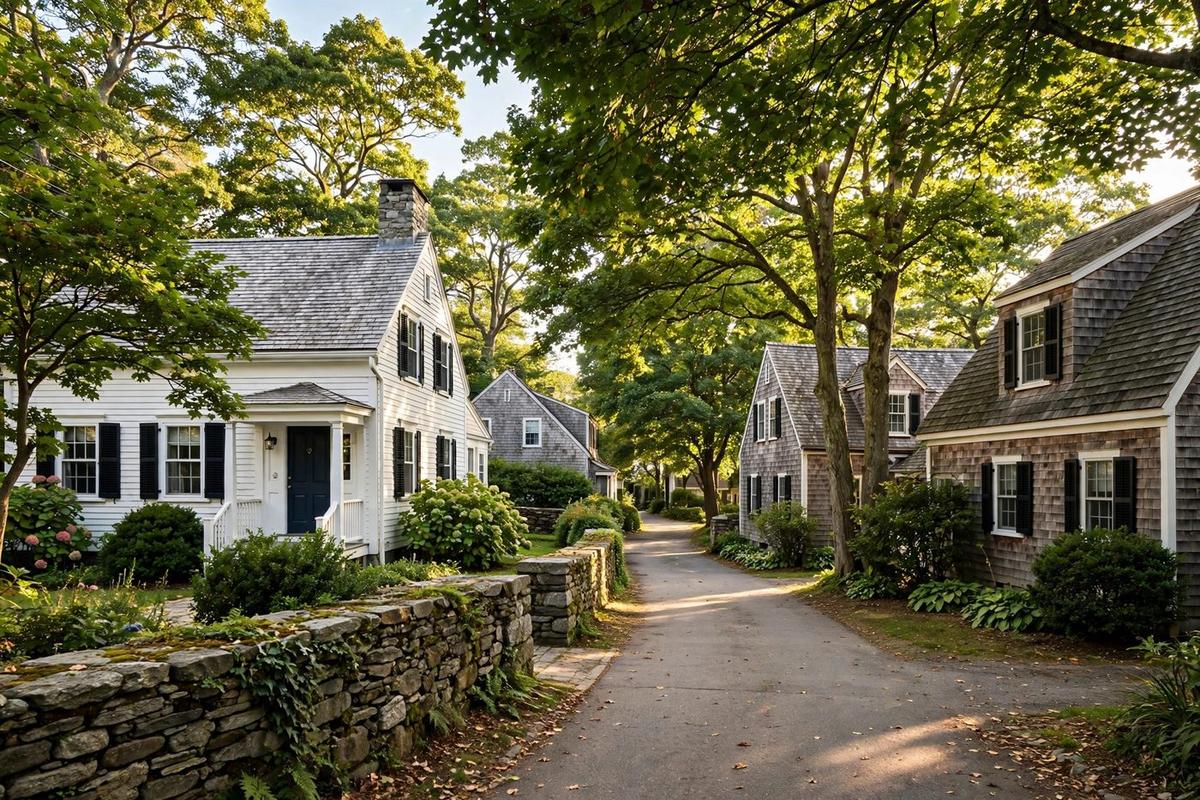
It shows a Gold Coast town where the off-market builder market is selective, not indiscriminate. Of 37 homes in the 06880 sample built in 1980 or earlier, 22 were acquired by builders, 59.5%, and the ZIP ranks 18th of 189 neighborhoods on the study\'s composite ranking. Westport's housing stock explains the selectivity: the town holds genuine architectural inventory, center-chimney colonials, antique farmhouses, well-built 1950s and 1960s colonials and ranches, on streets where the occupant buyer pool is deep, well-funded, and motivated by the Metro-North commute, the schools, and the town itself. Builders compete here, but so do families with renovation budgets, and the families win two in five.
The pattern sorts by condition and street. On the prime streets, the historic districts, the Saugatuck waterfront, the top school pockets, a well-kept colonial sells to an occupant who will renovate and live in it. On the same streets, a functionally obsolete cape or ranch with deferred systems sells to the builder, who replaces it with new shingle-style construction priced against the town's top comp set. The 59.5% is not a coin flip. It is a sorting mechanism, and the sorter is condition.
One caution keeps this finding honest: a builder-demand rate describes what buyers did with homes they already bought, not what any single seller's colonial will fetch. Whether a given house lands in the 59.5% or the 40.5% is the next sections' subject.
Westport's selective builder-demand market has bookends in this series. Kierland / Scottsdale Airpark / Magic ZIP ranks 17th of 189 neighborhoods with an 85.2% builder-demand rate, and Santa Rosa Beach local submarket ranks 19th with a 21.2% builder-demand rate. Westport sits between them: choosier than the desert, more rebuild-hungry than the beach. Pinecrest / North Pinecrest ranks 20th of 189 neighborhoods with an 84.0% builder-demand rate, where large lots and school zones drive a near-total rebuild.
How wide is the gap between an older home and a new build?
Wide, wider than the builder-demand rate alone would suggest. In the 06880 sample, older homes sold for an average of 22.6% of the price of new construction on comparable lots. In concrete terms: where a new shingle-style home sells for $3,200,000, the older colonial nearby changed hands for roughly $723,000. More than three-quarters of the new home's value is the Westport lot, the town, the commute, the schools, and the right to build.
This is the finding that complicates the "saved" story. Even the colonials that sell to occupants, the 40.5%, change hands at a fraction of new-build prices. The occupant buyer pays the "Westport discount to new": the price of the town minus the cost and trouble of renovation. The builder pays the residual land value. In Westport those two numbers are closer than in most markets in this study, which is exactly why the occupant wins two in five. But the seller's proceeds are still set primarily by the land in both cases.
Averages hide the street divide. The 22.6% figure blends village-area parcels near the town center and the Saugatuck, where the sample's 3,920 sq ft minimum lots concentrate value per square foot, with the larger lots north of the Merritt, where new-build comps run higher. The ratio's direction is uniform: Westport prices the town into the dirt. The colonial is the variable, and its value depends on which buyer it attracts.
What is the lot itself worth?
In Westport, the lot is priced against new shingle-style construction, and the residual math is the same discipline builders use everywhere. This is the question sellers ask most in every market in this study: how do off-market buyers actually price land? Start with the "as-new" value. Recent new construction in Westport has sold in the $2.4M to $4.5M range depending on street, lot size, and proximity to the village, the Saugatuck, or the top school pockets (Redfin, 2026). Subtract construction cost, high-end Connecticut builds with basements, masonry, and finish levels to match the comp set, subtract permits, fees, financing, and the builder's margin, then subtract site preparation.
Worked as an illustration, not a promise: a $3,200,000 new-build sale, minus roughly $1,400,000 in hard and soft construction costs, minus a builder margin near 20%, leaves a residual land value in the neighborhood of $1,100,000 to $1,250,000, before site-preparation costs of $30,000 to $50,000, higher where ledge rock complicates excavation. That residual is the number a land buyer negotiates against.
Three things move the number in 06880. Street and position are first: village proximity, Saugatuck frontage, and the top school pockets carry new-build premiums that define the residual. Second is lot size and usability: at a 3,920 sq ft minimum near the village, small lots concentrate value, while larger lots north of the Merritt offer the builder a bigger product. Third is condition of the existing structure, not for its own sake, but because it determines which buyer shows up: the occupant who pays the renovation-discount price, or the builder who pays the residual. A Westport seller who knows both numbers, the occupant price and the land residual, negotiates from full information. Most sellers know only the first.
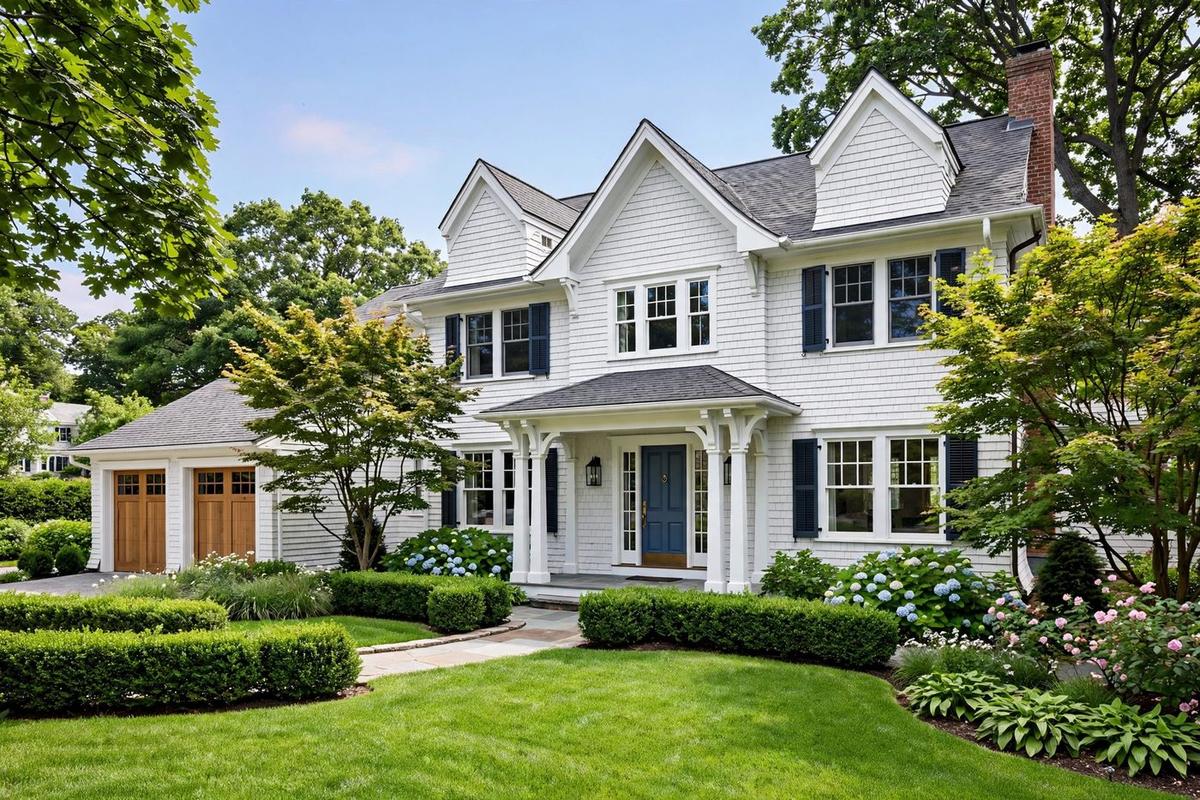
Should you fix it up or sell as-is?
In Westport, this question finally has a genuine two-sided answer, which makes the screen more important, not less. "Sell as-is or fix it up?" is the most-asked question type in the seller research behind this series, and 06880 is one of the few markets where renovation sometimes pays handsomely: the occupant buyer pool is deep, renovation budgets are large, and a well-executed update on a good colonial can capture a real premium.
But the probabilities still govern, and the condition divide is the screen. A $150,000 renovation on a well-kept colonial on a prime street, kitchen, baths, systems, might lift the sale price by $120,000 to $160,000 for the occupant buyer, a credible return. The same $150,000 on a functionally obsolete cape with a failing septic, dated electrical, and a chopped-up floor plan returns a fraction of that from the occupant, and $0 from the builder, who buys for the lot regardless. With 59.5% of sampled older homes acquired by builders, the expected value of blind renovation is still negative; the positive case requires the house to be a credible occupant product on a street occupants want.
The costly mistake, in both directions, is misclassification. Renovating the builder-bound cape wastes the capital. Selling the prime colonial as-is to the first cash buyer leaves the occupant premium on the table. Westport sellers should get a candid, street-specific read on which side of the divide their house sits before spending or signing. For the occupant-side house, the seller should know the occupant number before accepting the land number.
What does listing on the open market really cost?
In Westport, the listing ledger is long because the price points are high and the carrying costs are Connecticut's. The full accounting looks like this.
First, the commission: typically 5% to 6% of the sale price. On a $1,100,000 sale, that is $55,000 to $66,000 off the top (National Association of Realtors, 2025). Second, seller-side closing costs, title, transfer taxes, attorney fees (customary in Connecticut), prorations, commonly another 1.5% to 2.5%. Third, concessions: inspections on older colonials routinely surface oil tanks, septic age, knob-and-tube remnants, and roof condition; credits of $20,000 to $50,000 on aging inventory are normal.
Fourth is carrying cost over market time, and Westport carrying costs are among the highest in the study: property taxes on a $1.1M assessment run well into five figures annually, and every month of market time costs mortgage or equity carry, taxes, insurance, heating, and maintenance, $7,000 to $12,000 a month. An older home that misses the spring market can sit six months; that is $42,000 to $72,000 in pure hold expense.
Add the midpoints and a $1,100,000 list price nets the seller something in the low-to-mid $900,000s after a normal cycle, before any price reduction. The net-proceeds figure, not the list price, is what an off-market offer should be measured against, and in Westport, the carrying-cost line alone can decide the contest.
How do you handle a cash buyer, and how do you tell a closer from a contract flipper?
Verify funds, verify closings, and never sign an assignable contract you do not understand. "How do I handle cash buyers?" is among the most common real questions sellers ask, and Westport's high residuals draw sophisticated off-market operators of both kinds.
The distinction is structural. A buyer that closes, like Legacy Off-Market, purchases the property itself, with its own capital, and takes title in its own name; as a wholesaler, Legacy then places the acquired home with a vetted builder from its buyer network. A contract flipper signs a purchase contract with no means or intent to close, then shops the contract itself to a real buyer for a fee, profiting from the spread between the offer and the end buyer's price. The flipper's model requires paying the seller less than a closer would, because the fee comes out of the seller's equity.
Three verifications separate them. First, proof of funds in the buyer's name, dated within the last 30 days, not a pre-approval, not a letter from a "private lender." Second, a record of actually closed purchases: recorded deeds in the buyer's entity name, checkable in town land records (Westport Town Clerk, 2026). Third, the contract itself: a buyer that closes takes title in the name on the contract, with no assignment clause, and posts a meaningful earnest-money deposit, typically 1% or more, forfeited if it walks away. An assignment clause plus a token deposit is the signature of a contract that was never meant to close.
In Westport, the flipper's pitch often targets the condition divide itself, offering the confused seller a quick price for the builder lot while shopping the contract to builders at the residual, or to occupant-buyers at the renovation-discount price. Either way, the spread is the seller's money. Ask the three questions. Legitimate buyers welcome them.
Is it a bad time to sell an older colonial in Westport?
In Westport, the answer depends on which side of the condition divide the house sits, the two markets clear on different clocks. "Is it a bad time to sell?" is a perennial seller question, and here it splits. For the occupant-side colonial, well-kept, prime street, the market is the Fairfield County resale market: rates, inventory, and the spring season matter, and timing is a real consideration. For the house on the builder side of the divide, the market is the land market: new shingle-style sale prices, construction costs, and the supply of Westport lots, which move on multi-year cycles.
The land fundamentals remain constructive. Westport's commute, schools, and town continue to anchor demand across rate cycles, new construction sells to equity-rich buyers, and lots that builders want are a shrinking supply (U.S. Census Bureau, 2025). The permit record shows builders still replacing the obsolete stock (Town of Westport Assessor, 2026).
That yields the divided answer the headline promises. For the house that is a candidate for a builder acquisition, it can be a bad time to list on the MLS, months of market time at Connecticut carrying costs while the seller learns the land price, and a structurally ordinary time to sell off-market to the land buyer. For the occupant-side colonial, the seasonal resale market still matters, and the seller should time it like a resale.
What is the quiet-sale advantage in Westport?
In a town where two in five sampled older homes were saved rather than acquired by builders, the decision to sell is genuinely discriminating, and the off-market route offers five advantages either way. First, privacy: zero showings, zero open houses, no public marketing period, a real consideration where the social register reads the listings. Second, timing you choose: 7 to 21 days to close against 60 to 120-plus days for a listed older colonial, with a leaseback if the move needs coordination. Third, no commissions: none of the typical 5% to 6% (National Association of Realtors, 2025), roughly $43,000 on a $780,000 older-home sale. Fourth, no seller-side closing costs: none of the usual 1% to 2%, so the 6% to 8% that commissions plus closing costs consume, over $53,000 on that $780,000 transaction, is kept in full off-market. Fifth, no inspections or repairs: no $10,000 to $30,000 in repair credits or price reductions, a true as-is sale, which suits the builder buying the lot and the family buying the colonial honestly priced for its condition.
Methodology and limitations
The report is built from three kinds of evidence. The first is Legacy Off-Market's builder-acquisition sample (Legacy Off-Market, 2026): 37 homes in 06880 built in 1980 or earlier, 22 acquired by builders and replaced, with an average older-home sale price of 22.6% of new-build prices on comparable lots. The second is town records: the Town of Westport Assessor's parcel and permit data (Town of Westport Assessor, 2026), used to confirm the direction of builder acquisitions and new-construction activity. The third is market data: dated sold listings from Redfin and Zillow for 06880 (Redfin, 2026; Zillow, 2026), the source of the new-build price ranges cited. The 348 seller questions in the research behind this series chose the questions answered here; they are not evidence.
What was not done: no title search, no inspection of any individual colonial, and no verification of any new-build sale beyond its listing record. The price ranges illustrate from dated listings rather than appraising, and the residual-land arithmetic is a simplified model.
The central limitation is the sample. Thirty-seven homes built in 1980 or earlier cannot describe every parcel in Westport. The 59.5% figure describes the sample, which was built to find builder acquisitions, so treat it as evidence of a selective but active builder-acquisition market, which the permit record supports, not as a census of the ZIP code.
Conclusion
So which Westport colonials sell to builders and which stay lived in? On the record assembled here, the condition divide decides: 59.5% of sampled older homes were acquired by builders, the builder market's verdict on functionally obsolete houses, while two in five were saved by occupant buyers paying the renovation-discount price. Both prices are set primarily by the land, with older homes changing hands at 22.6% of new-build values. The seller's task is classification: know which buyer your house attracts, know both numbers, and do not spend renovation dollars or listing months on the wrong side of the divide.
The throughline is consistent. Westport's builder-acquisition market is selective, which makes it more dangerous for the misclassified seller, not less. The land residual is the floor. The occupant premium is the ceiling, available only to houses that can credibly claim it. And the wholesaler's spread is the tax on sellers who do not verify.
Legacy Off-Market buys directly in Westport and across the other 188 neighborhoods in this study, closing in its own name and then placing each deal with a vetted builder, with proof of funds and recorded closings behind every offer. Westport sellers can start with the acquisitions team at 401-219-4207 or aidansowa@outlook.com.
When the market saves two in five and builders acquire the rest, the question is not whether your colonial has value, it is which buyer the condition says is coming. Does your price know the answer, or will the carrying costs be the ones to teach it?
Frequently Asked Questions
How do I know if Legacy Off-Market buys in my ZIP code?
The company buys in the 189 neighborhoods ranked in this builder-acquisition study, with 06880 (Westport, Connecticut) ranked 18th. Enter your ZIP in the coverage checker to confirm, or call 401-219-4207.
Will I get less selling off-market than listing with an agent?
Compare net proceeds, not prices. A listed colonial nets its sale price minus commission, closing costs, inspection concessions, and carrying costs. The off-market offer deducts none of that.
Do I need to make repairs before selling off-market?
No. Off-market sales are as-is. Whether the buyer preserves the colonial or replaces it, pricing the home honestly for its condition beats spending on finishes the buyer did not ask for.
How fast can an off-market sale close?
Seven to 21 days is typical for an off-market close, versus 60 to 120-plus days for a listed older colonial. The seller picks the date, and a leaseback can bridge the move.
How is a buyer that closes different from a contract flipper?
Legacy Off-Market is a wholesaler that closes: it buys in its own name with its own capital, then places the home with a vetted builder. A contract flipper assigns your contract to someone else for a fee without ever closing. Demand proof of funds, recorded prior closings, and a non-assignable contract.
What does Legacy Off-Market need from me to make an offer?
The property address, your timeline, and permission to pull public records. No showings, no staging, no open houses. Call 401-219-4207 or email aidansowa@outlook.com.
Sources
- Legacy Off-Market, 2026. 189-neighborhood builder-acquisition study: 37 homes sampled in 06880, 22 acquired by builders, average older-home price 22.6% of new build. Market data.
- National Association of Realtors, 2025. Typical seller commission structures, Fairfield County market. Industry report.
- Redfin, 2026. Recently sold homes and new construction, ZIP code 06880, Westport CT. Market data.
- Town of Westport Assessor, 2026. Parcel and permit records, Westport CT. Official record.
- U.S. Census Bureau, 2025. QuickFacts: Westport town, Connecticut. Government data.
- Westport Town Clerk, 2026. Town land records, Westport CT. Official record.
- Zillow, 2026. Home values and recently sold, 06880. Market data.