In the sample compiled for this report, 23 of 27 older homes in Arizona's 85254, the Kierland, Scottsdale Airpark, and "Magic ZIP" area, were acquired by builders and redeveloped as new construction, a builder-demand rate of 85.2%, ranking 17th of 189 neighborhoods in this study (Legacy Off-Market, 2026). The older homes that changed hands sold for, on average, 27.3% of what new construction commands on a comparable lot. The 85254 is the rare ZIP whose mailing address and municipality disagree: most of it carries a Scottsdale address while sitting inside the City of Phoenix, the "Magic ZIP." For sellers, the magic that matters is arithmetic: whether the MLS, after its full ledger of costs, nets more than an off-market sale to the land buyer the record says is coming.
Key Findings
- 85.2% builder-demand rate, ranked #17, 23 of 27 sampled homes built in 1980 or earlier in 85254 were acquired by builders and redeveloped, the 17th-highest composite rank among the 189 neighborhoods studied.
- 27.3% price ratio, older homes sold for just over a quarter of new-build prices on comparable lots, meaning nearly three-quarters of new-home value sits in the land.
- 11,399 sq ft minimum lot, the second-largest minimum lot in this batch; 85254 parcels run big, and the land economics reward scale.
- The Magic ZIP cuts both ways, the Scottsdale address lifts the comp set while Phoenix jurisdiction governs the zoning; sellers should know which city prices their lot.
- The ledger is the whole question, in a ZIP where the land buyer dominates, net proceeds, not list price, decide whether the MLS or an off-market sale wins.
What does the builder-demand record in 85254 actually show?
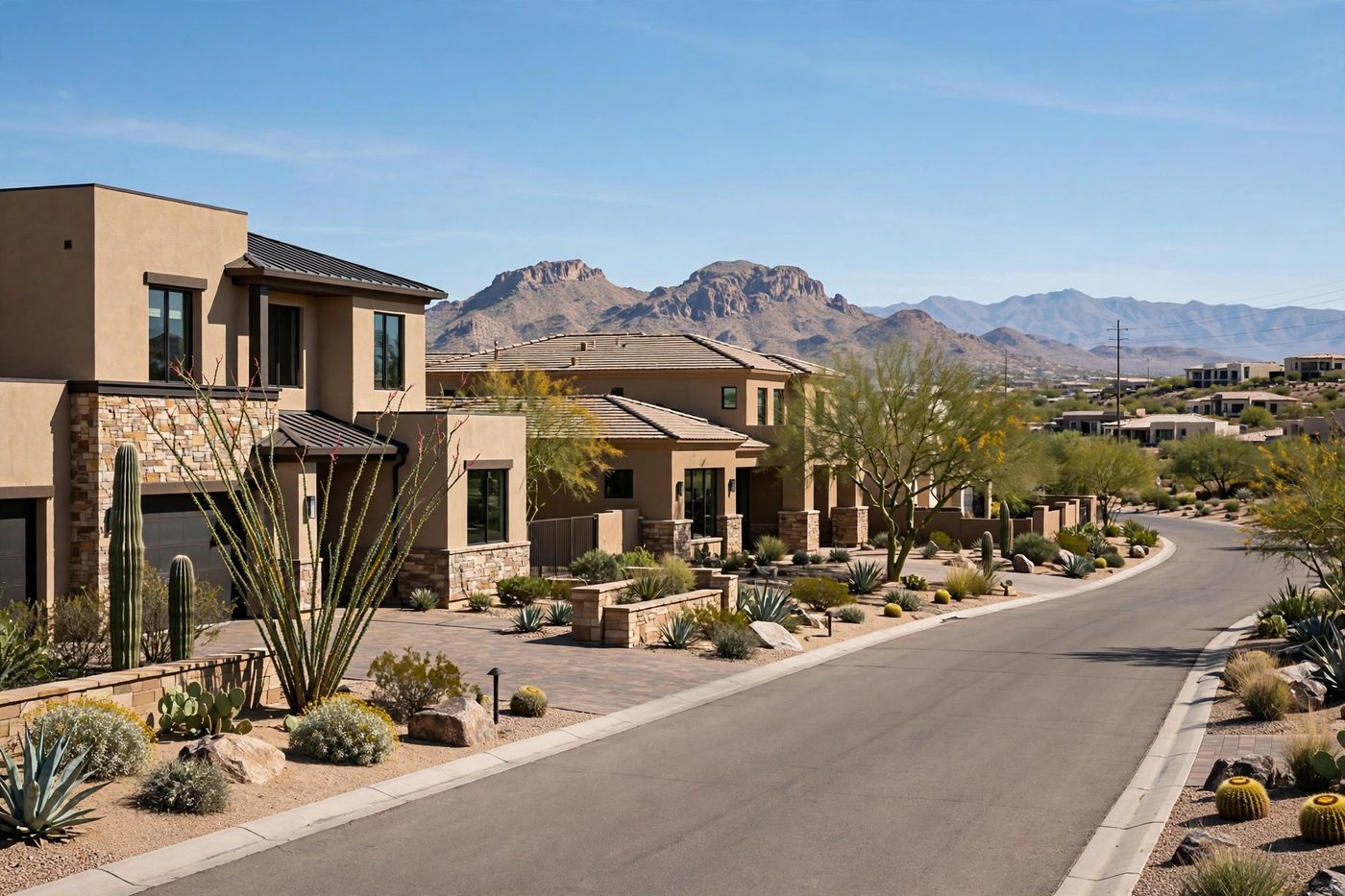
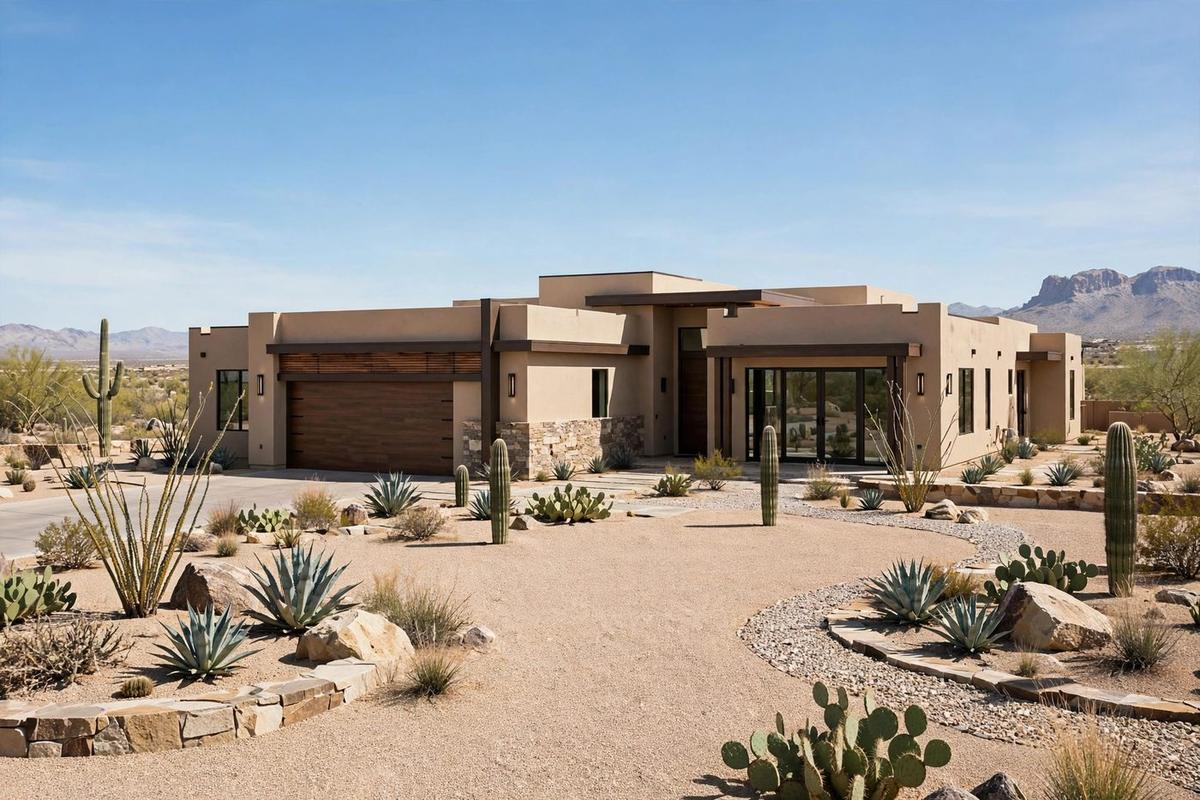
It shows one of the sharpest builder markets in the Southwest, hiding behind a mailing address. Of 27 homes in the 85254 sample built in 1980 or earlier, 23 were acquired by builders, 85.2%, and the ZIP ranks 17th of 189 neighborhoods on the study's composite ranking. The local geography needs a sentence: 85254 is the "Magic ZIP" because the post office calls most of it Scottsdale while the City of Phoenix governs most of it. The housing stock is 1970s and 1980s, ranch and Santa Fe-influenced homes on large desert lots, sitting between Kierland Commons, the Scottsdale Airpark employment center, and the Scottsdale Quarter. Builders are buying the position: north-Scottsdale adjacency, freeway access, and lots big enough to hold serious new product.
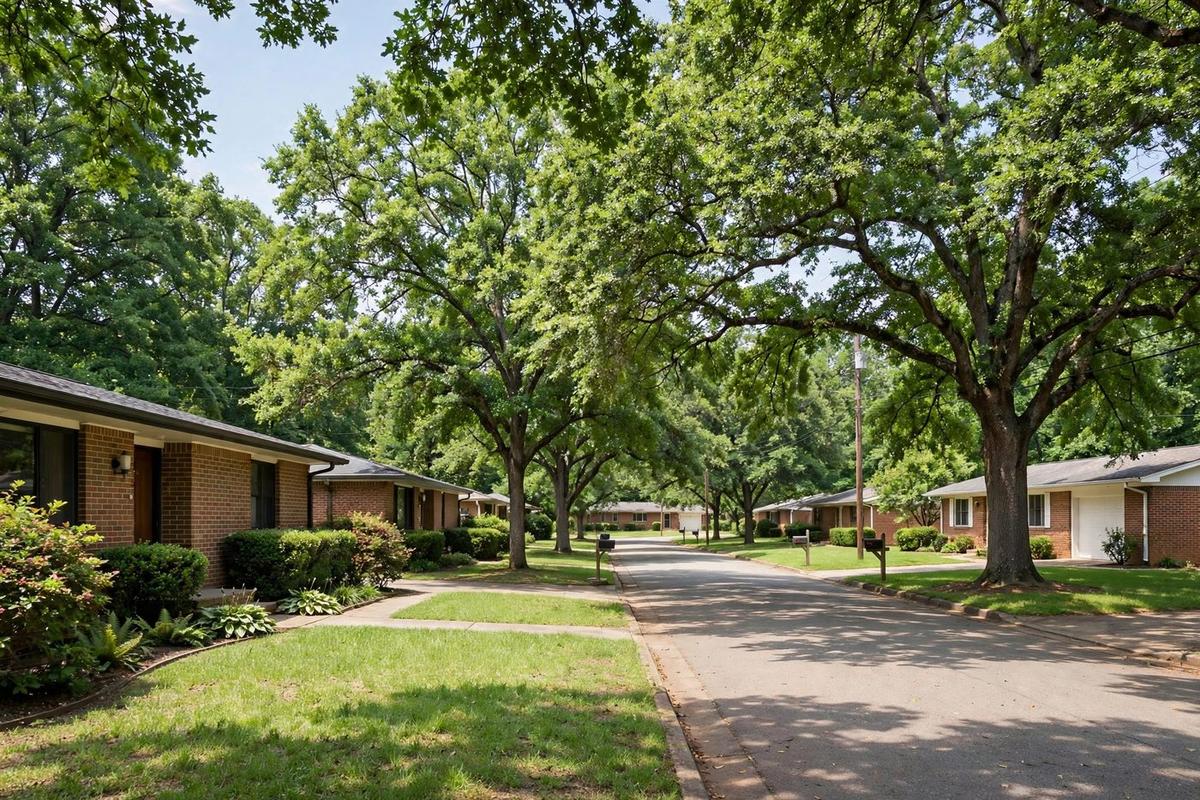
The pattern is unmistakable on the ground. Along the arterial corridors and interior streets, original 1970s homes with mature desert landscaping sit beside new two-story builds with courtyards, RV gates, and guest casitas, the northern Scottsdale product adapted to Phoenix zoning. The Scottsdale address does real work in the comp set: new construction here is priced against north Scottsdale, not against Phoenix averages. The land buyer knows this. The question is whether the seller does.
One caution keeps this finding honest: a builder-demand rate describes what buyers did with homes they already bought, not what any single seller will receive. That requires the price record, which is the next section.
The Magic ZIP's arithmetic is not unique to the desert. North Hills ranks 16th of 189 neighborhoods with an 85.7% builder-demand rate, and Westport local submarket ranks 18th with a 59.5% rate. Coastal Connecticut or the Valley of the Sun, the land buyer negotiates from the same residual formula. Santa Rosa Beach local submarket ranks 19th of 189 neighborhoods with a 21.2% builder-demand rate, where rental income keeps more cottages standing.
How wide is the gap between an older home and a new build?
Wide, and the width is the leverage the headline asks about. In the 85254 sample, older homes sold for an average of 27.3% of the price of new construction on comparable lots. In concrete terms: where a new build sells for $2,400,000, the older home nearby changed hands for roughly $655,000. Nearly three-quarters of the new home's value is the large lot in the Magic ZIP and the right to build, not the 1978 structure.
Averages hide the jurisdiction divide. The 27.3% figure blends parcels under Phoenix zoning with the smaller portion under Scottsdale's, and the two cities' development standards differ, setbacks, height, and design review all shape the buildable product. The Scottsdale-address premium shows up in the new-build comps regardless of which city issues the permit. But the ratio's message is uniform: the market prices the dirt at north-Scottsdale levels and the structure at site-preparation cost.
The honest distinction, as always, is between a list price and a land price. Older 85254 homes often list at prices implying the structure has value, and in a strong market, optimistic listings can sit while sellers wait for a buyer who shares the optimism. The record shows who actually buys: the land buyer, more than five times out of six. The gap between the aspirational list and the land price is measured in carrying costs, and the next sections price that gap precisely, because the headline's question can only be answered in net proceeds.
What is the lot itself worth?
In the Magic ZIP, the lot is priced against north Scottsdale new construction, and the residual math is straightforward. This is the question sellers ask most in every market in this study: how do off-market buyers actually price land? Start with the "as-new" value. Recent new construction in and around 85254 has sold in the $1.7M to $3.2M range depending on lot size, street, and finish level (Redfin, 2026). Subtract construction cost, permits, impact fees, financing, and the builder's margin, then subtract site preparation.
Worked as an illustration, not a promise: a $2,400,000 new-build sale, minus roughly $1,000,000 in hard and soft construction costs, minus a builder margin near 20%, leaves a residual land value in the neighborhood of $900,000 to $1,000,000, before site preparation of $25,000 to $40,000. That residual is the number a land buyer negotiates against.
Three things move the number in 85254. Lot size is first: at an 11,399 sq ft minimum, these are builder-scale parcels, and the deep lots common here accommodate the courtyard-and-casita product that commands the premium. Second is position relative to Kierland and the Airpark: proximity to the employment and retail core carries new-build premiums. Third is jurisdiction and zoning, Phoenix versus Scottsdale standards shape the buildable envelope, and a seller who knows which city governs their parcel, and what it allows, negotiates from the builder's own arithmetic. The Magic ZIP's magic is the Scottsdale address on the comp; the zoning is Phoenix's, and both belong in the seller's math.
Should you fix it up or sell as-is?
At 85.2%, the record answers in one number, but the reasoning matters more than the number. "Sell as-is or fix it up?" is the most-asked question type in the seller research behind this series, and in 85254 the probability-weighted return on pre-sale renovation is easy to compute: with more than five in six sampled older homes acquired by builders, a dollar spent on finishes has roughly a five-in-six chance of returning zero.
Consider the arithmetic. A $110,000 renovation on a 1970s ranch, kitchen, baths, flooring, maybe a pool replaster, might lift the sale price by $70,000 to $90,000 for a live-in buyer, a partial return before months of disruption in the desert heat. If the buyer is a builder, it returns $0: the builder underwrites the lot against north-Scottsdale new-build comps and prices the structure at site-preparation cost. The renovated pool deck is removed with everything else.
The exception is narrow. A genuinely well-kept home on a prime street can sell to the buyer who wants the 85254 address at a discount to new construction, the occupant who will live with the 1978 floor plan. That buyer exists, but the seller should verify the premise before spending: is the house a credible occupant product, or does the record's 85.2% describe its fate? Spending renovation dollars on the second house converts equity into construction debris.
Can the MLS net more than an off-market sale?
This is the headline's question, and it can only be answered in net proceeds, so here is the full ledger. Start with the list-price scenario. A $900,000 list price in 85254 faces, first, the commission: typically 5% to 6%, or $45,000 to $54,000 off the top (National Association of Realtors, 2025). Second, seller-side closing costs, title, transfer taxes, prorations, commonly another 1% to 2%. Third, concessions: inspections on 1970s and 1980s desert homes routinely surface roof age, polybutylene plumbing, electrical panels, and pool-equipment issues; credits of $15,000 to $35,000 are normal.
Fourth is carrying cost over market time. The Phoenix-area market is strong, but older homes that fit neither buyer pool cleanly can take 90 to 150 days, and summer listings move slower. Every month costs mortgage or equity carry, taxes, insurance, utilities, significant in the cooling season, pool service, and desert landscaping maintenance: $4,000 to $7,000 a month on a $900,000 property. Four months burns $16,000 to $28,000.
Add the midpoints and the $900,000 list nets the seller something in the high $700,000s after a normal cycle, before any price reduction. Now the comparison the headline demands: an off-market offer is measured against that net figure, not against $900,000. It carries no commission, no concessions, no carrying months, no showings. In a ZIP where the modal buyer is the land buyer either way, the MLS adds cost without adding a better buyer, the builder bids off-market too, and the builder's bid is the residual either way. That is the arithmetic behind the headline's question, and in 85254 the ledger usually answers it.
How do you handle a cash buyer, and how do you tell one from a wholesaler?
Verify funds, verify closings, and never sign an assignable contract you do not understand. "How do I handle cash buyers?" is among the most common real questions sellers ask, and the Magic ZIP's high residuals attract the full spectrum of off-market operators.
The distinction is structural. Legacy Off-Market buys directly from the seller off-market, then places the deal with a vetted builder. A bad actor signs a purchase contract with no means or intent to close, then shops the contract to a real buyer for a fee, profiting from the spread between the offer and the end buyer's price. The bad actor's model requires paying the seller less than a legitimate buyer would, because the fee comes out of the seller's equity.
Three verifications separate them. First, proof of funds in the buyer's name, dated within the last 30 days, not a pre-approval, not a letter from a "private lender." Second, a record of actually closed purchases: recorded deeds in the buyer's entity name, checkable in county records (Maricopa County, 2026). Third, the contract itself: a legitimate buyer closes in the name on the contract, with no assignment clause, and posts a meaningful earnest-money deposit, typically 1% or more, forfeited if it walks away. An assignment clause plus a token deposit is the signature of a contract that was never meant to close.
In 85254, bad actors often pitch the jurisdiction confusion as expertise, "I know how the Magic ZIP works", as justification for a discounted price. The zoning maps are public, and the builder's residual is arithmetic, not magic. Ask the three questions. Legitimate buyers welcome them.
Is it a bad time to sell an older home in the 85254?
For a builder-acquisition candidate, the Magic ZIP's land market runs on a longer cycle than the resale headlines. "Is it a bad time to sell?" is a perennial seller question, and in the Phoenix area it usually means rates, inventory, and seasonal buyer flow. That frame fits the occupant market. The land market, which set the price on 85.2% of sampled transactions, clears on north-Scottsdale new-build prices, construction costs, and the finite supply of large lots with the Scottsdale address.
Those fundamentals remain constructive. The Airpark employment core and Kierland retail continue to anchor demand, new construction sells to equity-rich buyers, and large builder-eligible lots are a shrinking supply, no new Magic ZIP land is being created (U.S. Census Bureau, 2025). The permit record shows builders still replacing the 1970s and 1980s stock (Maricopa County, 2026). What erodes with delay is the structure: roofs, polybutylene, and pool equipment age, narrowing the occupant pool, while the land value holds.
That yields the two-part answer. It can be a bad time to list an aging ranch on the MLS, where it will absorb months of market time and carrying costs while the seller learns the land price. It is a structurally ordinary time to sell the same property off-market to a land buyer, whose bid is anchored to new-build comps rather than seasonal sentiment. In the 85254, waiting does not improve the house. It only ages it on land that is not getting any cheaper.
What do sellers keep by selling off-market?
The Magic ZIP's question, whether the MLS nets more than an off-market sale, is answered by the ledger. The off-market side keeps five things a listing gives away. First, privacy: zero showings, zero open houses, no public marketing period. Second, speed with flexibility: 7 to 21 days to close versus 60 to 120-plus days for a listed older home, with a leaseback if the next home is not ready. Third, no commissions: none of the typical 5% to 6% (National Association of Realtors, 2025), about $37,000 on a $670,000 older-home sale. Fourth, no seller-side closing costs: none of the typical 1% to 2%, so the 6% to 8% normally lost to commissions plus closing costs, over $45,000 on that $670,000 transaction, stays with the seller. Fifth, no inspections or repairs: no $10,000 to $30,000 in repair credits or price reductions, a true as-is sale that matches a land buyer's intent, since the buyer never wanted the finishes.
Methodology and limitations
Three source types sit behind this report. First, Legacy Off-Market's builder-demand sample for the 189-neighborhood study: 27 homes in 85254 built in 1980 or earlier, 23 acquired by builders and redeveloped, with an average older-home sale price of 27.3% of new-build prices on comparable lots (Legacy Off-Market, 2026). Second, county records: the Maricopa County Assessor's parcel and permit data, confirming builder-acquisition and new-construction activity directionally. Third, market data: dated sold listings from Redfin and Zillow for 85254, behind the new-build price ranges cited. The 348 seller questions behind this series determined which questions the report answers; they are not quoted as data.
No title search was performed, no home was inspected, and no new-build sale was verified beyond its listing record. The price ranges are illustrations from dated listings, not appraisals, and the residual-land math is a simplified model.
The central limitation is the sample. Twenty-seven homes, chosen for the older-home characteristics that builders target, cannot describe every parcel in 85254. The 85.2% figure describes the sample, which was assembled to find builder acquisitions, so read it as evidence of a sharp desert builder market, which the permit record corroborates, not as a census of the ZIP code.
Conclusion
So can an off-market sale beat the MLS in Scottsdale's 85254? On the record assembled here, the ledger says it usually can: 85.2% of sampled older homes were bought for their lots, older homes changed hands at 27.3% of new-build prices, and the MLS adds commission, concessions, carrying months, and showings without adding a better buyer, because the modal buyer is the land buyer either way. The Magic ZIP's real magic is the Scottsdale address on a Phoenix-governed lot, and the seller who knows the residual math captures the address premium instead of spending it on the listing process.
The throughline is consistent. The replacement wave is the dominant fact of this ZIP. The large lots carry north-Scottsdale land economics. Net proceeds, not list price, decide the contest the headline poses. And the bad actor's spread is the tax on sellers who do not verify.
Legacy Off-Market buys directly from sellers in the 85254 and the other 188 neighborhoods covered by this study, then places each deal with a vetted builder, with proof of funds and a record of closed purchases behind its offers. Sellers in the Magic ZIP can contact the acquisitions team at 401-219-4207 or aidansowa@outlook.com.
When more than five out of six older homes were bought for the dirt beneath them, what is the MLS selling that the land buyer is not already offering?
Frequently Asked Questions
How do I know if Legacy Off-Market buys in my ZIP code?
The company buys in the 189 neighborhoods ranked in this builder-demand study, with 85254 (Kierland / Scottsdale Airpark, Arizona) ranked 17th. Enter your ZIP in the coverage checker to confirm, or call 401-219-4207.
Will I get less selling off-market than listing with an agent?
The ledger decides. A listed older home nets its price minus commission, closing costs, concessions, and carrying costs. The off-market offer has none of those.
Do I need to make repairs before selling off-market?
No. The sale is as-is by definition. In the Magic ZIP, where the modal buyer never wanted the finishes, a pre-sale remodel is spending against the buyer's intent.
How fast can an off-market sale close?
An off-market close typically runs 7 to 21 days, against 60 to 120-plus days for a listed older home. You choose the closing date, and a leaseback can cover the transition.
How is an off-market buyer different from a wholesaler?
The direct buyer closes in its own name with its own funds and posts a deposit it forfeits by walking away. The bad actor sells your contract to the real buyer for a fee. Ask for proof of funds, recorded closings, and no assignment clause.
What does Legacy Off-Market need from me to make an offer?
Just the property address, your timeline, and permission to review public records. No showings, no staging, no open houses. Reach the team at 401-219-4207 or aidansowa@outlook.com.
Sources
- Legacy Off-Market, 2026. 189-neighborhood builder-demand sample: 27 homes sampled in 85254, 23 acquired by builders, average older-home price 27.3% of new build. Market data.
- Maricopa County, 2026. Parcel and permit records, Phoenix/Scottsdale AZ. Official record.
- National Association of Realtors, 2025. Typical seller commission structures, Phoenix-Scottsdale market. Industry report.
- Redfin, 2026. Recently sold homes and new construction, ZIP code 85254, Scottsdale AZ. Market data.
- U.S. Census Bureau, 2025. QuickFacts: Scottsdale city, Arizona. Government data.
- Zillow, 2026. Home values and recently sold, 85254. Market data.