In the sample compiled for this report, 17 of 61 older homes in Vienna's 22180 were acquired by builders and redeveloped into new construction, a builder-demand rate of 27.9%, ranking the neighborhood 28th of 189 neighborhoods in the builder-acquisition study (Legacy Off-Market, 2026). The older homes that changed hands sold for, on average, 34.4% of what new construction commands on a comparable lot in the same neighborhoods. The builder-demand rate is the lowest among the reports in this set, but the sample is the largest, 61 homes, which makes the rate the sturdiest. And the 34.4% price ratio says the same thing the other numbers say: in Vienna, the market prices two different assets, a livable home and a development site, and they clear at very different prices. The seller's proceeds turn on which buyer shows up. This report identifies the three buyer types, what each one pays for, and how to tell them apart.
Key Findings
- 27.9% builder-demand rate, ranked 28th of 189 neighborhoods, 17 of 61 sampled homes built in 1980 or earlier in 22180 were acquired by builders and redeveloped, placing the neighborhood 28th on the study's composite ranking.
- 61-home sample, the largest sample among this set of ten reports, which makes the 27.9% rate the most statistically grounded figure a Vienna seller will encounter.
- 34.4% price ratio, older homes sold for just over a third of new-build prices on comparable lots, meaning nearly two-thirds of a new home's value sits in the land.
- 9,450 sq ft minimum lot, the smallest parcel in the sample and the second-most generous minimum among these ten reports; Vienna lots run large, which is what makes the builder math work.
- Three buyers, three prices, the land buyer, the live-in buyer, and the wholesaler pay for different things; only two of them are buyers at all.
What does the builder-acquisition record in 22180 actually show?
It shows a steady inside-the-Beltway builder market, more than one in four older homes acquired by builders, measured on the largest sample in this set. Of 61 homes in the 22180 sample built in 1980 or earlier, 17 were acquired by builders, 27.9%, and the neighborhood ranks 28th of 189 on the study's composite ranking. The composite ranking weights sample size alongside the raw rate, and here the sample does the heavy lifting: 61 homes is the largest sample among these ten reports, which means the 27.9% rate rests on more evidence than any other figure in the set.
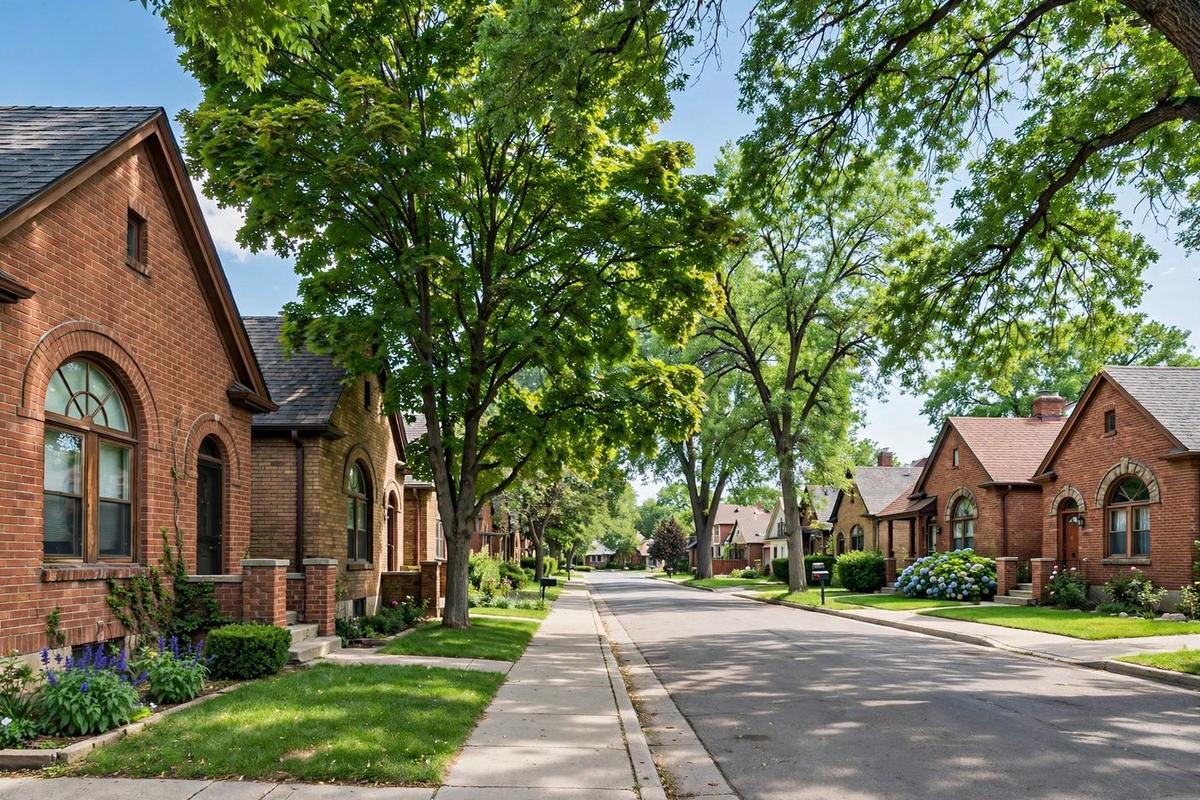
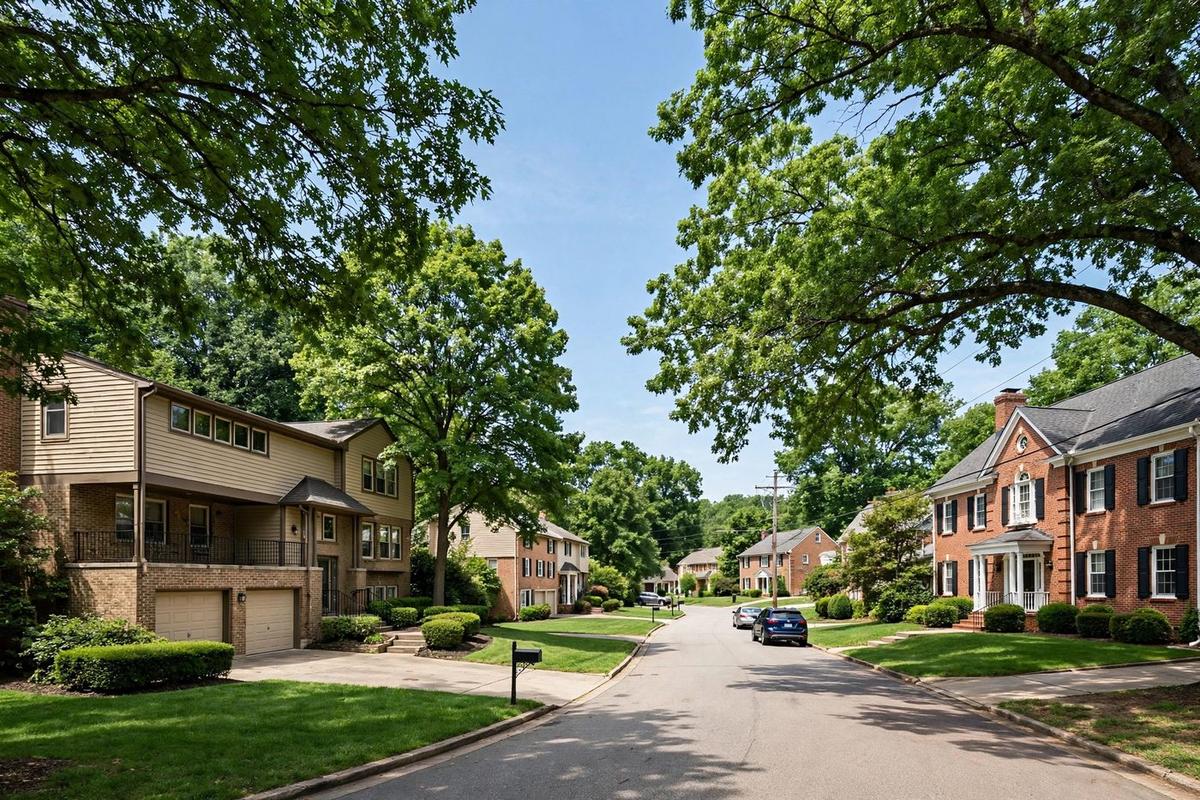
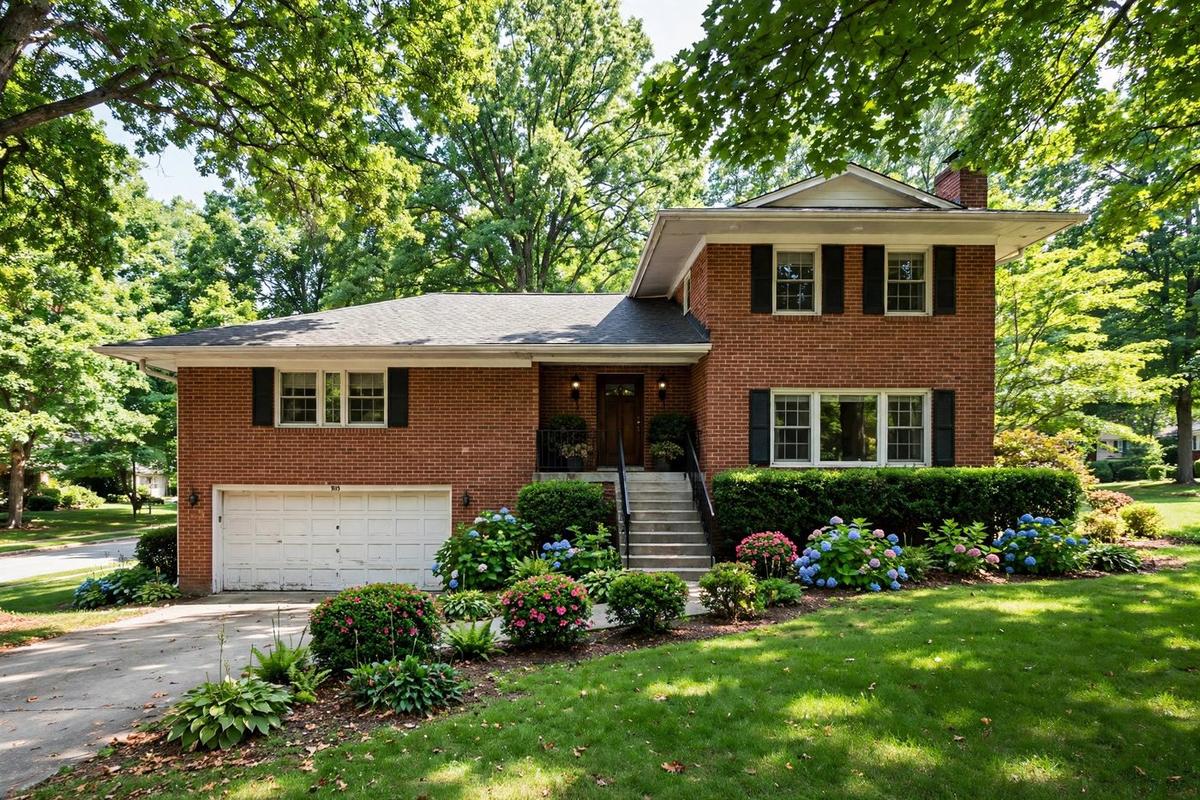
What the record describes is the Vienna pattern: 1950s through 1970s colonials, ramblers, and split-levels on generous lots inside the Beltway, bought by builders and custom-home buyers and redeveloped into new two-story construction. Fairfax County permit records confirm the direction of the trend, with builder redevelopment activity a durable feature of the Vienna market (Fairfax County Department of Tax Administration, 2026).
The Beltway pattern extends across the river. In McLean, ranked 21st of 189 neighborhoods with a builder-demand rate of 33.3%, the same inside-the-Beltway dynamics price land at a similar premium.
Two cautions keep this finding honest. First, the sample is 61 homes selected for builder-targeted older-home characteristics, not the whole ZIP code; the true ZIP-wide builder-acquisition share is lower than 27.9%. Second, a builder-demand rate describes what buyers did with homes they already bought. It does not, by itself, tell a seller what their home will fetch, 44 of the 61 sampled homes were not acquired by builders, the largest non-acquired group in the set. In Vienna, the live-in buyer is a real and numerous alternative. The price record, taken up next, prices the two paths.
How wide is the gap between an older home and a new build?
Wide, roughly two-thirds of the new home's value sits in the land. In the 22180 sample, older homes sold for an average of 34.4% of the price of new construction on comparable lots. Put in concrete terms: where a new build sells for $1,900,000, the older home nearby changed hands for roughly $654,000. The $1.25 million difference is not explained by finishes and fixtures. It is explained by the fact that one buyer purchased a house and the other purchased a homesite inside the Beltway.
This ratio deserves a careful reading, because averages hide condition. The 34.4% figure blends updated older homes, which sell to families who will live in them, and in Vienna that buyer pool is deep, with functionally obsolete ones that sell to builders. A renovated 1960s colonial in Vienna can sell within striking distance of new construction per square foot. An unrenovated one on the same street sells at land value minus site preparation. The spread between those two outcomes, on the same block, is often several hundred thousand dollars.
That is the finding of this section, and it is the headline's question in embryo: in 22180, the market does not price "a house." It prices two different assets, a livable home and a development site, and the seller's proceeds depend on which asset the buyer believes they are acquiring. The next sections price each buyer in turn.
What is the lot itself worth?
In Vienna, the lot is priced on inside-the-Beltway scarcity, school pyramids, and generous dimensions. The residual land method still applies: start with the new-build sale price on a comparable lot, subtract construction cost, margin, and site preparation. Recent new construction in 22180 has sold in the $1.5M to $2.6M range depending on street, lot size, and school pyramid (Redfin, 2026).
Worked as an illustration, not a promise: a $1,900,000 new-build sale, minus roughly $800,000 in hard and soft construction costs, minus a builder margin near 20%, leaves a residual land value in the neighborhood of $700,000 to $800,000, before site-preparation costs of $25,000 to $40,000.
Three things move that number in 22180. First is location inside the Beltway: Vienna's commute shed to Tysons, Arlington, and downtown Washington is finite, and finished lots cannot be created, which supports the residual structurally. Second is the school pyramid: parcels zoned for the most sought-after schools carry premiums that show up in the new-build comps but rarely in the older-home listings. Third is lot size: at a 9,450 sq ft sample minimum, the most generous minimum among these ten reports, Vienna lots give builders room for the floor plans the market wants.
Which buyer pays the most, the land buyer or the live-in buyer?
It depends on the house, and the honest answer requires pricing both. This is the headline's question, and in Vienna it has a genuine two-sided answer, because unlike in the highest builder-demand markets, the live-in buyer here is numerous enough to be the right answer for the right house.
The land buyer, a builder or custom-home buyer, pays the residual: the new-build sale price minus construction, margin, and site preparation. On the illustration above, that is $700,000 to $800,000 for the lot, with the structure valued at or near zero. The land buyer pays quickly, in cash, as-is, with no inspection drama over a 60-year-old roof. What the land buyer does not pay for is condition: updates, renovations, and maintenance are worth nothing in this bid.
The live-in buyer, a family buying a home to occupy, pays for the house as a house. For an updated, well-kept older home in Vienna, that buyer can pay meaningfully more than the land bid: the live-in premium for condition, for the school pyramid, for moving in without a construction project. For a dated, functionally obsolete home, the live-in buyer pays less than the land buyer, because the live-in buyer discounts for every renovation they will have to fund, while the builder buyer pays for the lot alone.
The decision rule: get both numbers. The residual land bid from the builder's math, and the as-renovated resale value from dated comps of updated homes. If the live-in number exceeds the land bid by more than the cost of achieving it, the house is a house. If it doesn't, the house is a homesite wearing a house costume, and marketing it as a home just adds months and commissions to the path toward the land price.
How does an off-market sale change the seller's side of the deal?
It changes five things, each carrying a number. The off-market path alters the economics of the transaction in five specific ways.
First is privacy. Zero showings, zero open houses, no lockbox, no public marketing period, no neighbors tracking the photographer's visits and speculating about the asking price. The sale happens between the seller and one buyer, with nothing on public display. The neighbors find out when the deed records, not before.
Second is control over timing. A listing compresses the seller into the market's schedule; an off-market buyer negotiates the closing date around the seller's life. A direct sale can close in 7 to 21 days, compared with 60 to 120-plus days for a listed older home once market time is counted, or it can go the other way: time to find the next home, to coordinate a move, to settle an estate, even to stay past closing under a short leaseback while the new home is ready.
Third, there is no commission. None of the typical 5% to 6% (National Association of Realtors, 2025): on a $950,000 sale, $47,500 to $57,000 stays with the seller. Fourth, there are no closing costs on the seller's side: none of the typical 1% to 2% in title, transfer, and recordation charges. Commissions plus closing costs commonly consume 6% to 8% of the sale price, on a $950,000 Vienna transaction roughly $57,000 to $76,000, kept by the seller. Fifth, there are no inspections or repairs. The sale is truly as-is: no $10,000-to-$30,000 repair credits after the buyer's inspection of a 60-year-old home, no renegotiation, no appraisal from the buyer's lender resetting the price.
Priced together, those five advantages are why an off-market number should never be compared to a list price. It should be compared to the list price minus everything the listing would have cost, including the carrying costs that Fairfax County taxes make unusually expensive here.
What does listing on the open market really cost?
More than the commission rate suggests, once time and taxes are priced in. The full ledger: typically 5% to 6% of the sale price in the Northern Virginia market, so on a $950,000 sale, $47,500 to $57,000 off the top (National Association of Realtors, 2025). Seller-side closing costs, title, transfer and recordation taxes, prorations, add another 1% to 2%. Concessions: buyers inspecting 50- to 60-year-old homes negotiate repair credits and price reductions after inspection, often $10,000 to $30,000 on older inventory.
Then carrying cost over market time: Fairfax County real estate taxes on a $950,000 assessment run well into five figures annually, and every month a listing sits, the seller pays mortgage or equity opportunity cost, insurance, taxes, utilities, and maintenance. Three to six months of market time, normal for older homes that appeal to a narrower buyer pool, costs $20,000 to $45,000 in pure hold expense.
Add the midpoints and a $950,000 list price nets the seller something in the mid-$800,000s after a normal market cycle, before any price reduction. This is the number an off-market offer should be compared against: not the list price, but the net proceeds after the full cost of achieving it.
How do you tell a direct buyer from a wholesaler?
Three checks, and the headline's "third buyer" is the one they are for. The off-market space contains genuine direct buyers and intermediaries who never intend to close. A wholesaler signs your contract, then sells the contract itself to a real buyer, pocketing the spread from your equity. That spread is why the wholesaler must buy for less than a direct buyer would pay.
First check: proof of funds in the buyer's own name, dated within 30 days, covering the full purchase price, not a pre-approval or a letter from a private lender. Second: a record of closed deals, recorded deeds in the buyer's entity name, checkable through the Fairfax County Circuit Court Clerk (Fairfax County Circuit Court Clerk, 2026). Third: the contract itself. A direct buyer closes in the name on the contract, with no assignment clause, and posts earnest money, usually 1% or more, that it forfeits if it walks away. An assignment clause paired with a token deposit is the tell of a contract never meant to close.
Is it a bad time to sell an older home in Vienna?
For a home that is a candidate for a builder acquisition, market timing matters less than most sellers think. The off-market builder market runs on a different cycle than the resale market, where rates and inventory move prices quarter to quarter.
A builder's residual land calculation depends on new-build sale prices, construction costs, and the availability of builder-targeted lots, not on mortgage rates. New construction in Vienna sells to cash-heavy and well-qualified buyers whose demand has proven durable across rate cycles, anchored by federal employment and the school pyramids. Construction costs rarely fall; when they rise, they squeeze the builder's margin, not the land bid, up to the point where projects stop penciling, which in this ZIP they still do.
What does change with the cycle is the alternative. In a slow resale market, an older home listed on the MLS sits longer and takes larger reductions, and the carrying-cost math gets worse at Vienna assessments. The off-market bid, anchored to new-build comps rather than resale sentiment, moves less. So it can be a bad time to list, and a perfectly ordinary time to sell off-market.
Methodology and limitations
This report rests on three evidence types. The core is the builder-acquisition sample compiled for the 189-neighborhood study: 61 homes in 22180 built in 1980 or earlier, 17 acquired by builders and redeveloped, with older homes selling at an average of 34.4% of new-build prices on comparable lots (Legacy Off-Market, 2026). Supporting it are public records, chiefly Fairfax County Department of Tax Administration assessment and permit data, used to confirm that builder redevelopment activity runs in the direction the sample suggests, and dated sold listings from Redfin and Zillow behind the new-build price ranges in the residual math (Fairfax County Department of Tax Administration, 2026; Redfin, 2026). The questions answered here were drawn from 348 distinct real seller questions, used as a menu of question types, not quoted as data.
Not verified: no title search on any property, no inspection of any home's condition, and no specific new-build sale beyond its listing record, so the illustrated price ranges are starting points, not appraisals. The residual land arithmetic is a simplified model; real builder underwriting adds financing structure, entitlement risk, and carry assumptions this report does not attempt.
The central limitation is the sample, even at 61 homes, the largest among these ten reports. Homes selected for builder-targeted older-home characteristics cannot describe every parcel in 22180, and the sample was built to find builder acquisitions, which tilts it. Treat the 27.9% figure as evidence of a steady inside-the-Beltway off-market builder market, corroborated by the permit record, not as a census of the ZIP code.
Conclusion
So which buyer pays the most for your Vienna home? On the record assembled here, the answer is that it depends on the house, and that is precisely what makes Vienna different from the highest builder-demand markets. The land buyer pays the residual, $700,000 to $800,000 on the illustration, fast and as-is. The live-in buyer pays for condition, and for a genuinely updated home can pay more. The wholesaler pays the least by design, and the three verifications in this report are how a seller keeps that buyer out of the transaction. The expensive mistake is not choosing wrong between the first two. It is failing to price both before deciding.
The same buyer menu faces sellers one rank away in Washington Park, ranked 27th of 189 neighborhoods with a builder-demand rate of 75.0%, where the land buyer dominates far more heavily. The cost of a traditional listing, commission, recordation taxes, concessions, carrying costs, months of limbo, is the number every off-market offer should be measured against.
Legacy Off-Market buys directly in 22180 and the other 188 neighborhoods in this study, then places each deal with a vetted builder, with proof of funds and recorded closings behind every offer. Sellers who want the off-market number can reach the acquisitions team at 401-219-4207 or aidansowa@outlook.com, with an address and a rough timeline.
When the market prices your property as two different assets, how do you decide which one you're selling without pricing both?
Frequently Asked Questions
How do I know if Legacy Off-Market buys in my ZIP code?
The company buys in 189 neighborhoods across 37 states, ranked by builder-acquisition activity, with Vienna's 22180 ranked 28th. Check your ZIP on the coverage page, or call 401-219-4207.
Will I get less selling off-market than listing with an agent?
Only the net comparison can answer that. A $950,000 list price typically lands in the mid-$800,000s after commission, seller-side closing costs, concessions, and months of carrying costs, and Fairfax County taxes make the carry unusually expensive. An off-market offer carries none of those deductions. Get the off-market number first, then the comparison is real.
Do I need to make repairs before selling off-market?
No. Off-market sales are as-is by definition. In Vienna the question is closer than in the highest builder-demand markets, because updated older homes attract family buyers, but if your home is a candidate for a builder acquisition, pre-sale renovation returns exactly zero.
How fast can an off-market sale close?
A direct cash buyer typically closes in 7 to 21 days, compared with 60 to 120-plus days for a listed older home once market time is counted. The seller sets the closing date, and a short leaseback past closing is often negotiable.
How is an off-market buyer different from a wholesaler?
A direct buyer closes in its own name, with its own funds, and posts a meaningful earnest deposit it forfeits by walking away. A wholesaler ties up your property with an assignable contract it intends to sell to someone else. Ask for proof of funds, recorded prior closings, and a non-assignable contract.
What does Legacy Off-Market need from me to make an offer?
The property address, your timeline, and permission to pull public records. No showings to strangers, no staging, no open houses. Call 401-219-4207 or email aidansowa@outlook.com.
Sources
- Fairfax County Department of Tax Administration, 2026. Real estate assessments and permit records, Vienna VA. Official record.
- Legacy Off-Market, 2026. 189-neighborhood builder-acquisition sample: 61 homes sampled in 22180, 17 acquired by builders, average older-home price 34.4% of new build. Market data.
- National Association of Realtors, 2025. Typical seller commission structures, Washington-Arlington-Alexandria market. Industry report.
- Redfin, 2026. Recently sold homes and new construction, ZIP code 22180, Vienna VA. Market data.
- U.S. Census Bureau, 2025. QuickFacts: Fairfax County, Virginia. Government data.
- Zillow, 2026. Home values and recently sold, 22180. Market data.