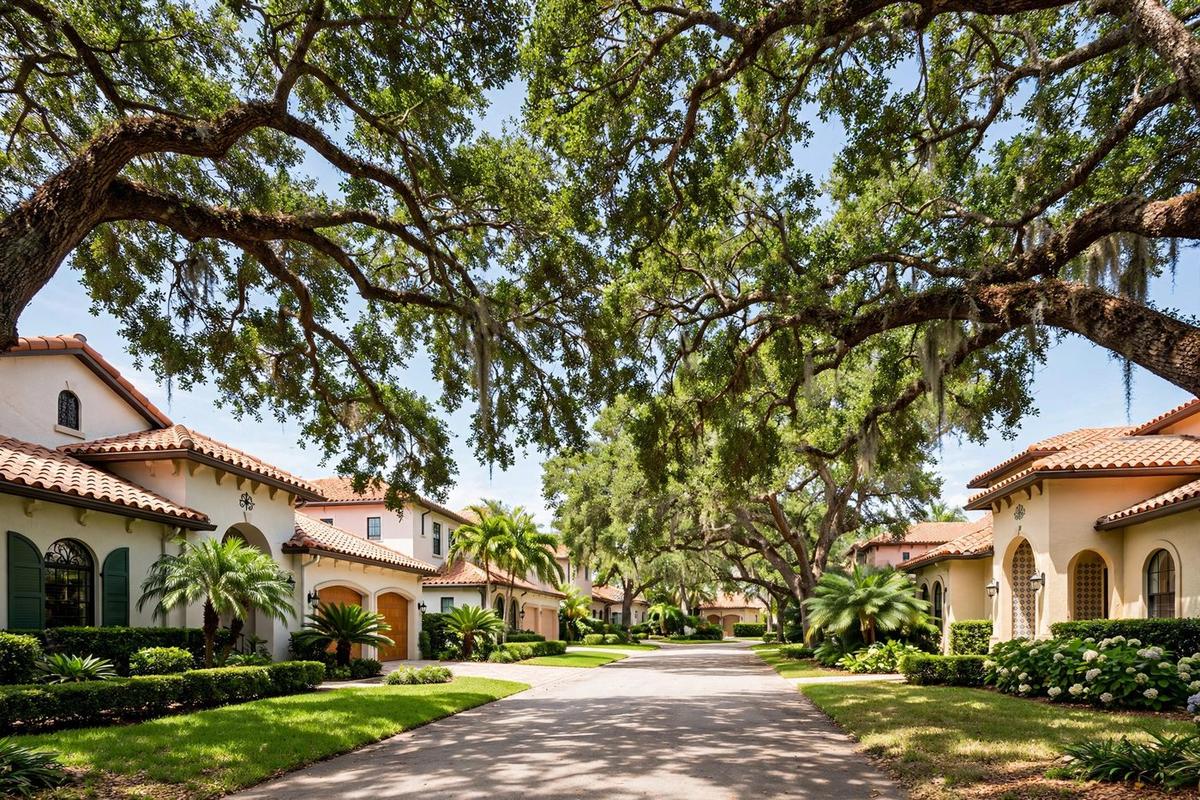
In the sample compiled for this report, 20 of 60 older homes in McLean's 22101 were acquired by builders and redeveloped with new construction, a builder-demand rate of 33.3%, ranking the neighborhood 21st of 189 neighborhoods in the builder-demand study (Legacy Off-Market, 2026). The older homes that changed hands sold for, on average, 42.6% of what new construction commands on a comparable lot in the same neighborhoods. That ratio, higher than in most off-market builder markets in the study, carries a specific meaning: McLean's older homes are expensive even to builders off-market, because the land beneath them sits inside the Beltway, minutes from downtown Washington, inside some of the most sought-after school pyramids in Northern Virginia. Here, buyers pay a premium for the dirt and still pay real money for the house. Both facts matter, and they pull in different directions.
Key Findings
- 33.3% builder-demand rate, ranked 21st of 189 neighborhoods, 20 of 60 sampled homes built in 1980 or earlier in 22101 were acquired by builders and redeveloped, placing McLean 21st on the study's composite ranking.
- 42.6% price ratio, older homes sold for just over two-fifths of new-build prices on comparable lots, a higher ratio than most off-market builder markets in the study, reflecting McLean's land premium.
- 60-home sample, one of the largest samples among this set of ten reports, which means the 33.3% rate rests on more evidence than most ZIP-level builder-demand figures a seller will ever see.
- 799 sq ft minimum lot, the smallest parcel in the sample, almost certainly an atypical lot; single-family parcels in 22101 typically run a quarter-acre and up, a reminder that minimums describe a dataset's edges, not its center.
- Two assets, two buyers, the market prices a livable older home and a development site differently, and in McLean the spread between the two outcomes is often the largest single variable in a seller's proceeds.
What does the builder-acquisition record in 22101 actually show?
It shows a steady, high-end off-market builder market, one in three older homes replaced, not a frenzy. Of 60 homes in the 22101 sample built in 1980 or earlier, 20 were acquired by builders, 33.3%, and the neighborhood ranks 21st of 189 on the study's composite ranking. The composite ranking weights sample size alongside the raw rate, which is why a 33.3% rate on 60 homes outranks higher percentages on thinner samples.
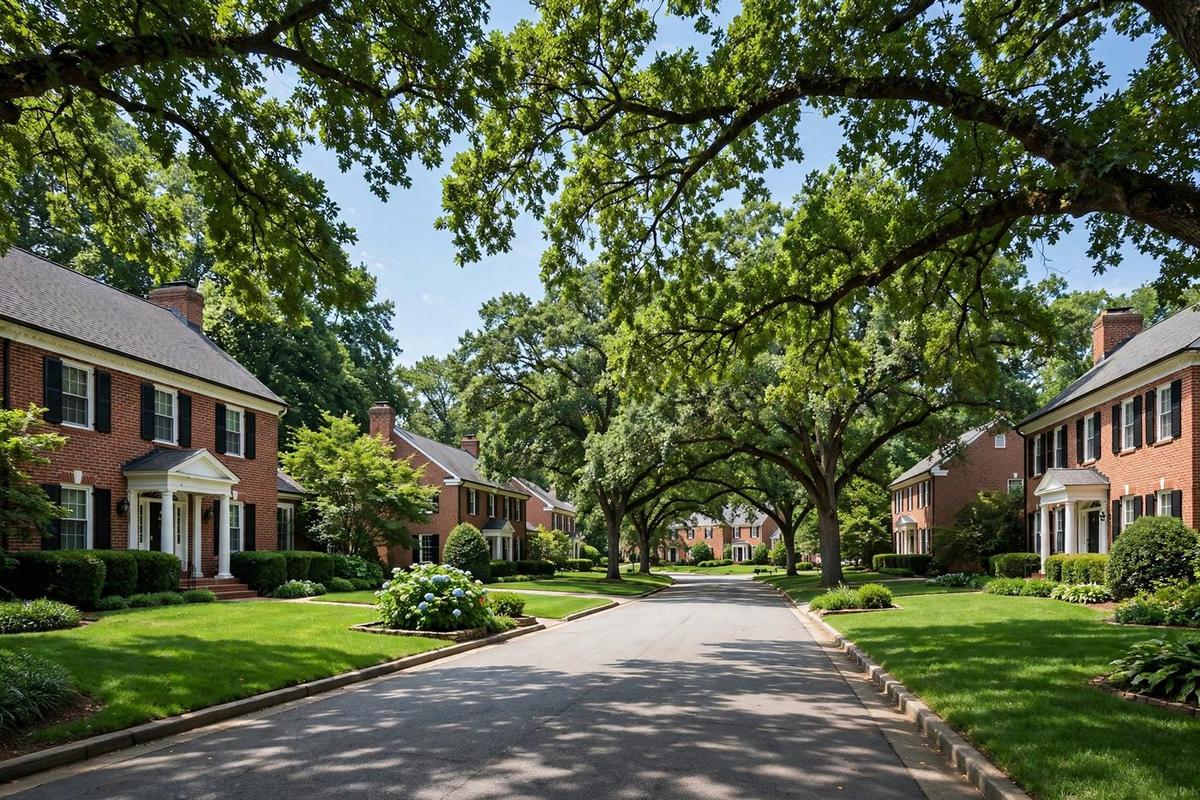
What the record describes is the familiar McLean pattern: 1950s and 1960s ramblers and split-levels on generous lots, bought by builders and custom-home buyers, acquired by builders, and replaced with 6,000-plus-square-foot new construction. Fairfax County permit records confirm the direction of the trend, with acquire-and-rebuild activity a durable feature of the inside-the-Beltway market rather than a cyclical spike (Fairfax County Department of Tax Administration, 2026).
The dynamic is not unique to McLean. Just below in the ranking, Troon and Desert Mountain sits at 22nd of 189 neighborhoods with a builder-demand rate of 52.6%, and the same land-versus-structure split drives its prices, though its older homes trade at a very different ratio.
Two cautions keep this finding honest. First, the sample is 60 homes selected for the age profile builders target, not the whole ZIP code; the true ZIP-wide builder-acquisition share is lower than 33.3%. Second, a builder-demand rate describes what buyers did with homes they already bought. It does not, by itself, price any individual property. The price ratio, taken up next, is the beginning of the answer.
How wide is the gap between an older home and a new build?
Meaningful, but narrower than in most off-market builder markets, and that narrowness is itself information. In the 22101 sample, older homes sold for an average of 42.6% of the price of new construction on comparable lots. Put in concrete terms: where a new build sells for $3,200,000, the older home nearby changed hands for roughly $1,360,000. Compare that to the study's median behavior, where older homes more commonly trade at a quarter to a third of new-build prices, and the McLean premium comes into focus. Here, the house itself, the structure, retains substantial value even in a off-market builder market.
Why? Two overlapping reasons. First, McLean's older homes are not functionally obsolete the way a 1950s ranch in a weaker market is. Many are well-built brick ramblers on lots that still work for modern life, and they sell to move-up buyers who renovate rather than clear the site. Second, the land premium lifts everything: when the dirt is worth seven figures, the total package price stays high even when the structure is discounted.
The honest reading: a 42.6% ratio means the structure is worth something, but nearly three-fifths of a new home's value still sits in the land. The same two-asset pricing shows up elsewhere in the ranking: in MacDonald Highlands, ranked 23rd of 189 neighborhoods with a builder-demand rate of 46.3%, the price gap between an older home and a new build is the seller's main leverage, priced off view corridors rather than school pyramids.
What is the lot itself worth?
More than the assessed land value suggests, and it can be estimated before any buyer calls. This is the question sellers ask most in every market in this study, and any seller can run a simplified version of the method buyers use.
Start with the new-build sale price on a comparable lot, the "as-new" value. In McLean, recent new construction on standard lots has sold in the $2.5M to $4.5M range depending on street, lot size, and school pyramid (Redfin, 2026; Zillow, 2026). Subtract the cost to build that new home, construction cost, permits, financing, and the builder's required margin, and subtract site preparation and site preparation. What remains is the residual land value: the most a rational builder can pay for the dirt and still make the project work.
Worked as an illustration, not a promise: a $3,200,000 new-build sale, minus roughly $1,300,000 in hard and soft construction costs, minus a builder margin near 20%, leaves a residual land value in the neighborhood of $1,250,000 to $1,450,000, before site-preparation costs of $30,000 to $50,000.
Three things move that number in 22101. First is the school pyramid: parcels zoned for the most sought-after high schools carry premiums visible in new-build comps but rarely in older-home listings. Second is lot size and geometry: a flat, wide, quarter-acre-plus lot that fits a modern floor plan is worth materially more than a narrow or steeply sloped one. Third is location within the ZIP: proximity to downtown McLean, the CIA corridor, and Metro access points all register in the land bid.
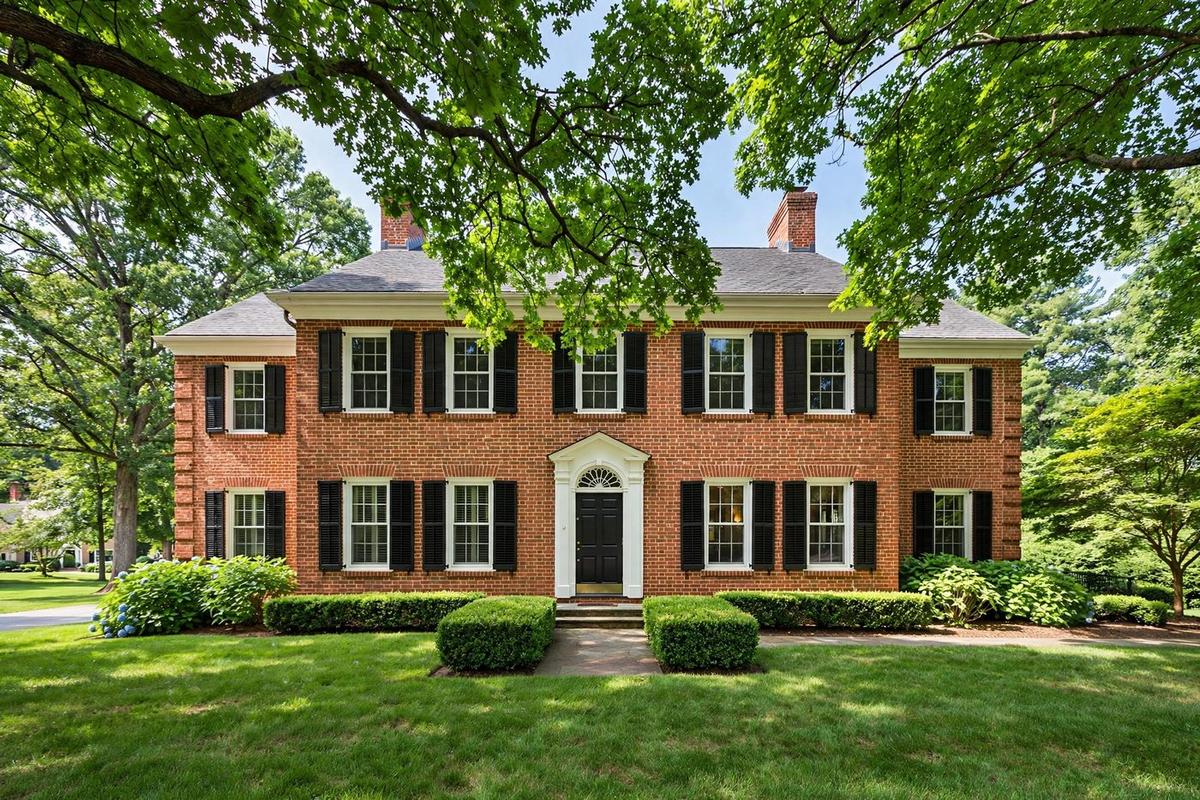
Should you fix it up or sell as-is?
In McLean, this question has a narrower answer than in most off-market builder markets, because the house itself is worth more here. The most-asked question type in the seller research behind this series is "sell as-is or fix it up?", and in 22101 the data answers it with unusual nuance.
Consider the arithmetic. A $150,000 kitchen-and-systems update on a 1962 rambler might lift the sale price by $100,000 to $140,000 if the buyer intends to live in the home, a partial but real return, and in McLean the live-in buyer pool is deep enough that the updated-home outcome is genuinely available. If the buyer intends to redevelop, the same $150,000 buys exactly $0.
The honest framing is a classification problem, not a renovation problem. If the home is genuinely livable, marketing it as a home to a family buyer can capture a real premium, because in McLean that buyer exists in numbers. If the home is dated past the point where a family buyer will pay for condition, the marginal buyer is a builder, and every dollar spent on finishes is subtracted from the land bid.
What does listing on the open market really cost?
More than the commission rate suggests, once time and taxes are priced in. Sellers underestimate the all-in cost of a traditional listing, because the commission, the visible cost, is only part of it. The full ledger: typically 5% to 6% of the sale price, split between listing and buyer's agents, so on a $1,600,000 sale, $80,000 to $96,000 off the top (National Association of Realtors, 2025). Seller-side closing costs, title, transfer and recordation taxes, prorations, add another 1% to 2%. Inspection concessions on 60-year-old homes commonly run $15,000 to $40,000.
Most underweighted is carrying cost over market time. Fairfax County real estate taxes on a $1.6M assessment run well into five figures annually, and every month a listing sits, the seller pays mortgage or equity opportunity cost, insurance, taxes, utilities, and maintenance. Three to six months of market time, normal for older homes appealing to a narrower buyer pool, costs $30,000 to $70,000 in pure hold expense.
Add the midpoints and a $1,600,000 list price nets the seller something in the low $1.4M range after a normal market cycle, before any price reduction. This is the number an off-market offer should be compared against: not the list price, but the net proceeds after the full cost of achieving it.
What does a seller actually gain by staying off-market?
Five measurable advantages, each carrying a number. The off-market path is not simply the listing with the marketing removed. It changes the economics of the transaction in five specific ways, and in a off-market builder market like 22101, each one is material.
First is privacy. There are zero showings, zero open houses, no lockbox, no for-sale sign, no neighbors tracking your timeline. The sale happens quietly, between the seller and one buyer, with nothing on public display. The neighbors find out when the deed records, not before.
Second is control over timing. A listing compresses the seller into the market's schedule; an off-market buyer negotiates the closing date around the seller's life. A direct sale can close in 7 to 21 days, compared with 60 to 120-plus days for a listed older home once market time is counted, or it can go the other way: time to find the next home, to coordinate a move, to settle an estate, even to stay past closing under a short leaseback while the new home is ready.
Third, there is no commission. The 5% to 6% that would have left the transaction at closing stays in the seller's pocket, and at McLean price points that is not a rounding error (National Association of Realtors, 2025). Fourth, there are no closing costs on the seller's side: none of the typical 1% to 2% in title, transfer, and recordation charges. Together, commissions plus closing costs commonly consume 6% to 8% of the sale price, on a $1.3M-plus McLean transaction $80,000 or more, kept by the seller. Fifth, there are no inspections or repairs. The sale is truly as-is. Nobody walks the roof with a clipboard, nobody demands the $10,000-to-$30,000 repair credit that older-home inspections routinely produce, nobody's lender orders the appraisal that kills the deal.
Priced together, those five advantages are why an off-market number should never be compared to a list price. It should be compared to the list price minus everything the listing would have cost: commission, closing costs, concessions, carrying costs, months of disruption. In 22101, that gap is routinely six figures.
How do you tell a direct buyer from a wholesaler?
Three checks, each verifiable, and they take less than an hour. The off-market space contains genuine direct buyers and intermediaries who never intend to close. A wholesaler signs your contract, then sells the contract itself to a real buyer, pocketing the spread. That spread comes directly out of your proceeds, so the wholesaler must buy for less than a direct buyer would pay.
The first check is proof of funds in the buyer's own name, dated within 30 days, showing it can fund the full purchase, not a pre-approval or a letter from a private lender. The second is a record of closed deals: recorded deeds in the buyer's entity name, checkable through the Fairfax County Circuit Court Clerk (Fairfax County Circuit Court Clerk, 2026). The third is the contract itself. A direct buyer closes in the name on the contract, with no assignment clause, and posts earnest money, usually 1% or more, that it forfeits if it walks away. An assignment clause paired with a token deposit is the tell of a contract never meant to close.
Is it a bad time to sell an older home in McLean?
For a home that is a candidate for a builder acquisition, market timing matters less than most sellers think. "Is it a bad time to sell?" makes sense for the ordinary resale market, where rates and inventory move prices quarter to quarter. The off-market builder market runs on a different cycle.
A builder's residual land calculation depends on new-build sale prices, construction costs, and the availability of builder-acquisition lots, not on mortgage rates. New construction in McLean sells to cash-heavy and well-qualified buyers whose demand has proven durable across rate cycles, anchored by federal employment and the school pyramids. Construction costs rarely fall; when they rise, they squeeze the builder's margin, not the land bid, up to the point where projects stop penciling, which in this ZIP they still do.
What does change with the cycle is the alternative. In a slow resale market, an older home listed on the MLS sits longer and takes larger reductions, and the carrying-cost math gets worse at McLean assessments. The off-market bid, anchored to new-build comps rather than resale sentiment, moves less. So it can be a bad time to list, and a perfectly ordinary time to sell off-market. Sellers should not confuse the two markets. They clear on different fundamentals, and only one of them requires the seller to wait.
Methodology and limitations
The record assembled here rests on three evidence types. The backbone is the builder-demand sample compiled for the 189-neighborhood study: 60 homes in 22101 built in 1980 or earlier, 20 acquired by builders and redeveloped, with older homes selling at an average of 42.6% of new-build prices on comparable lots (Legacy Off-Market, 2026). Around that sample sit public records, chiefly Fairfax County assessment and permit data confirming the direction of rebuild activity, and dated sold listings from Redfin and Zillow behind the new-build price ranges in the residual math (Fairfax County Department of Tax Administration, 2026; Redfin, 2026). The questions this report answers were drawn from 348 distinct real seller questions, used as a menu of question types, not quoted as data.
Several things were not done. No title search on any individual property. No inspection of any home's condition. No verification of any specific new-build sale beyond its listing record, so the illustrated price ranges are starting points, not appraisals. The residual land arithmetic is a simplified model; real builder underwriting folds in financing structure, entitlement risk, and carry assumptions this report does not attempt.
The central limitation is the sample. Sixty homes, selected for the age profile builders target, cannot describe every parcel in 22101, and the sample was built to find builder acquisitions, which tilts it. Read the 33.3% figure as evidence of a steady, high-end off-market builder market, corroborated by the permit record, not as a census of the ZIP code.
Conclusion
So what is your McLean lot really worth to a builder? On the record assembled here, the answer starts with the residual math: a new-build sale near $3.2M, minus construction and margin, leaves a land bid in the low seven figures, lifted further by school pyramids, lot geometry, and inside-the-Beltway scarcity. The 42.6% price ratio is the market's way of saying the house still counts for something here, which is exactly why the classification question, house or homesite, matters more in McLean than in markets where the structure is priced at zero.
Legacy Off-Market sources off-market deals to builders in 22101 and the other 188 neighborhoods in this study: the company buys directly from the seller off-market, then places the deal with a vetted builder, with proof of funds behind every offer. The same land-versus-structure question faces sellers a few ranks away in Vienna, ranked 28th of 189 neighborhoods with a builder-demand rate of 27.9%, where the family buyer remains a genuine rival to the builder. Sellers who want the off-market number for a 22101 property can reach the acquisitions team at 401-219-4207 or aidansowa@outlook.com, with an address and a rough timeline.
When one in three older homes on your street was bought for the dirt beneath it, what exactly is your home being priced as?
Frequently Asked Questions
How do I know if Legacy Off-Market buys in my ZIP code?
The company buys in 189 neighborhoods across 37 states, ranked by builder acquisition activity, with McLean's 22101 ranked 21st. Check your ZIP on the coverage page, or call 401-219-4207.
Will I get less selling off-market than listing with an agent?
Only the net comparison can answer that. A $1,600,000 list price in McLean typically lands in the low $1.4M range after commission, closing costs, concessions, and months of carrying costs. An off-market offer carries none of those deductions. Ask for the off-market number first; it costs nothing to obtain, and then the comparison is real.
Do I need to make repairs before selling off-market?
No. Off-market sales are as-is by definition. If your buyer is a builder, every dollar you spend on finishes is stripped with the walls. Spend only if you have verified, with evidence, that a family buyer is your marginal buyer.
How fast can an off-market sale close?
A direct cash buyer typically closes in 7 to 21 days, compared with 60 to 120-plus days for a listed older home once market time is counted. The seller sets the closing date, and staying past closing under a short leaseback is often negotiable.
How is an off-market buyer different from a wholesaler?
A direct buyer closes in its own name, with its own funds, and posts a meaningful earnest deposit it forfeits by walking away. A wholesaler ties up your property with an assignable contract it intends to sell to someone else. Ask for proof of funds, recorded prior closings, and a non-assignable contract, and watch which buyer welcomes the questions.
What does Legacy Off-Market need from me to make an offer?
The property address, your timeline, and permission to pull public records. No showings to strangers, no staging, no open houses. Call 401-219-4207 or email aidansowa@outlook.com.
Sources
- Fairfax County Department of Tax Administration, 2026. Real estate assessments and permit records, McLean VA. Official record.
- Legacy Off-Market, 2026. 189-neighborhood builder-demand study: 60 homes sampled in 22101, 20 acquired by builders, avg. older-home price 42.6% of new build. Research institute.
- National Association of Realtors, 2025. Typical seller commission structures, Washington-Arlington-Alexandria market. Industry report.
- Redfin, 2026. Recently sold homes and new construction, ZIP code 22101, McLean VA. Market data.
- U.S. Census Bureau, 2025. QuickFacts: Fairfax County, Virginia. Government data.
- Zillow, 2026. Home values and recently sold, 22101. Market data.