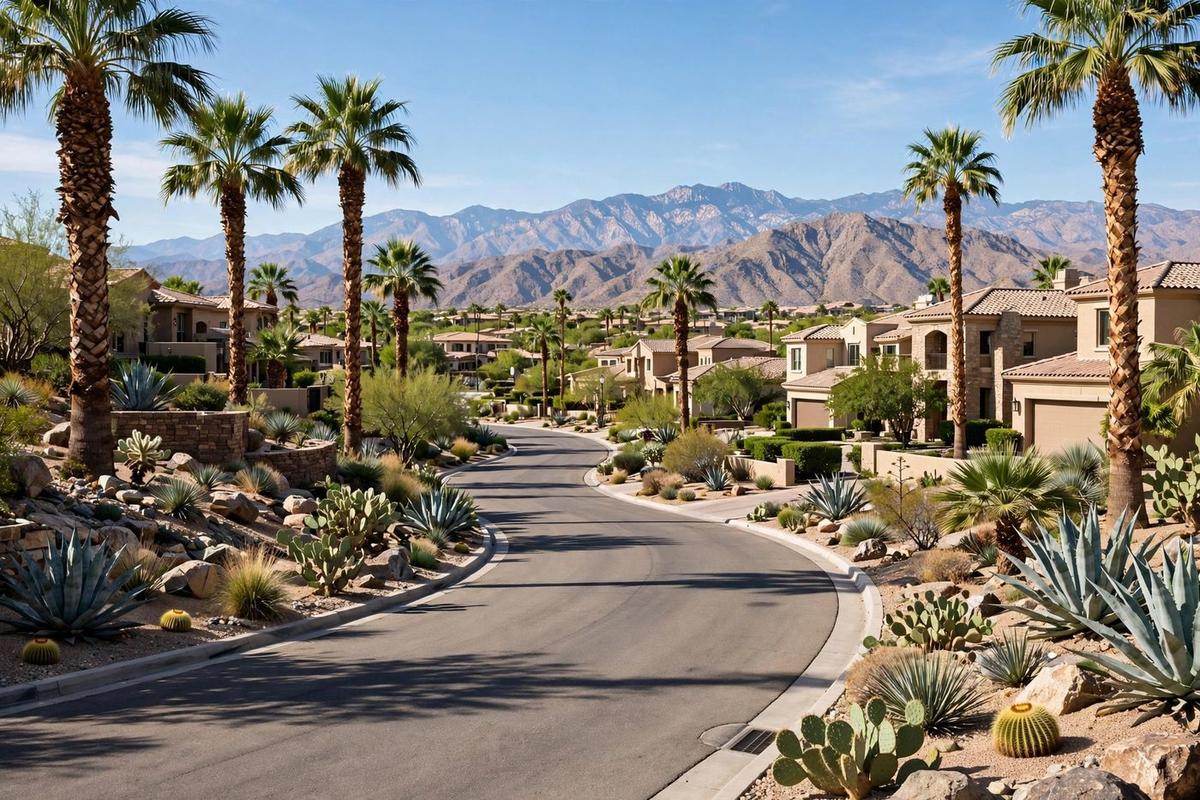
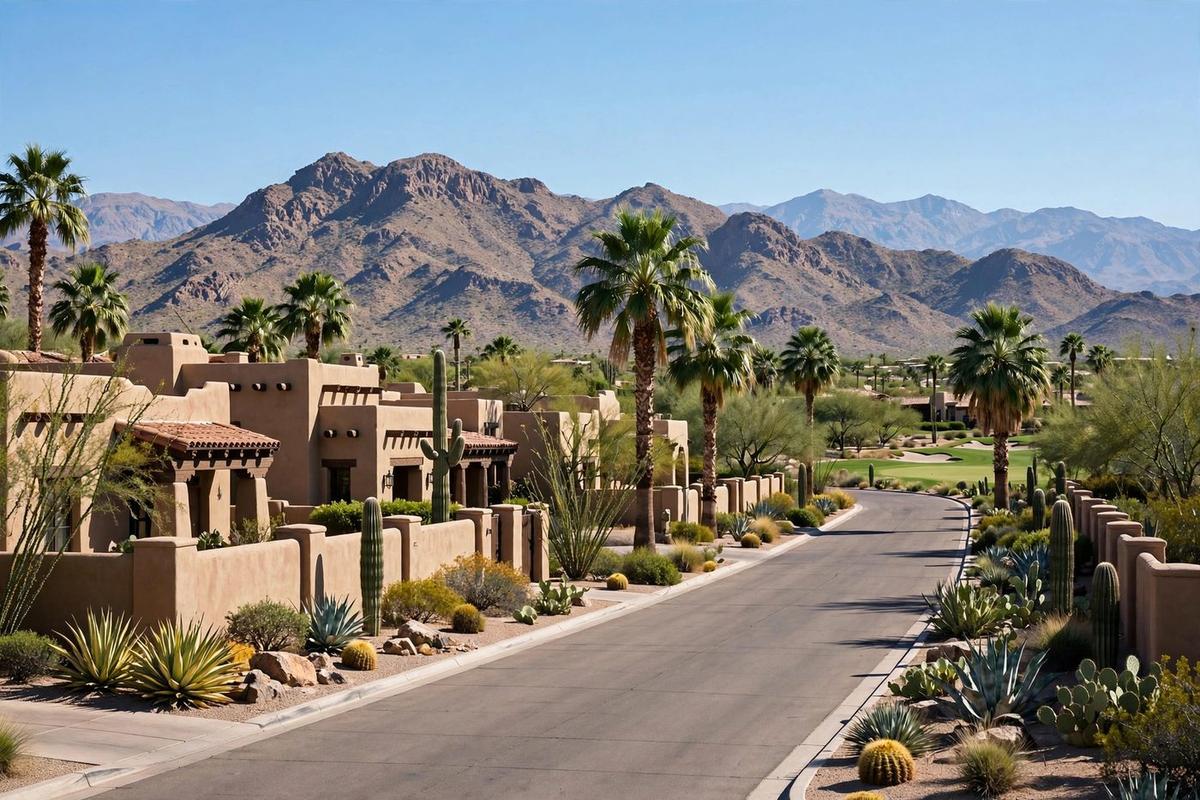
In the sample compiled for this report, 20 of 38 older homes in Scottsdale's 85262, Troon and Desert Mountain, were acquired by builders and redeveloped with new construction, a builder-demand rate of 52.6%, ranking the neighborhood 22nd of 189 neighborhoods in the builder-demand study (Legacy Off-Market, 2026). Then comes the number that breaks the study's pattern: the older homes that changed hands sold for, on average, 128.9% of what new construction commands on a comparable lot. Here, on average, it sells at a premium. That single figure reframes everything about selling in 85262: this is a off-market builder market where the house itself, the right house, in the right condition, can be worth more than the dirt.
Key Findings
- 52.6% builder-demand rate, ranked 22nd of 189 neighborhoods, 20 of 38 sampled homes built in 1980 or earlier in 85262 were acquired by builders and redeveloped, placing Troon and Desert Mountain 22nd on the study's composite ranking.
- 128.9% price ratio, older homes sold for nearly 29% more than new construction on comparable lots, one of only a handful of above-100% ratios in the 189-neighborhood study, and the finding that defines the 85262 market.
- 8,332 sq ft minimum lot, the smallest parcel in the sample; many Troon and Desert Mountain lots run far larger, with golf frontage and mountain views priced as separate assets.
- Two markets in one ZIP, dated luxury homes sell near land value to builders while updated custom estates sell at premiums to new construction.
- Condition is the entire negotiation, more than in any other market in this study, the spread between an as-is sale and a renovated sale turns on verifiable condition, not on sentiment.
What does the builder-acquisition record in 85262 actually show?
It shows an active luxury builder-acquisition market, more than half of sampled older homes replaced. Of 38 homes in the 85262 sample built in 1980 or earlier, 20 were acquired by builders and redeveloped, 52.6%, and the neighborhood ranks 22nd of 189 on the study's composite ranking. The composite ranking weights sample size alongside the raw rate, so a 52.6% rate on 38 homes lands where the evidence supports: strong rate, mid-sized sample.
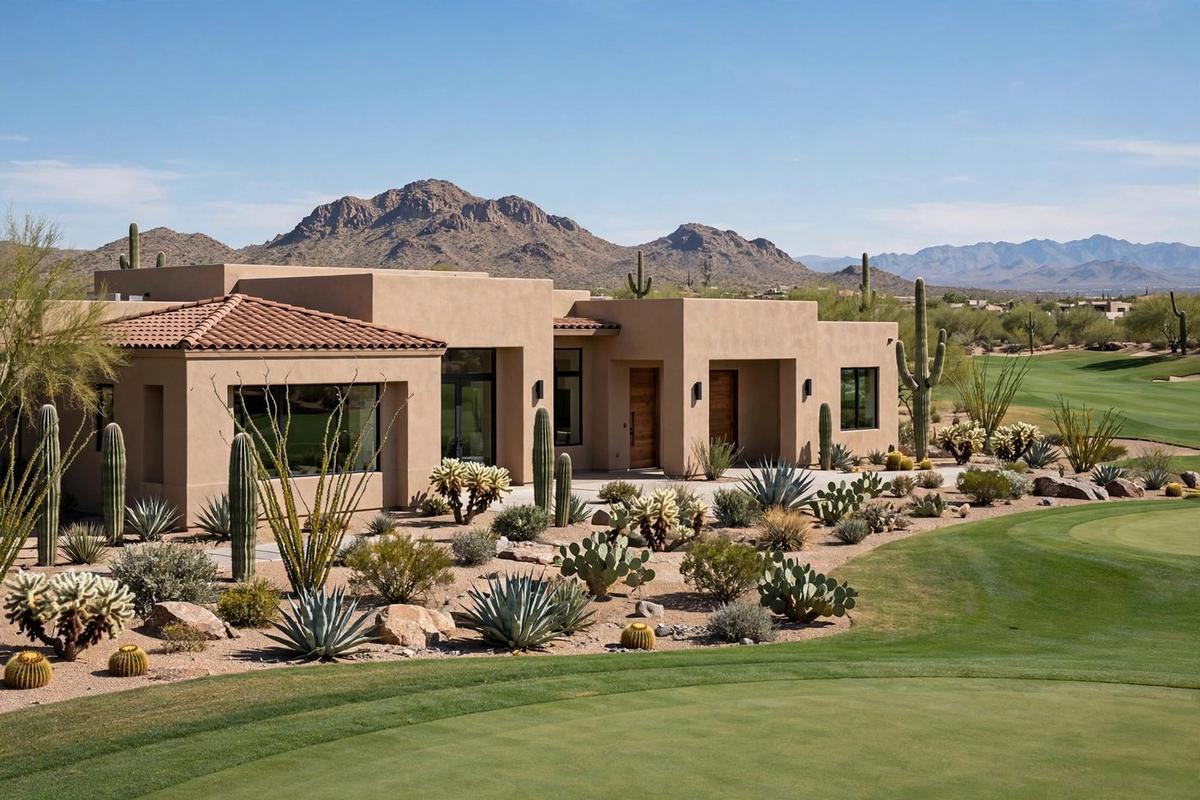
What the record describes is the desert-luxury builder-acquisition pattern: 1980s and 1990s custom homes in Troon, Troon North, and Desert Mountain, guard-gated golf-course communities in North Scottsdale, bought and replaced with larger, more current luxury construction. Maricopa County permit records confirm the direction of the trend, with acquire-and-rebuild a durable feature of the North Scottsdale luxury market (Maricopa County Assessor, 2026).
The pattern is not confined to this ZIP. Higher in the same ranking, Paradise Valley Core sits at 10th of 189 neighborhoods with a builder-demand rate of 60.8%, and its older homes trade at a very different ratio to new construction.
But the builder-acquisition record alone misleads here more than in most ZIP codes, because 18 of the 38 sampled homes were not acquired by builders, and, as the next section shows, those homes did not sell at discounts. In 85262 the builder-demand rate and the price ratio tell opposite stories, and a seller who reads only the first one will misprice by a wide margin. Two cautions keep this finding honest. First, the sample is 38 homes selected for the age and profile builders buy, not the whole ZIP code; the true ZIP-wide builder-acquisition share is lower than 52.6%. Second, a builder-demand rate describes what buyers did with homes they already bought. It does not price any individual property. That requires the price record, and the price record in this ZIP is strange.
Why do older homes here sell for more than new construction?
Because in guard-gated luxury enclaves, the "old home" is often a custom estate the market values above a new spec build. The 128.9% ratio, older homes averaging nearly 29% more than new construction on comparable lots, is one of only a handful of above-100% figures in the full 189-neighborhood study, and it demands a careful reading, because averages hide exactly the composition effects that create it.
Three things are likely happening at once. First, the "older homes" in this sample include $2M-plus custom estates on premium lots, golf frontage, mountain views, mature desert landscaping, whose location value exceeds anything a new build on an interior lot can match. A 1990s custom home on the 7th fairway is not competing with new construction; it is competing with other fairway estates, and it wins on lot. Second, the "new construction" in the sample may skew toward smaller spec homes, which sell for less per project than the large customs they sit beside. When the two groups being averaged are different products, the ratio describes the mix, not a discount. Third, renovation: many older luxury homes here have been substantially updated, and an updated custom estate in a guard-gated community can legitimately outprice new construction on a lesser lot.
The honest conclusion is not "your old home is worth more than new." It is that 85262 contains two distinct markets, dated homes that sell near land value to builders, and updated or well-located estates that sell at premiums, and the 128.9% average blends them. A seller's first job is to determine, with evidence, which market their property belongs to.
What is the lot itself worth?
In 85262, the lot is priced as three separate assets: dirt, view, and golf. The residual land method still applies, start with the new-build sale price on a comparable lot, subtract construction cost, margin, and site preparation, but the inputs look different in desert luxury. Recent new construction in Troon and Desert Mountain has sold in the $2M to $5M-plus range depending on community, lot, and view (Redfin, 2026), while custom rebuilds on premier lots reach well beyond that.
Worked as an illustration, not a promise: a $3,500,000 new-build sale, minus roughly $1,400,000 in hard and soft construction costs, minus a builder margin near 20%, leaves a residual land value in the neighborhood of $1,350,000 to $1,550,000, before site-preparation costs of $30,000 to $50,000. That residual is the number a land buyer is negotiating against when the home is a candidate for a builder acquisition.
What moves that number here is specific to the submarket. View corridors, city lights, mountain backdrops, golf course frontage, are priced as separate line items in a way they are not in ordinary suburbs; a view lot and an interior lot of identical size can differ by several hundred thousand dollars in the land bid. Lot size matters too: at an 8,332 sq ft sample minimum, and many parcels running to half an acre or more, the buildable envelope is what the builder is really buying. And community matters: guard-gated Desert Mountain and Troon carry premiums over non-gated surroundings that show up in the new-build comps.
Should you renovate or sell as-is in a luxury off-market builder market?
Here, uniquely, the honest answer is sometimes renovate, but only with a buyer's eyes, not a homeowner's. The most-asked question type in the seller research behind this series is "sell as-is or fix it up?", and in 85262 the data refuses the usual builder-market answer.
In most builder-demand ZIP codes, pre-sale renovation is the most expensive way to learn what the land is worth, because the modal buyer assigns improvements no value. In 85262, the modal buyer is split: roughly half the sampled homes went to builders, and roughly half went to buyers who paid premiums for condition and location. A targeted update, systems, kitchen, outdoor living, the finishes a luxury buyer actually prices, on an already well-located estate can return real money.
The trap is renovating the wrong home. If the property is a candidate for a builder acquisition, dated beyond what updating cures, every dollar spent on finishes is a dollar the builder subtracts via site preparation. The distinguishing test: get the renovated-resale number from dated comps of updated estates, and get the land bid from the residual math. If the spread between them is wide, the property is a land sale wearing a house costume.
What does listing on the open market really cost?
In luxury, the invisible costs scale with the price. Sellers underestimate the all-in cost of a traditional listing, because the commission, the visible cost, is only part of it. The full ledger: typically 5% to 6% of the sale price in the Scottsdale luxury market, so on a $2,400,000 sale, $120,000 to $144,000 off the top (National Association of Realtors, 2025). Seller-side closing costs, title, transfer fees, HOA transfer charges, prorations, add another 1% to 2%. Luxury listings routinely spend $15,000 to $40,000 on staging, photography, and pre-listing cosmetic work.
Then come concessions: buyers inspecting 30- to 40-year-old luxury homes negotiate repair credits and price reductions after inspection, often $20,000 to $60,000 on older inventory. And carrying cost: luxury homes move slower than the median, three to nine months is normal, and at Scottsdale carrying costs each month costs thousands. Six months of market time can cost $40,000 to $90,000 in pure hold expense.
Add the midpoints and a $2,400,000 list price nets the seller something in the low $2.1M range after a normal luxury market cycle, before any price reduction. This is the number an off-market offer should be compared against: not the list price, but the net proceeds after the full cost of achieving it.
What do luxury sellers gain by skipping the listing?
Five measurable advantages, and at luxury prices, the numbers are large. The off-market path changes the economics of the transaction in five specific ways, each carrying a figure.
First is privacy. Zero showings, zero open houses, no lockbox, no public marketing period, no neighbors watching the photographer's truck and doing the math on your equity. In a guard-gated community where discretion is part of the product, the sale happens between the seller and one buyer, with nothing on public display. The neighbors find out when the deed records, not before.
Second is control over timing. A listing compresses the seller into the market's schedule; an off-market buyer negotiates the closing date around the seller's life. A direct sale can close in 7 to 21 days, compared with 60 to 120-plus days for a listed older luxury home once market time is counted, or it can go the other way: time to find the next home, to coordinate a relocation, even to stay past closing under a short leaseback.
Third, there is no commission. None of the typical 5% to 6% (National Association of Realtors, 2025), and at luxury prices that line item is enormous: on a $2.4M sale, $120,000 to $144,000 stays with the seller. Fourth, there are no closing costs on the seller's side: none of the typical 1% to 2% in title, transfer, and HOA transfer charges. Commissions plus closing costs commonly consume 6% to 8% of the sale price, on a $2.4M Troon transaction $140,000 or more, kept by the seller. Fifth, there are no inspections or repairs. The sale is truly as-is: no $10,000-to-$30,000 inspection repair credits, no renegotiation after the home inspection, no appraisal from the buyer's lender resetting the price.
Priced together, those five advantages are why an off-market number should never be compared to a list price. It should be compared to the list price minus everything the listing would have cost. In 85262, that gap is routinely in the mid six figures.
How do you tell a direct buyer from a wholesaler?
Three checks, and in a luxury market the spread a wholesaler can extract runs into six figures, which makes them matter more, not less. A wholesaler signs your contract, then sells the contract itself to a real buyer, pocketing the spread from your equity. That spread is why an undisclosed wholesaler must buy for less than a disclosed operator with a lined-up builder would pay.
Here is the honest version of our role: Legacy Off-Market is a wholesaler. The company buys directly from the seller off-market, then places the deal with a vetted builder, with the mechanism disclosed in the contract. The operator to avoid is the one who never discloses the mechanism at all: signs with no intent to close, shops the contract, and profits from your equity without your knowledge.
First check: proof of funds in the buyer's own name, dated within 30 days, covering the full purchase price. At luxury prices, partial proof is no proof. Second: a record of closed deals, recorded deeds in the buyer's entity name, checkable through the Maricopa County Recorder (Maricopa County Recorder, 2026). Third: the contract itself. Who closes, in what name, and what the assignment terms are, plus earnest money, usually 1% or more, that the buyer forfeits if it walks away. An undisclosed assignment clause paired with a token deposit is the tell of a contract never meant to close.
What if you only live in Scottsdale part of the year?
Distance makes every cost in the listing ledger worse, and every off-market advantage larger. Many Troon and Desert Mountain owners are seasonal or second-home owners, and the seller questions in this study include the out-of-state variant explicitly: how do you sell a house you don't live in?
Start with the carrying math. A vacant luxury home still pays the HOA, the insurance (vacancy clauses often raise it), the pool service, the landscape contract, and the climate-control utility bill through a Scottsdale summer. Showings on a vacant luxury home require a local keyholder and a cleaning service on standby, and inspection negotiations and contractor access all have to be handled remotely or through a representative, with every round trip of negotiation adding weeks.
The off-market format was built for this seller. No staging, no showings, no months of vacant carrying costs, no remote contractor management, one as-is transaction, on the seller's timeline, closable while the seller is in another state. For the part-time owner, the MLS side of the ledger carries extra months and extra management that the local seller never faces.
Methodology and limitations
This report rests on three evidence types. The core is the builder-demand sample compiled for the 189-neighborhood study: 38 homes in 85262 built in 1980 or earlier, 20 acquired by builders and redeveloped, with older homes selling at an average of 128.9% of new-build prices on comparable lots (Legacy Off-Market, 2026). Supporting it are public records, chiefly Maricopa County Assessor parcel data and Recorder deed records, used to confirm that scrape-and-rebuild activity runs in the direction the sample suggests, and dated sold listings from Redfin and Zillow behind the new-build price ranges in the residual math (Maricopa County Assessor, 2026; Redfin, 2026). The questions answered here were drawn from 348 distinct real seller questions, used as a menu of question types, not quoted as data.
Not verified: no title search on any property, no inspection of any home's condition, and no specific new-build sale beyond its listing record, so the illustrated price ranges are starting points, not appraisals. The residual land arithmetic is a simplified model; real builder underwriting adds financing structure, entitlement risk, and carry assumptions this report does not attempt.
The central limitation is the sample, compounded by composition. Thirty-eight homes, selected for the age and profile builders buy, cannot describe every parcel in 85262, and the 128.9% ratio blends custom estates with spec builds, two different products. Treat the ratio as evidence that condition and location carry unusual weight in this ZIP, not as a promise that any particular older home will outprice new construction.
Conclusion
So does a builder-buyer ZIP code mean your luxury home sells for less? On the record assembled here, 85262 refuses the question's premise. More than half of sampled older homes were acquired by builders, and yet the older homes that sold averaged 128.9% of new-build prices. Both facts are true at once, because this ZIP contains two markets: dated homes that trade near land value to builders, and updated or well-located estates that command premiums from luxury buyers. The seller's entire negotiation is the classification: which market their property belongs to. The same split-market logic appears in Kierland, ranked 17th of 189 neighborhoods with a builder-demand rate of 85.2%, where the builder share runs even higher.
The same classification discipline applies one rank away in MacDonald Highlands, ranked 23rd of 189 neighborhoods with a builder-demand rate of 46.3%, where view and elevation play the role that golf frontage plays here. The cost of a traditional luxury listing, commission, staging, concessions, months of carrying costs, is the number every off-market offer should be measured against.
Legacy Off-Market sources off-market deals to builders in 85262 and the other 188 neighborhoods in this study, buying directly from sellers off-market and placing each deal with a vetted builder, with proof of funds and recorded closings behind every offer. Sellers who want the off-market number can reach the acquisitions team at 401-219-4207 or aidansowa@outlook.com, with an address and a rough timeline.
When half the homes on your street were bought for their lots and the other half sold at premiums for their condition, which half is your home in?
Frequently Asked Questions
How do I know if Legacy Off-Market buys in my ZIP code?
The company buys in 189 neighborhoods across 37 states, ranked by builder-demand activity, with Troon and Desert Mountain's 85262 ranked 22nd. Check your ZIP on the coverage page, or call 401-219-4207.
Will I get less selling off-market than listing with an agent?
Only the net comparison can answer that. A $2,400,000 list price typically lands in the low $2.1M range after commission, staging, seller-side closing costs, concessions, and months of carrying costs. An off-market offer carries none of those deductions. Get the off-market number first, then the comparison is real.
Do I need to make repairs before selling off-market?
No. Off-market sales are as-is by definition. If your home is a candidate for a builder acquisition, pre-sale renovation returns exactly zero. The only exception in 85262 is the updated luxury estate where a family buyer, not a builder, is the marginal buyer.
How fast can an off-market sale close?
A direct cash buyer typically closes in 7 to 21 days, compared with 90 to 180-plus days for a listed older luxury home once market time is counted. The seller sets the closing date, and a short leaseback past closing is often negotiable.
Is Legacy Off-Market a wholesaler?
Yes. Legacy Off-Market is a wholesaler: it buys directly from sellers off-market and places each deal with a vetted builder, with the mechanism disclosed in the contract. Ask for proof of funds, recorded prior closings, and disclosed assignment terms.
What does Legacy Off-Market need from me to make an offer?
The property address, your timeline, and permission to pull public records. No showings to strangers, no staging, no open houses. Call 401-219-4207 or email aidansowa@outlook.com.
Sources
- Legacy Off-Market builder-demand sample, 2026. 189-neighborhood builder-demand study: 38 homes sampled in 85262, 20 acquired by builders, avg. older-home price 128.9% of new build. Proprietary sample; methodology in the limitations section above. Market data.
- Maricopa County Assessor, 2026. Parcel and permit records, Scottsdale AZ. Official record.
- National Association of Realtors, 2025. Typical seller commission structures, Phoenix-Mesa market. Industry report.
- Redfin, 2026. Recently sold homes and new construction, ZIP code 85262, Scottsdale AZ. Market data.
- U.S. Census Bureau, 2025. QuickFacts: Maricopa County, Arizona. Government data.
- Zillow, 2026. Home values and recently sold, 85262. Market data.