In the sample compiled for this report, 19 of 28 older homes in Sarasota's 34239, Southside Village and Cherokee Park, were acquired by builders and redeveloped with new construction, a builder-demand rate of 67.9%, ranking the neighborhood 24th of 189 neighborhoods in the builder-demand study (Legacy Off-Market, 2026). The older homes that changed hands sold for, on average, 22.4% of what new construction commands on a comparable lot in the same streets. That ratio, among the lowest in this study, is the whole story in one number: in this ZIP code, buyers are overwhelmingly not buying the house. They are buying the land it sits on, a short drive from downtown Sarasota and Sarasota Bay, and pricing the structure at or near zero. When more than two-thirds of older homes that sell go to builders, the question is not whether your home might be a builder acquisition. The question is what the dirt is worth.
Key Findings
- 67.9% builder-demand rate, ranked 24th of 189 neighborhoods, 19 of 28 sampled homes built in 1980 or earlier in 34239 were acquired by builders and redeveloped, placing the neighborhood 24th on the study's composite ranking.
- 22.4% price ratio, older homes sold for barely more than a fifth of new-build prices on comparable lots, among the lowest ratios in this study, meaning nearly four-fifths of a new home's value sits in the land.
- 6,200 sq ft minimum lot, the smallest parcel in the sample; Southside Village lots are compact, which concentrates the land value per square foot.
- Insurance reprices the old house, Florida's insurance market discounts older, non-fortified homes heavily, widening the gap between old and new beyond what structure alone explains.
- One decision matters most, whether the seller captures the land value directly or discounts it away through commissions, concessions, and months of market time.
What does the builder-acquisition record in 34239 actually show?
It shows one of the most intense builder-acquisition markets in the study, more than two in three older homes replaced. Of 28 homes in the 34239 sample built in 1980 or earlier, 19 were acquired by builders, 67.9%, and the neighborhood ranks 24th of 189 on the study's composite ranking. The composite ranking weights sample size alongside the raw rate, which tempers the headline: 28 homes is a modest sample, and smaller samples produce noisier rates.
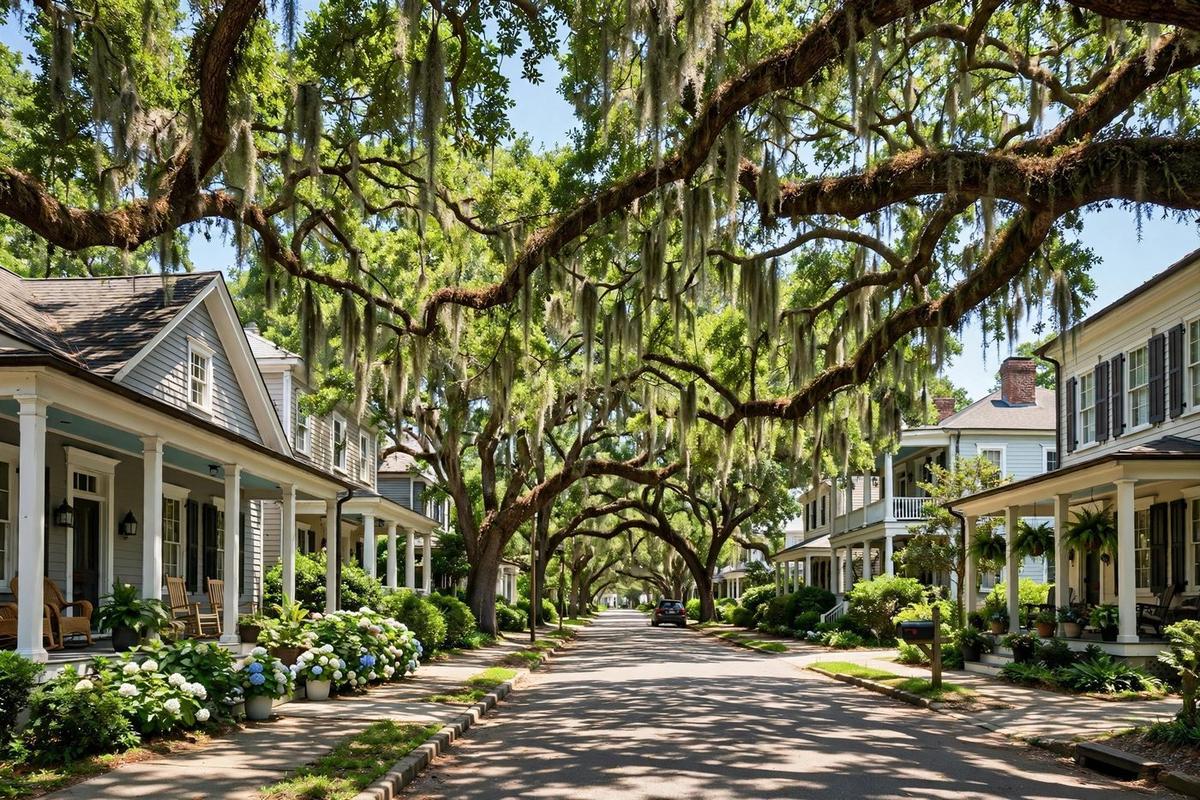
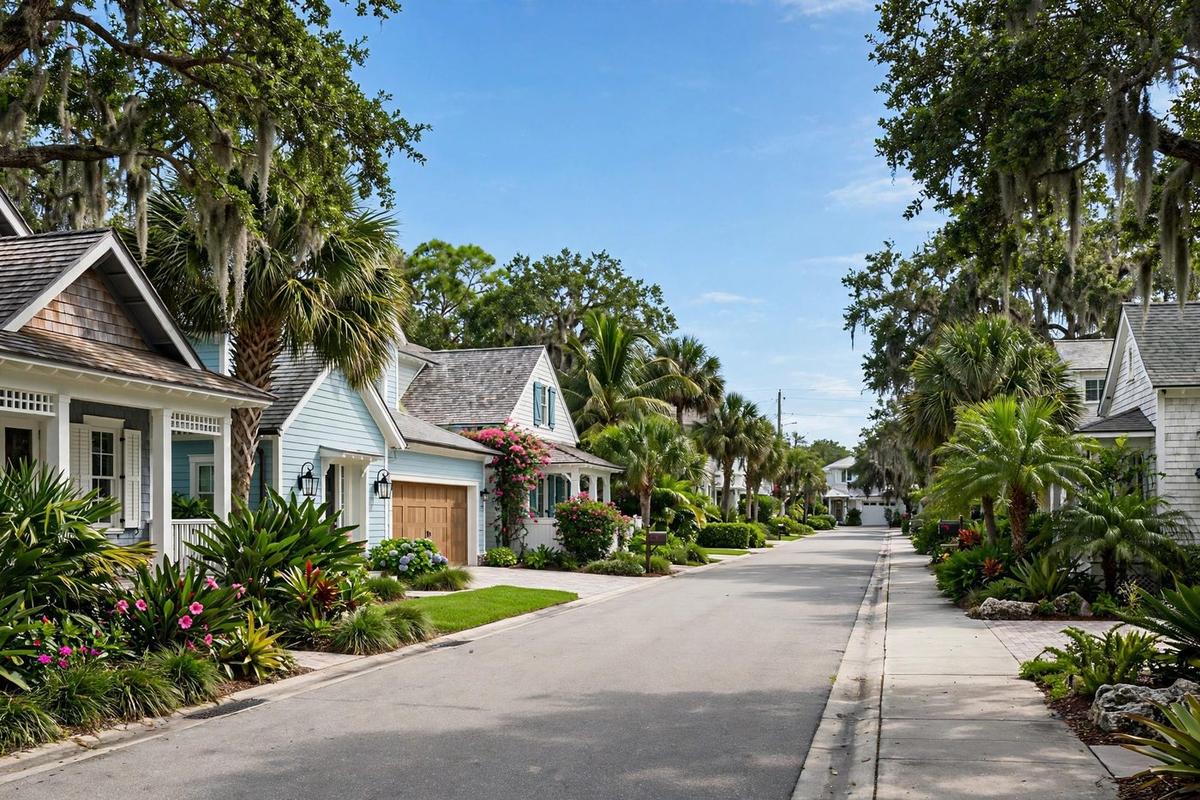
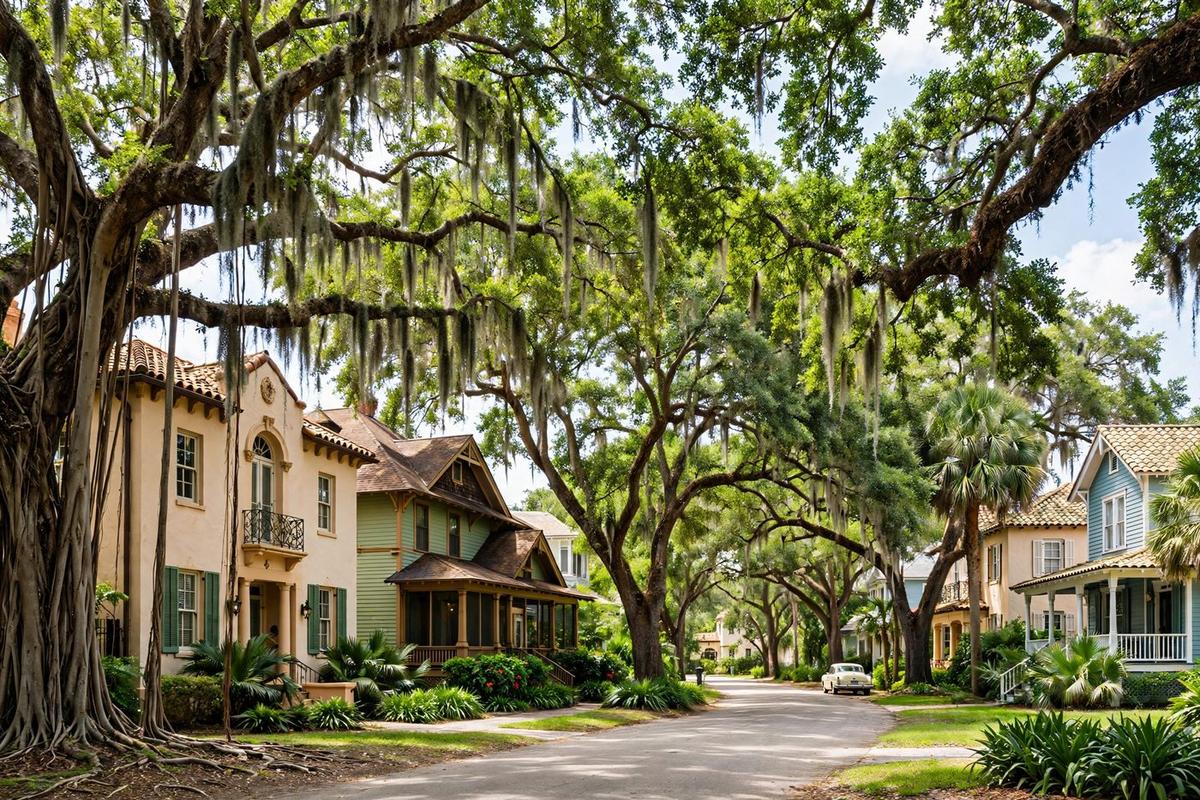
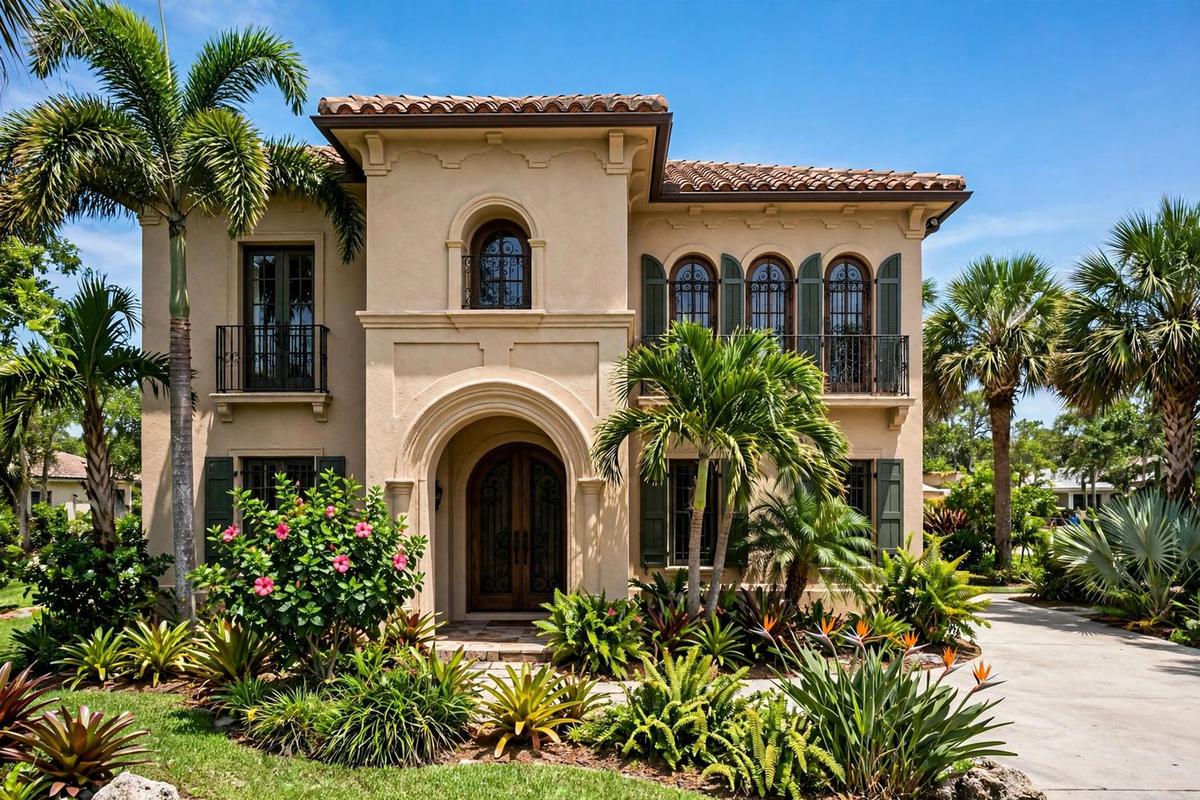
What the record describes is the Southside Village pattern: 1940s through 1960s cottages and ranch homes on compact lots south of downtown Sarasota, near Cherokee Park and the bayfront, bought by builders, acquired by builders, and replaced with new two-story construction that fills the lot toward the setback lines. Sarasota County permit records confirm the direction of the trend, with infill rebuild activity a durable feature of the close-in Sarasota market (Sarasota County Property Appraiser, 2026).
The intensity has company. Across the peninsula in East Delray, ranked 26th of 189 neighborhoods with a builder-demand rate of 64.3%, builders run the same close-in builder playbook on compact coastal lots.
Two cautions keep this finding honest. First, the sample is 28 homes selected for older-home characteristics, not the whole ZIP code; the true ZIP-wide builder-acquisition share is lower than 67.9%. Second, a builder-demand rate describes what buyers did with homes they already bought. It does not, by itself, tell a seller what their home will fetch. Nine of the 28 sampled homes were not acquired by builders. The price record, taken up next, is what separates the two outcomes, and in 34239 the price record is stark.
How wide is the gap between an older home and a new build?
Enormous, among the widest in this study. In the 34239 sample, older homes sold for an average of 22.4% of the price of new construction on comparable lots. Put in concrete terms: where a new build sells for $1,500,000, the older home on the next street over changed hands for roughly $336,000. The $1.16 million difference is not explained by finishes and fixtures. It is explained by the fact that one buyer purchased a house and the other purchased a homesite minutes from downtown Sarasota and the bay.
This ratio deserves a careful reading, because averages hide condition, and in Florida, they hide insurance. The 22.4% figure blends updated older homes, which sell to families who will live in them, with functionally obsolete ones that sell to builders. But there is a Florida-specific force widening the gap beyond condition: insurance. An older, non-fortified home near the coast carries insurance costs several multiples of a new, fortified build's, and buyers price that carrying cost into what they will pay for the old house. The structure is discounted twice: once for its age, once for what it costs to insure.
A steeper version of the same ratio appears in Pinecrest, ranked 20th of 189 neighborhoods with a builder-demand rate of 84.0%. The finding for 34239 stands: the market does not price "a house." It prices two different assets, a livable home and a development site, and the seller's proceeds depend on which asset the buyer believes they are acquiring.
What is the lot itself worth?
In Southside Village, the lot is priced on proximity, to downtown, to the bay, to the streets buyers already want. The residual land method still applies: start with the new-build sale price on a comparable lot, subtract construction cost, margin, and site preparation. Recent new construction in 34239 has sold in the $1.2M to $2.2M range depending on street and lot size (Redfin, 2026).
Worked as an illustration, not a promise: a $1,600,000 new-build sale, minus roughly $650,000 in hard and soft construction costs, minus a builder margin near 20%, leaves a residual land value in the neighborhood of $600,000 to $700,000, before site-preparation costs of $20,000 to $35,000.
Three things move that number in 34239. First is location within the ZIP: Cherokee Park and the streets nearest downtown and the bayfront carry premiums that show up in the new-build comps but rarely in the older-home listings. Second is lot size: at a 6,200 sq ft sample minimum, Southside Village lots are compact, which means every foot of width matters to a builder's floor plan, and the per-square-foot land value runs high. Third is the insurance reset: a new build on the lot will carry fortified-construction insurance pricing, while the existing older home will not, and that future savings is part of what the builder's residual captures.
Should you fix it up or sell as-is?
In a 67.9%-builder-acquisition markets, renovation is usually the most expensive way to learn what the land is worth. This is the most-asked question type in the seller research behind this series, "sell my house as-is or fix it up?", and in 34239 the data answers it sharply.
Consider what a renovation buys. A $90,000 kitchen-and-bath update on a 1955 cottage might lift the sale price by $50,000 to $70,000 if the buyer intends to live in the home, a partial return, before the months of disruption. If the buyer intends to clear the lot, the same $90,000 buys exactly $0. In a ZIP code where 67.9% of sampled older homes were acquired by builders, the probability-weighted return on pre-sale renovation is poor, because the modal buyer assigns the improvements no value at all.
Florida adds a wrinkle worth naming honestly. Some updates, a new roof, impact windows, fortified construction, do move the insurance number, which moves what a live-in buyer will pay. But those are systems investments with partial returns, not cosmetic renovations, and they only pay if the buyer intends to live in the home. If the marginal buyer is a builder, even a new roof is acquired by builders with the rest. The classification question comes first: is the property a house someone will live in, or a lot someone will build on?
What does listing on the open market really cost?
More than the commission rate suggests, once time and insurance are priced in. The full ledger: typically 5% to 6% of the sale price in the Sarasota market, so on a $550,000 sale, $27,500 to $33,000 off the top (National Association of Realtors, 2025). Seller-side closing costs, title, documentary stamp taxes, prorations, add another 1% to 2%. Concessions: buyers inspecting 70-year-old cottages negotiate repair credits and price reductions after inspection, often $10,000 to $25,000, with four-point and wind-mitigation inspections giving them the documentation to do it.
Then carrying cost over market time: every month a listing sits, the seller pays mortgage or equity opportunity cost, insurance, taxes, utilities, and maintenance. In Florida, the insurance line alone on an older home can run several hundred dollars a month, and three to six months of market time, normal for older homes, costs $12,000 to $30,000 in pure hold expense.
Add the midpoints and a $550,000 list price nets the seller something in the mid-$400,000s after a normal market cycle, before any price reduction. This is the number an off-market offer should be compared against: not the list price, but the net proceeds after the full cost of achieving it.
What is the off-market sale actually worth to a Sarasota seller?
Five measurable advantages, and the insurance line makes each one larger. The off-market path changes the economics of the sale in five specific ways, each carrying a number.
First is privacy. Zero showings, zero open houses, no lockbox, no public marketing period, no neighbors tracking the photographer's visits and doing the math on your equity. The sale happens between the seller and one buyer, with nothing on public display. The neighbors find out when the deed records, not before.
Second is control over timing. A listing compresses the seller into the market's schedule; an off-market buyer negotiates the closing date around the seller's life. A direct sale can close in 7 to 21 days, compared with 60 to 120-plus days for a listed older home once market time is counted, or it can go the other way: time to find the next home, to coordinate a move, to settle an estate, even to stay past closing under a short leaseback while the new home is ready.
Third, there is no commission. None of the typical 5% to 6% (National Association of Realtors, 2025): on a $550,000 sale, $27,500 to $33,000 stays with the seller. Fourth, there are no closing costs on the seller's side: none of the typical 1% to 2% in title, documentary stamp taxes, and prorations. Commissions plus closing costs commonly consume 6% to 8% of the sale price, on a $550,000 Sarasota transaction roughly $35,000 to $45,000, kept by the seller. Fifth, there are no inspections or repairs. The sale is truly as-is: no $10,000-to-$25,000 repair credits after the four-point and wind-mitigation inspections, no renegotiation, no appraisal from the buyer's lender resetting the price.
Priced together, those five advantages are why an off-market number should never be compared to a list price. It should be compared to the list price minus everything the listing would have cost, including the insurance carrying costs that inflate every month of market time in Florida.
How do you tell a direct buyer from a wholesaler?
Three checks, each verifiable, and they take less than an hour. A bad-faith wholesaler signs your contract, then sells the contract itself to a real buyer, pocketing the spread from your equity. That spread is why a dishonest operator must buy for less than an honest wholesaler would pay.
First check: proof of funds in the buyer's own name, dated within 30 days, covering the full purchase price, not a pre-approval or a letter from a private lender. Second: a record of closed deals, recorded deeds in the buyer's entity name, checkable through the Sarasota County Clerk of Court (Sarasota County Clerk of Court, 2026). Third: the contract itself. An honest wholesaler buys under its own contract and closes with the seller, posting earnest money, usually 1% or more, that it forfeits if it walks away. An assignment clause paired with a token deposit is the tell of a contract never meant to close.
Does insurance change the math on selling an older Sarasota home?
Yes, it widens every gap in this report, and sellers who ignore it misprice twice. Florida's property insurance market is the invisible hand on every older-home transaction in 34239, and it deserves its own section because it moves numbers that look, at first glance, like pure structure discounts.
The mechanism is straightforward. An older, non-fortified home near the coast costs multiples more to insure than a new, fortified build, and in some cases the older home is difficult to insure at any standard price. A live-in buyer prices that annual cost into their offer: every thousand dollars of yearly premium is capitalized into a lower purchase price. That is part of why the 22.4% price ratio is so low, the old house is discounted not only for its age but for what it costs to carry.
The builder's side of the trade sees the same fact in reverse. A new build on the lot resets the insurance equation entirely: fortified construction, current codes, insurable at standard rates. Part of the residual land value computed earlier is, economically, the value of escaping the old home's insurance burden. What the insurance math does not do is change the classification question. It makes the old-house outcome worse and the land outcome relatively better, which sharpens the decision rather than altering it.
Methodology and limitations
This report rests on three evidence types. The core is the builder-demand sample compiled for the 189-neighborhood study: 28 homes in 34239 built in 1980 or earlier, 19 acquired by builders and redeveloped, with older homes selling at an average of 22.4% of new-build prices on comparable lots (Legacy Off-Market, 2026). Supporting it are public records, chiefly Sarasota County Property Appraiser parcel and permit data, used to confirm that infill rebuild activity runs in the direction the sample suggests, and dated sold listings from Redfin and Zillow behind the new-build price ranges in the residual math (Sarasota County Property Appraiser, 2026; Redfin, 2026). The questions answered here were drawn from 348 distinct real seller questions, used as a menu of question types, not quoted as data.
Not verified: no title search on any property, no inspection of any home's condition, and no specific new-build sale beyond its listing record, so the illustrated price ranges are starting points, not appraisals. The residual land arithmetic is a simplified model; real builder underwriting adds financing structure, entitlement risk, and carry assumptions this report does not attempt.
The central limitation is the sample. Twenty-eight homes, selected for older-home characteristics, cannot describe every parcel in 34239. The 67.9% figure describes the sample, and the sample was built to find builder acquisitions. Treat it as evidence of an intense close-in builder-acquisition markets, corroborated by the permit record, not as a census of the ZIP code.
Conclusion
So how do land buyers price an older Sarasota home? On the record assembled here, the method is the residual: a new-build sale near $1.6M, minus construction and margin, leaves a land bid in the $600,000s, and in 34239 that bid is lifted by downtown and bayfront proximity and by the insurance reset a new build delivers. The 22.4% price ratio is the market's way of saying the structure is nearly fully discounted, which is exactly why the seller's leverage sits in the dirt, not the dwelling.
The same builder-acquisition intensity shows up a few ranks away in Winter Park, ranked 29th of 189 neighborhoods with a builder-demand rate of 68.0%, where lakeside lots play the role that bayfront proximity plays here. The cost of a traditional listing, commission, concessions, carrying costs inflated by Florida insurance, months of limbo, is the number every off-market offer should be measured against.
Legacy Off-Market sources off-market deals in 34239 and the other 188 neighborhoods in this study, buying directly from sellers and placing each deal with a vetted builder, with proof of funds and recorded closings behind every offer. Sellers who want the off-market number can reach the acquisitions team at 401-219-4207 or aidansowa@outlook.com, with an address and a rough timeline.
When more than two-thirds of the older homes on your street were bought for the dirt beneath them, what exactly would a listing be selling?
Frequently Asked Questions
How do I know if Legacy Off-Market buys in my ZIP code?
The company buys in 189 neighborhoods across 37 states, ranked by builder-acquisition activity, with Southside Village's 34239 ranked 24th. Check your ZIP on the coverage page, or call 401-219-4207.
Will I get less selling off-market than listing with an agent?
Only the net comparison can answer that. A $550,000 list price typically lands in the mid-$400,000s after commission, seller-side closing costs, concessions, and months of carrying costs, with Florida insurance inflating the hold expense. An off-market offer carries none of those deductions. Get the off-market number first, then the comparison is real.
Do I need to make repairs before selling off-market?
No. Off-market sales are as-is by definition. In a 67.9%-builder-acquisition markets like 34239, pre-sale renovation is usually the worst investment a seller can make, because the modal buyer assigns the improvements no value.
How fast can an off-market sale close?
A direct cash buyer typically closes in 7 to 21 days, compared with 60 to 120-plus days for a listed older home once market time is counted. The seller sets the closing date, and a short leaseback past closing is often negotiable.
How is an off-market buyer different from a wholesaler?
Legacy Off-Market is a wholesaler that buys directly from sellers off-market and places each deal with a vetted builder. A bad-faith operator ties up your property with an assignable contract it intends to sell to someone else. Ask for proof of funds, recorded prior closings, and clear contract terms.
What does Legacy Off-Market need from me to make an offer?
The property address, your timeline, and permission to pull public records. No showings to strangers, no staging, no open houses. Call 401-219-4207 or email aidansowa@outlook.com.
Sources
- Legacy Off-Market builder-demand sample, 2026. 189-neighborhood builder-demand study: 28 homes sampled in 34239, 19 acquired by builders, avg. older-home price 22.4% of new build. Proprietary sample; methodology in the limitations section above.
- National Association of Realtors, 2025. Typical seller commission structures, Sarasota-Bradenton market. Industry report.
- Redfin, 2026. Recently sold homes and new construction, ZIP code 34239, Sarasota FL. Market data.
- Sarasota County Property Appraiser, 2026. Parcel and permit records, Sarasota FL. Official record.
- U.S. Census Bureau, 2025. QuickFacts: Sarasota County, Florida. Government data.
- Zillow, 2026. Home values and recently sold, 34239. Market data.