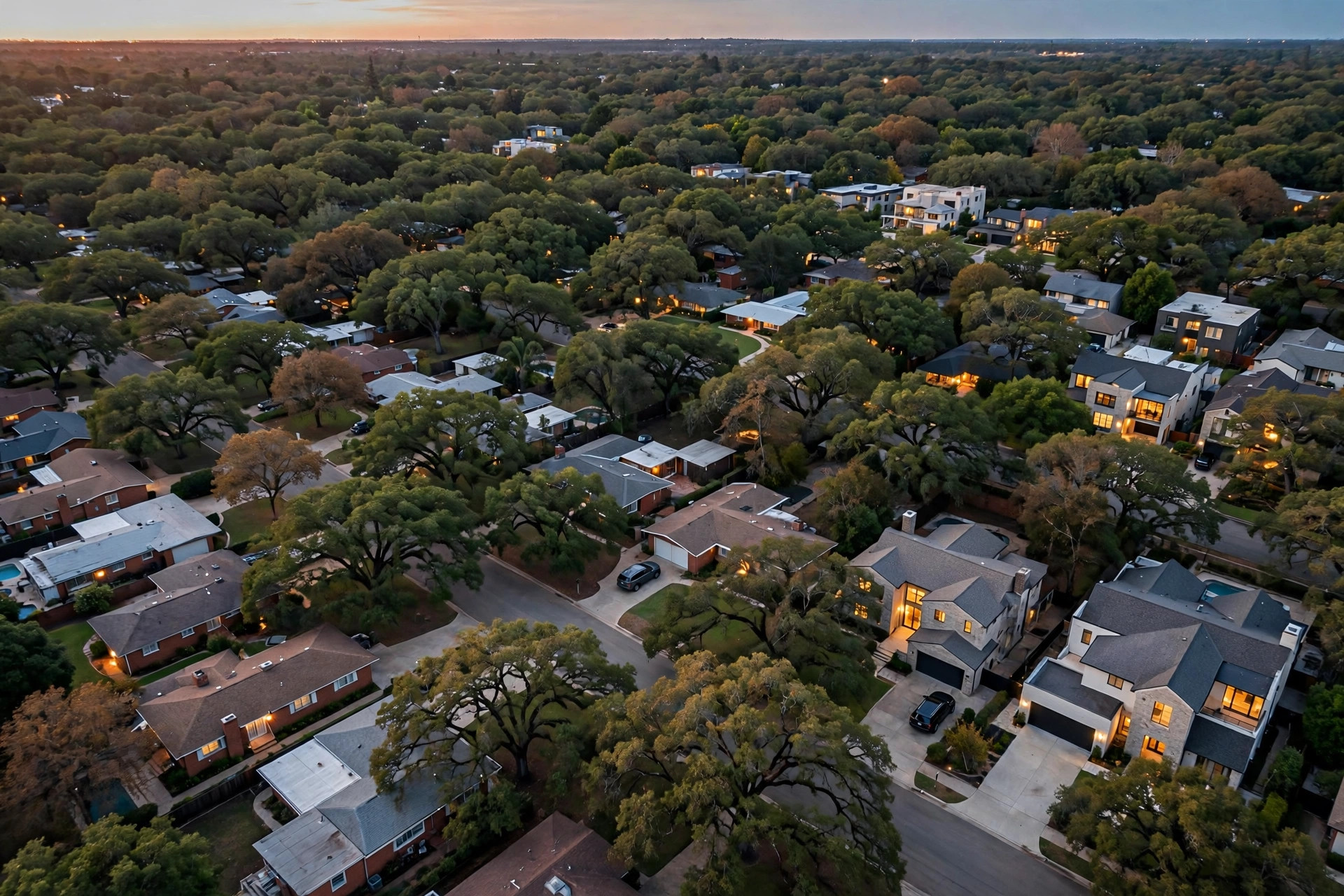
In the sample compiled for this report, 35 of 41 older homes in Nashville's 37205, Belle Meade and West Meade, were acquired by builders off-market and replaced with new construction, a builder-demand rate of 85.4%, ranking the ZIP fourth in the 189-neighborhood study (Legacy Off-Market, 2026). The older homes that changed hands sold for, on average, 27.8% of what new construction commands on comparable lots in the same streets. In the most expensive residential ground in Nashville, the question is not whether your lot has estate value. It is whether you price it like an estate, or let a listing price it like a house.
Key Findings
- 85.4% builder-demand rate, ranked #4, 35 of 41 sampled homes built in 1980 or earlier in 37205 were acquired by builders off-market and replaced, the fourth-highest composite rank among the 189 neighborhoods studied.
- 27.8% price ratio, older homes sold for just over a quarter of new-build prices on comparable lots, meaning nearly three-quarters of a new home's value is the land.
- 15,681 sq ft minimum lot, the smallest lot in the sample; Belle Meade parcels run to half-acres and full acres, the estate scale that drives the residual math.
- Recent new builds sold from $3.4M to $4.3M, dated 2025-2026 sales on Page Road, Heady Drive and Bellevue Drive set the land-value ceiling (Nashville Home Guru, 2026).
- One decision matters most, whether the seller prices the lot for a builder's estate project or prices the house for a listing, because in 37205 the two numbers differ by millions.
What does the builder-acquisition record in 37205 actually show?
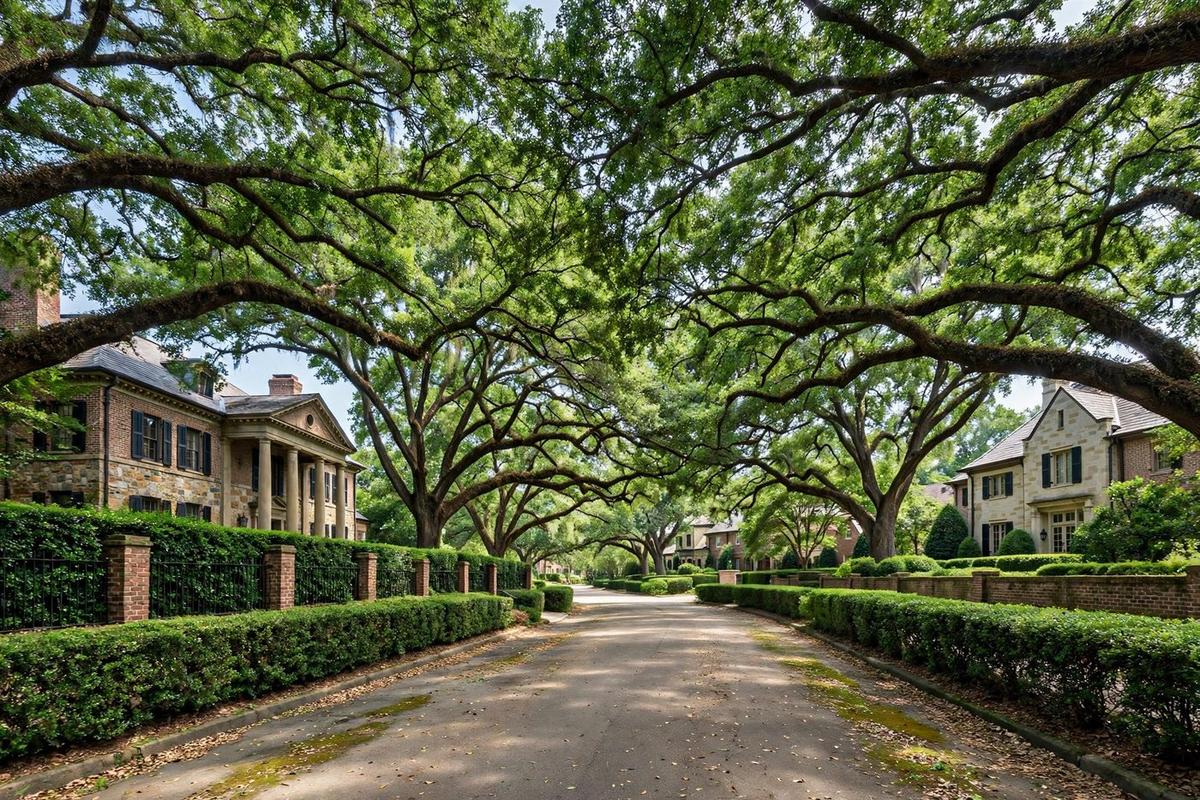
It shows the strongest builder-acquisition market in Tennessee, and the fourth-ranked in the study. Of 41 homes in the 37205 sample built in 1980 or earlier, 35 were acquired by builders, 85.4%, and the ZIP ranks fourth of 189 neighborhoods, just below Truckee, ranked third with a 92.5% builder-demand rate and well above its Tennessee counterpart, Brentwood, ranked ninth with a 26.5% builder-demand rate, on the study's composite ranking, which blends the raw acquisition share with sample depth and the price-ratio signal. Behind the number is one of the South's most recognizable luxury corridors: Belle Meade proper, with its city-enforced deed restrictions and deep, wooded estate lots, and West Meade, where mid-century ranch homes sit on half-acre parcels minutes from downtown Nashville.
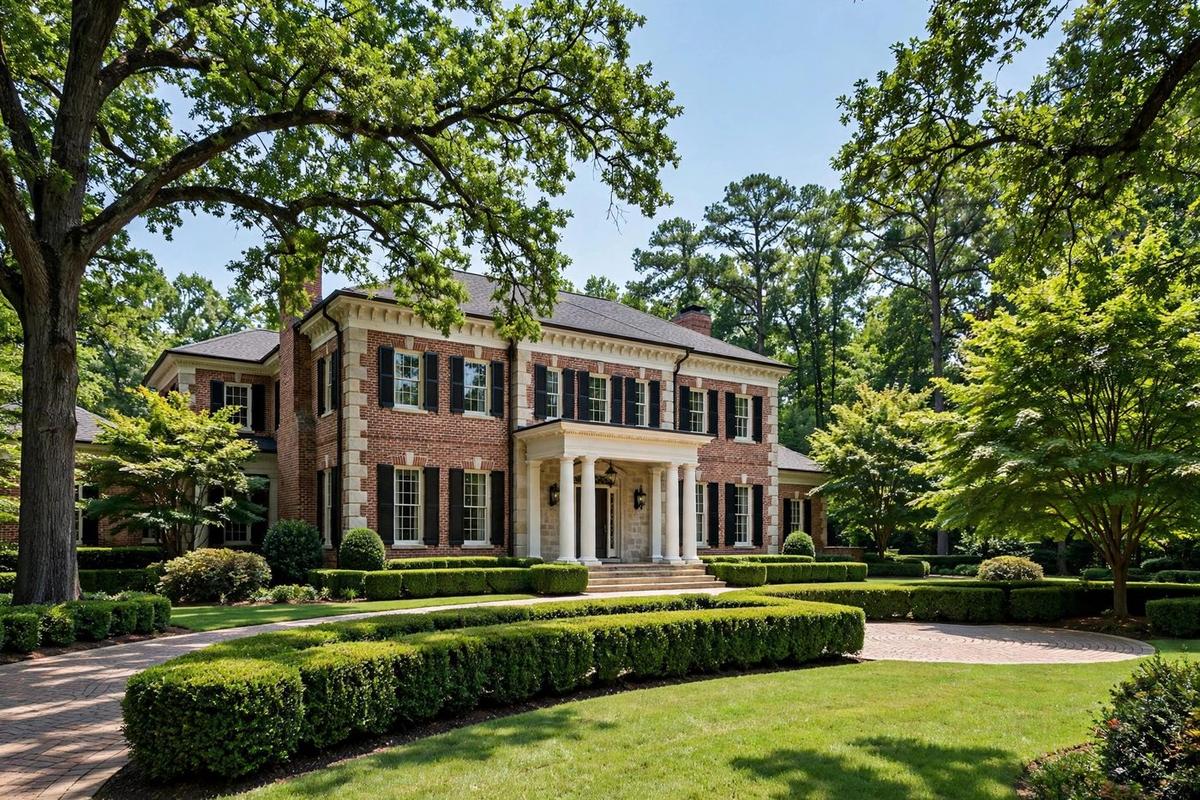
The replacement stock is new traditional estates: 5,000 to 8,000 square feet, brick and stone, built by established Nashville-area builders for buyers who want new construction in the city's most prestigious address. Dated 2025-2026 sales include $4.255 million for a 2026 build at 116 Heady Drive, $4.2 million for a 2025 build at 208 Page Road, $4.0 million at 105 Bellevue Drive South, and $3.484 million at 117 Alton Road (Nashville Home Guru, 2026). The homes those replaced, the Highlands and West Meade originals, trade at a fraction, with originals posting a median near $1.64 million in recent years.
Two cautions keep this finding honest. First, the sample is 41 homes, not the whole ZIP; it was assembled to study older homes with builder-acquisition potential, so it over-represents exactly the properties an estate builder wants. The true ZIP-wide builder-acquisition share is lower than 85.4%, though Davidson County permit records confirm the direction (Davidson County, 2026). Second, a builder-demand rate describes what buyers did after they bought. It does not set the seller's price, that requires the sold-price gap, covered next.
How wide is the gap between an older home and a new build?
Roughly three-to-one, and it widens every year the older stock ages. In the 37205 sample, older homes sold for an average of 27.8% of the price of new construction on comparable lots. Put in concrete terms: where a new estate on Page Road sells for $4,200,000, the older home on a comparable lot changed hands for roughly $1,170,000. The $3 million difference is not finishes: one transaction priced a finished estate, the other priced a development site.
The dated sales record supports the scale. New construction sold in 2025 ranged from $3.484 million to $4.2 million, with a 2026 build at $4.255 million (Nashville Home Guru, 2026). At 27.8%, an older home on a comparable lot changes hands at roughly $970,000 to $1,180,000, the land discounted for site preparation, carrying cost, and the builder's required margin. The ratio is the market's verdict on the structure: worth something, but worth far less than the dirt.
Averages hide condition, and this one hides a lot of it. The 27.8% blends genuinely livable older homes, updated ranch homes in West Meade that sell to families drawn by the address and the schools, with functionally obsolete ones that sell to builders. A cared-for 1960s brick ranch on a level half-acre can command a real "live-in" premium in 37205. An unrenovated one on the same street sells at residual land value. The spread between those two outcomes is often seven figures, and it turns entirely on which buyer the seller reaches. An MLS listing markets to the first buyer. An off-market process can reach the second directly. The pattern repeats far outside Nashville: Old Naples, ranked second with a 71.2% builder-demand rate, shows the same land-dominant pricing.
What is the lot itself worth?
More than the listing price of the house on it, and it can be estimated before any buyer calls. This is the question sellers ask most in every market in this study, and the method is public: any seller can run a simplified version.
Start with the new-build sale price on a comparable lot, the "as-new" value. In Belle Meade and West Meade, recent new estates have sold from roughly $3.4 million to $4.3 million depending on street, lot size and finish level (Nashville Home Guru, 2026). Subtract the cost to build that new home, construction cost, permits, financing, and the builder's required margin, and subtract site preparation. What remains is the residual land value: the most a rational builder can pay for the dirt and still make the project work.
Worked as an illustration, not a promise: a $4,000,000 new-build sale, minus roughly $1,600,000 in hard and soft construction costs, minus a builder margin near 20%, leaves a residual land value in the neighborhood of $1,500,000 to $1,700,000, before site-preparation costs of $40,000 to $80,000 for older structures. That residual is the number a land buyer is actually negotiating against.
Three things move that number. Lot size and buildable envelope are first: at a 15,681 sq ft minimum in the sample, and most Belle Meade parcels larger, every additional foot matters to a builder's floor plan. Second is the street and the restrictions: in the city of Belle Meade, deed restrictions and zoning shape what can be built, which concentrates premiums on the streets with the most permissive envelopes. Third is topography and trees, level, wooded estate lots clear faster with buyers than steep or constrained ones. A seller who knows their residual land value negotiates from the builder's own math.
Should you fix it up or sell as-is?
In an off-market builder market, renovation is usually the most expensive way to learn what the land is worth. This is the most-asked question type in the seller research behind this series, "sell my house as-is or fix it up?", and in 37205 the data answers it sharply.
A $150,000 kitchen-and-bath update on a 1965 ranch might lift the sale price by $90,000 to $120,000 if the buyer intends to live in the home, a partial return, before the months of disruption. If the buyer intends to redevelop the lot, the same $150,000 buys exactly $0: the finishes are stripped with the walls. In a ZIP code where 85.4% of sampled older homes were acquired by builders, the probability-weighted return on pre-sale renovation is poor, because the modal buyer assigns the improvements no value at all.
There is an exception, and honesty requires naming it. If the home is genuinely livable and well-kept, updated systems, no functional obsolescence, the kind of brick ranch a family could move into tomorrow, listing it as a home rather than a homesite can capture the "live-in" buyer premium, which in Belle Meade is substantial. A seller should get a candid assessment of which of the two assets they own, a house someone will live in, or a lot someone will build on, before spending a dollar on the structure. Spending on the wrong one is how sellers leave seven figures on the table.
An off-market sale is as-is by definition, no repairs, no staging, no punch list. For a builder-acquisition candidate home, that is not a concession: the buyer never wanted the finishes anyway.
What does listing on the open market really cost?
More than the commission rate suggests, once time is priced in. Sellers routinely underestimate the all-in cost of a traditional listing, because the visible costs, the commission, are only part of it. The full ledger looks like this.
First, the commission: typically 5% to 6% of the sale price in the Nashville luxury market, split between listing and buyer's agents. On a $1,400,000 sale, that is $70,000 to $84,000 off the top (National Association of Realtors, 2025). Second, closing costs on the seller's side, title, transfer taxes, prorations, commonly another 1% to 2%. Third, concessions: in a market where buyers inspect 60-year-old homes, repair credits and price reductions after inspection routinely run $15,000 to $40,000 on older inventory.
Fourth, and most underweighted, is carrying cost over market time. Luxury older-home listings in 37205 do not move at median speed: estate-area inventory turns slower than the broader Nashville market, and every month a listing sits, the seller pays the mortgage or opportunity cost of equity, insurance, taxes, utilities, and maintenance on a large older home. At $1.4 million with typical carrying costs, six months of market time costs $40,000 to $70,000 in pure hold expense. Fifth is the showing cost, which is not financial but real: months of keeping a home show-ready, vacating for showings, and living in limbo.
Add the midpoints and a $1,400,000 list price nets the seller something in the low-to-mid $1,200,000s after a normal market cycle, before any price reduction. This is the number an off-market offer should be compared against: not the list price, but the net proceeds after the full cost of achieving it.
How do you handle a cash buyer, and how do you tell one from a wholesaler?
Verify funds, verify closings, and make sure the buyer is transparent about their model. "How do I handle cash buyers?" is among the most common real questions sellers ask. The off-market space contains both honest operators and intermediaries who hide their role.
The distinction matters. Legacy Off-Market is a wholesaler that works transparently: we buy your home directly, off-market, and then place the deal with a vetted builder, with the whole model disclosed before you sign. A dishonest operator signs a purchase contract with no means or intent to close, then shops the contract to a real buyer for a fee, profiting from the spread between what they offered you and what the end buyer pays. In a market where estate lots run into seven figures, the hidden fee can be enormous, and every dollar of it comes out of the seller's equity. Nashville's hot builder market has attracted its share of assignment contracts; sellers on estate-scale lots are prime targets.
Three verifications separate the two. First, proof of funds in the buyer's name, dated within the last 30 days, not a "pre-approval," not a letter from a "private lender." Second, a record of actually closed purchases: recorded deeds in the buyer's entity name, checkable in county records (Davidson County, 2026). Third, the contract itself: a transparent buyer explains exactly what happens after you sign, closes in the name on the contract, and puts up a meaningful earnest-money deposit, typically 1% or more, that it forfeits if it walks away. An assignment clause plus a nominal deposit is the signature of a contract that was never meant to close.
The hidden-fee operator's pitch is designed to feel like a buyer's, so ask the three questions.
Is it a bad time to sell an older home in Belle Meade?
For a builder-acquisition candidate lot, market timing matters less than most sellers think. "Is it a bad time to sell?" is a perennial question, and it makes sense for the ordinary resale market, where interest rates and inventory swings move prices quarter to quarter. The off-market builder market runs on a different cycle.
A builder's residual land calculation depends on new-build sale prices, construction costs, and the availability of older homes with builder-acquisition potential, not on whether mortgage rates are 6% or 7.5%. New estates in Belle Meade sell to cash-heavy and well-qualified buyers whose demand has proven durable across rate cycles. Construction costs, meanwhile, rarely fall; when they rise, they squeeze the builder's margin, not the land bid.
What does matter is the alternative the seller is weighing. In a strong seller's market for new estates, the land bid strengthens with every comparable sale, the $4.255 million Heady Drive sale resets the ceiling for the next builder's residual calculation. Waiting "for a better market" in a builder corridor often means waiting while the builder's math gets better for the buyer, not the seller: as new-build prices rise, land values rise, but so do construction costs and carrying costs. The question to ask is not whether this is a good time in the abstract. It is whether your lot is priced at today's residual, and whether anyone on the market side is willing to pay it.
What stays with the seller in an off-market transaction?
Time, privacy, and a six-figure slice of the proceeds.
Privacy: zero showings, zero open houses, no public marketing period. No photography online, no broker caravans through the house, no neighbors tracking the days on market.
Timing: 7 to 21 days to close, against 60 to 120-plus days for a listed older home, with the seller setting the date and a leaseback available for a longer runway.
Commissions: none of the typical 5% to 6% (National Association of Realtors, 2025).
Closing costs: none of the typical 1% to 2% seller-side costs. Commissions plus closing costs commonly exceed $84,000 on a $1,400,000 transaction.
Inspections: no inspection contingency means no $10,000 to $30,000 repair credits or price reductions. The sale is as-is, and the number in the offer is the number at closing.
Methodology and limitations
This report rests on three inputs: Legacy Off-Market's builder-demand sample for the 189-neighborhood study (41 homes in 37205 built in 1980 or earlier, 35 acquired by builders, older homes averaging 27.8% of new-build prices on comparable lots), Davidson County parcel and permit records confirming builder-acquisition activity directionally, and dated sold listings for the ZIP behind the new-build price ranges. The series' 348-question seller research chose the questions answered here.
Not verified: no title search, no condition inspection, no sale confirmed beyond its listing record. Price ranges are illustrations, not appraisals; the residual-land math is a simplified model.
The central limitation is selection. Forty-one homes chosen for builder-acquisition potential over-represent what estate builders want, so 85.4% describes the sample: evidence of an intense off-market builder market, corroborated by permits, not a census.
Conclusion
So how does a Belle Meade lot get priced? The way this report has priced it all along: from the new estate it can become, backward. If 85.4% of sampled older homes in your ZIP were bought for their land, and older homes change hands at 27.8% of new-build prices, the probability is high that your buyer is a land buyer, and land buyers do not need your home staged, photographed, and shown through a slow luxury season. They need the lot, a clear title, and a seller who knows the residual math.
Legacy Off-Market sources off-market deals to builders in Belle Meade and West Meade and the other 188 neighborhoods in this study: we buy directly from sellers off-market, then place each deal with a vetted builder, with proof of funds and a record of completed purchases behind every offer. Sellers can reach the acquisitions team at 401-219-4207 or aidansowa@outlook.com.
When eight in ten older homes on your street were bought for the estate lot beneath them, what exactly would a listing be selling?
Frequently Asked Questions
How do I know if Legacy Off-Market buys in my ZIP code?
Legacy Off-Market buys in 189 neighborhoods across 26 states, and Belle Meade / West Meade (37205) is ranked fourth in the study. Enter your ZIP in the coverage checker on the Legacy Off-Market site to confirm, or call 401-219-4207.
Will I get less selling off-market than listing with an agent?
Compare net proceeds, not the headline. A $1,400,000 Nashville listing typically nets in the high $1,100,000s after commission, closing costs, inspection concessions, and months of carrying costs. An off-market offer carries none of those deductions. Get the off-market number first.
Do I need to make repairs before selling off-market?
No. The sale is as-is, and in a ZIP where 85.4% of sampled older homes were acquired by builders, renovation spending is usually the most expensive way to learn the land's value. The buyer is pricing an estate lot.
How fast can an off-market sale close?
A direct cash buyer can close in 7 to 21 days, against 60 to 120-plus days for a listed older home. The seller chooses the date, and a leaseback bridges a slower move.
How is an off-market buyer different from a wholesaler?
Legacy Off-Market is a wholesaler that works transparently: we buy your home directly off-market, then place the deal with a vetted builder, with the whole process disclosed before you sign. The operator to avoid is the one who signs your contract and assigns it for a fee. Ask for proof of funds dated within 30 days, recorded prior closings in the buyer's name, and a clear written explanation of what happens after you sign.
What does Legacy Off-Market need from me to make an offer?
The property address, your timeline, and permission to pull public records. No showings, no staging, no open houses. Call 401-219-4207 or email aidansowa@outlook.com.
Sources
- Davidson County, 2026. Property Assessor parcel and permit records, Nashville TN. Official record.
- Legacy Off-Market, 2026. 189-neighborhood builder-demand study: 41 homes sampled in 37205, 35 acquired by builders; older homes averaged 27.8% of new-build prices. Proprietary sample, see the limitations section. Research institute.
- Nashville Home Guru, 2026. Dated new-construction sales, Belle Meade / 37205. Market data.
- National Association of Realtors, 2025. Typical seller commission structures, Nashville market. Industry report.
- Redfin, 2026. Recently sold homes and new construction, ZIP code 37205, Nashville TN. Market data.
- U.S. Census Bureau, 2025. QuickFacts: Nashville, Tennessee. Government data.
- Zillow, 2026. Home values and recently sold, 37205. Market data.