In the sample compiled for this report, 14 of 21 older homes in Charlotte's 28209, the Sedgefield and Madison Park neighborhoods, were acquired by builders and replaced with new construction, a builder-demand rate of 66.7%, ranked 39th of 189 neighborhoods in the study (Legacy Off-Market, 2026). The older homes that changed hands sold for, on average, 42.0% of what new construction commands on a comparable lot. And the listing market just demonstrated the risk in real time: a 1946 Sedgefield bungalow listed at $1,550,000 sat for 114 days before cutting to $1,390,000, a $160,000 reduction that still hadn't produced a sale at last record (Redfin, 2026). When the open market takes four months to tell a seller the price was wrong, the question is not just what listing nets. It is what the waiting costs, and whether the off-market number, available in weeks, beats the listing's net after the full expense of finding out.
Key Findings
- 66.7% builder-demand rate, ranked #39, 14 of 21 sampled homes built in 1980 or earlier in 28209 were acquired by builders and replaced.
- 42.0% price ratio, older homes sold for less than half of new-build prices on comparable lots.
- $1.235M-$1.8M new-build range, recent new construction on dated listings, against the $1.39M reduced bungalow asking (Redfin, 2026).
- 114 days, $160,000 cut, the Sedgefield Road bungalow's listing history, a live demonstration of market-time risk.
- The carrying-cost clock, every month of market time transfers thousands from the seller's proceeds to the carry.
What does the builder-acquisition record in Sedgefield actually show?
Two of every three sampled older homes went to builders, in neighborhoods defined by the 1940s American Small House. Fourteen of twenty-one: 66.7%, ranked 39th of 189 neighborhoods. (Rank weights sample depth and the price-ratio signal alongside the rate, it describes the quality of the evidence, not just the acquisition count.) The inner-ring builder-acquisition dynamic repeats in nearby ranks: 12 South / Belmont ranked 37th of 189 neighborhoods with a 40.0% builder-demand rate, and Lake Oswego ranked 40th with a 63.3% rate.
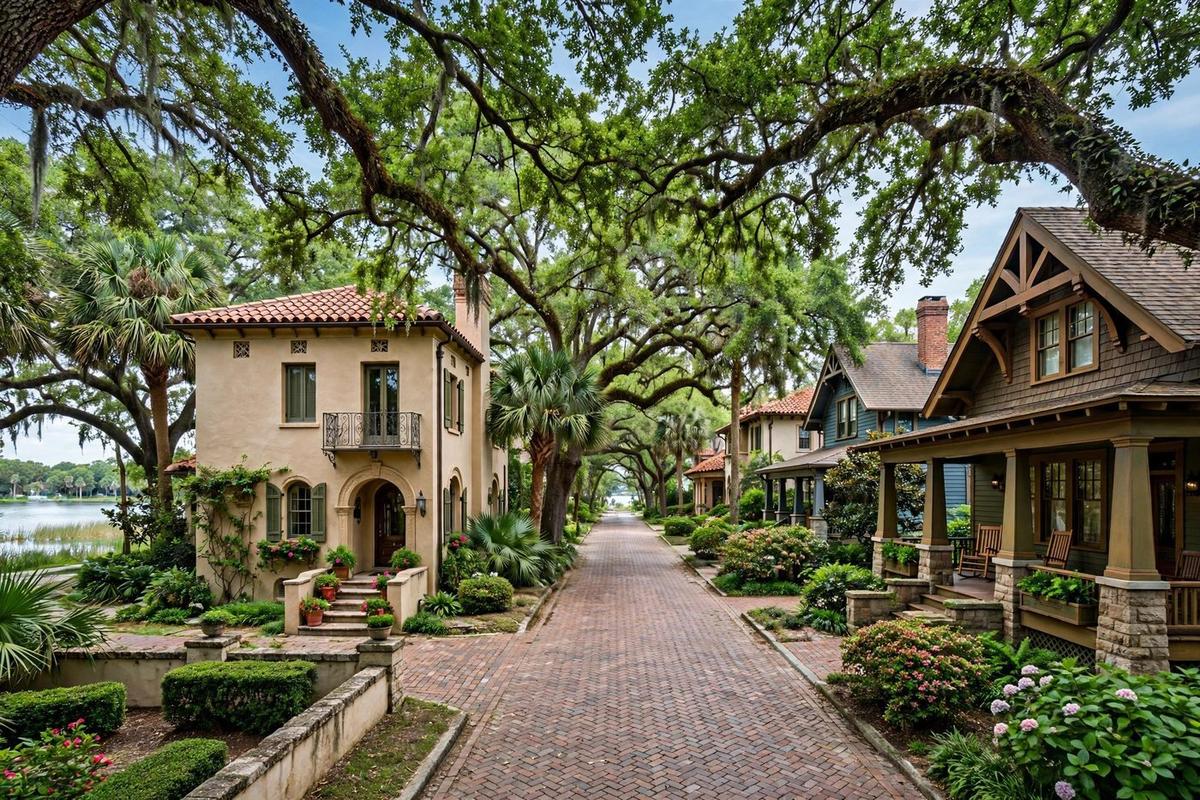
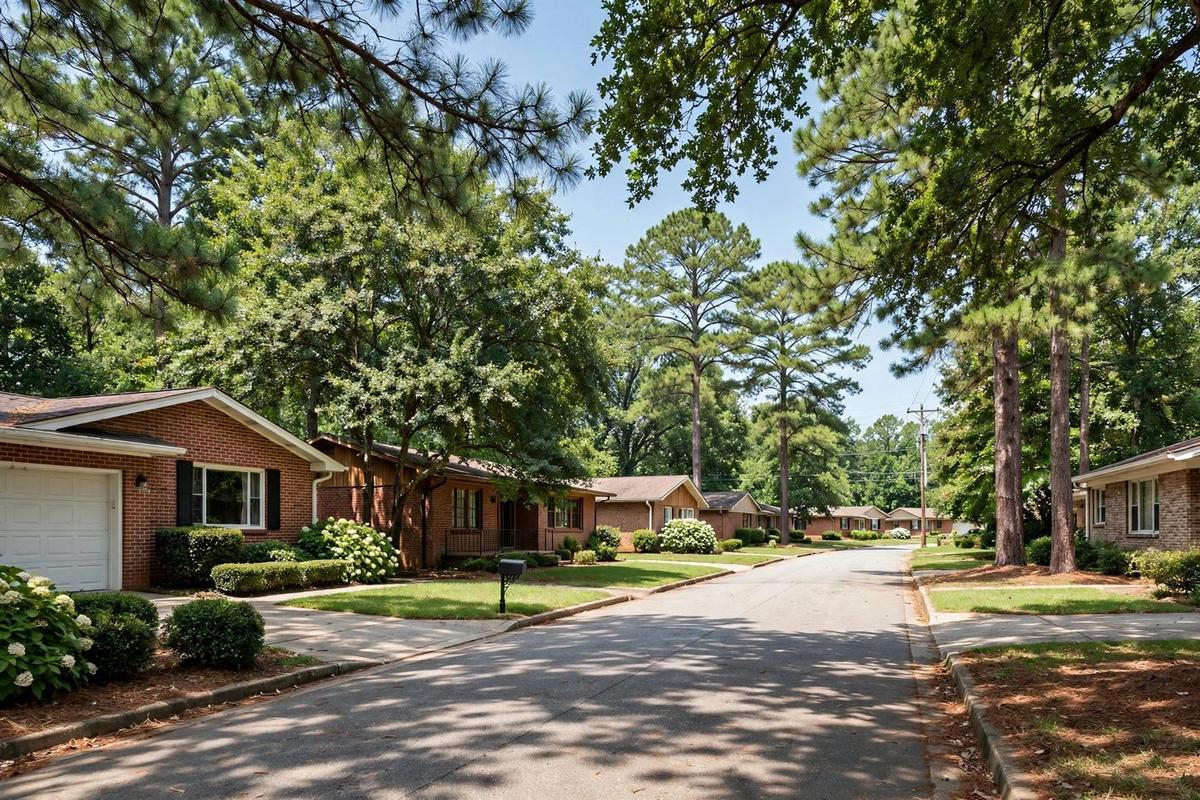
Sedgefield and Madison Park sit in Charlotte's inner ring, between South End's growth and the established south Charlotte corridors, near the LYNX Blue Line, Freedom Park, and the commercial energy radiating from South Boulevard. The housing stock is the modest postwar cottage: 1940s American Small Houses, small footprints, simple construction, built for a different Charlotte. On lots now valued for proximity to the city's core, builders replace them with new construction priced from $1,235,000 to $1,800,000 on dated listings (Redfin, 2026), homes three to four times the size of what they replace.
Two honest cautions. First, the 21-home sample was built to find builder acquisitions; the true neighborhood-wide replacement share is lower than 66.7%. Second, a builder-demand rate records what buyers did with homes they already bought, demand evidence, not a price tag. But the demand signal here is corroborated by the listing market itself: when new construction at $1.7 million rises on streets of 1940s cottages, the direction of the capital is not ambiguous.
How wide is the gap between an older home and a new build?
More than double, 42.0%, with the listing record showing how the gap punishes mispricing. In the 28209 sample, older homes sold for an average of 42.0% of new-build prices on comparable lots. The dated comps: new construction at $1,235,000 on Belton Street, $1,700,000 on Marsh Road, $1,800,000 on Dover Avenue, against older homes changing hands in the $600,000s to low $700,000s on comparable streets (Redfin, 2026; listings record).
Then the cautionary tale. A 1946 bungalow on Sedgefield Road listed at $1,550,000, priced, evidently, against the new-construction comps rather than the older-home market. After 114 days, the price was cut to $1,390,000: a $160,000 reduction, nearly four months of carrying costs, and still no sale at last record. The listing priced the house as though it competed with new builds. The market's silence was the answer.
The lesson is the split this report keeps finding: new construction and older homes are different assets with different buyers. The 42.0% ratio is the market's long-run statement of the relationship. The Sedgefield Road listing is what happens when a seller prices against the wrong asset class. The $160,000 cut plus four months of carry is the tuition. The same builder-versus-family split prices homes in Bella Collina, ranked 38th of 189 neighborhoods with a 45.2% builder-demand rate.
What is the lot itself worth? How do builders do the math?
The residual method, with Charlotte infill economics. Start with the finished new home: $1,235,000 to $1,800,000 on the dated comps. Subtract construction costs for infill new builds, efficient production at this scale, but with site preparation, infill site constraints, permits, design, financing, and carry. Subtract the builder's margin. The residual is the supportable land price.
Worked as an illustration: a $1,500,000 new build, minus roughly $850,000 in all-in construction and site costs, minus a builder margin near 18%, leaves a residual land value in the $350,000 to $450,000 range for a standard buildable lot, before site preparation. That residual is the number a land buyer negotiates against.
Three things move an individual Sedgefield lot. Size is first: the 7,405 sq ft sample minimum is workable infill, and wider lots support the larger footprints that reach the $1.7M-plus comps. Second is the street: proximity to South End, the Blue Line, and Freedom Park creates block-level premiums visible in the new-build spread. Third is the structure's condition, which sets site-preparation cost, a straightforward cottage clears cheap; complications don't.
The Sedgefield Road bungalow, viewed through this math, was priced at roughly triple the residual land value and double the older-home market, a number neither buyer pool could support. The residual is not the seller's enemy. It is the seller's anchor.
Should you fix it up, or sell as-is?
In a 66.7%-builder-demand market, the renovation math fails before it starts. "Fix up or sell as-is?" is the most-asked question type in the seller research, and Sedgefield's record answers it plainly.
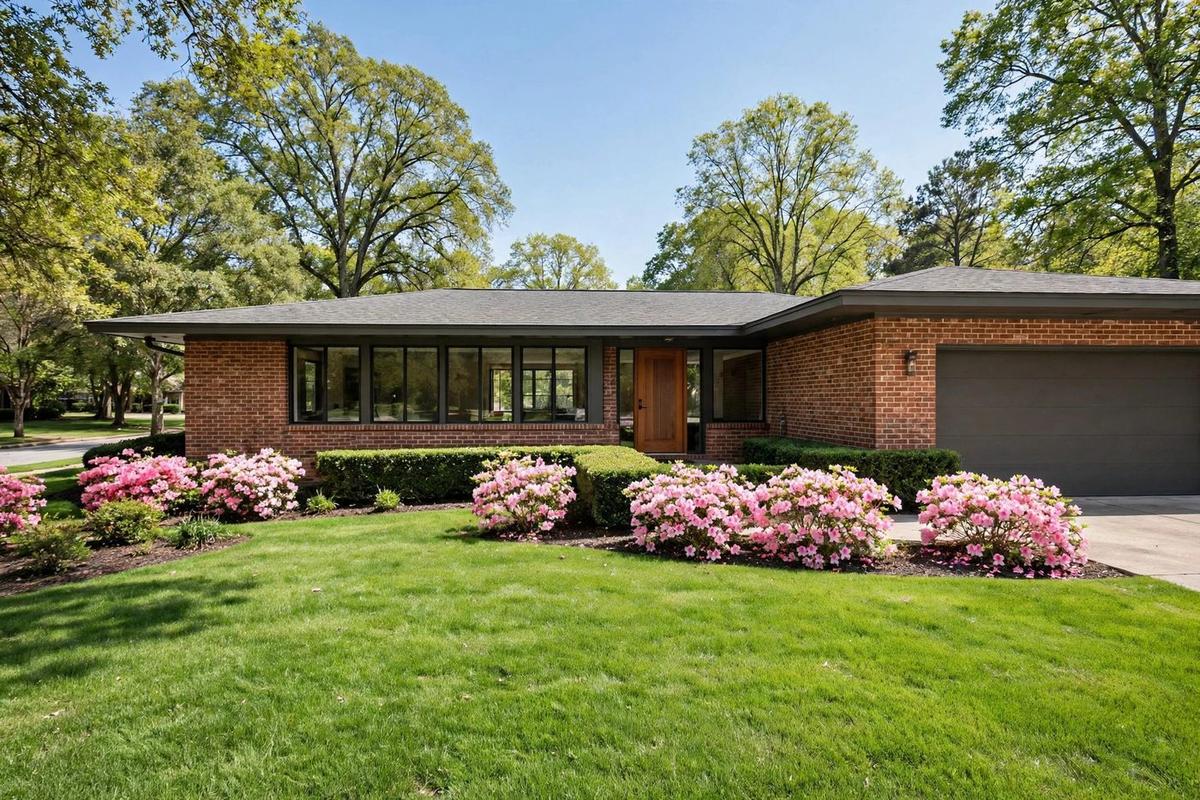
A $70,000 renovation of a 1940s cottage, kitchen, baths, systems touches, might lift a live-in buyer's price by $40,000 to $55,000: a partial return before months of disruption. But when the buyer redevelops, the outcome in two of three sampled sales, the same $70,000 returns exactly $0. With a 66.7% builder-demand rate, the probability-weighted return on pre-sale renovation is negative, and that is before the Sedgefield Road lesson: even the renovated older home competes against $1.7 million new construction next door, a comparison it cannot win.
The honest exception: a genuinely charming, well-kept cottage in Sedgefield can capture the live-in buyer premium, walkability, character, and the neighborhood's identity have real buyers. But the bar is the renovated product, not the lightly updated one, and the renovation that pays is the one that leans into what new construction can't replicate. The $70,000 generic update lands between the builder's land bid and the new-build price, attracting neither buyer. That is the trap the Sedgefield Road seller fell into at a larger scale: pricing and improving toward the wrong asset class.
The decision rule: if the cottage is a genuine character property a family would pay the premium for, prepare it honestly. If the buyer pool is builders running the residual math, as the 66.7% rate says it usually is, sell as-is and keep the $70,000.
Will listing net more than selling off-market? Run the carrying-cost clock.
This is the headline question, and the Sedgefield Road listing is the exhibit. Run the full ledger on a $750,000 older-home sale, the sample's band.
A 5% to 6% commission is $37,500 to $45,000 (National Association of Realtors, 2025). North Carolina seller closing costs, title, transfer tax, attorney, prorations, add roughly 1.5% to 2.5%. Inspection credits on an 80-year-old cottage commonly run $12,000 to $30,000: old wiring, old plumbing, and foundation settlement are the standard second negotiation. Then the carrying-cost clock: mortgage or equity opportunity cost, taxes, insurance, utilities, maintenance, $3,500 to $6,500 a month on this price point.
Now add the market-time risk the Sedgefield Road listing demonstrated. Priced right against the older-home comps, market time might run two to four months: $7,000 to $26,000 of carry. Priced against the new builds, the $1,550,000 mistake, market time ran 114 days and counting, plus a $160,000 price cut.
Add the midpoints for a well-priced listing and a $750,000 list nets in the mid-to-high $600,000s after a normal cycle. That net, not the price, is what an off-market offer should be measured against. And the variance around it is the point: the listing's net is a distribution with a long left tail (the Sedgefield Road outcome), while the off-market number is a point. Sellers who need certainty should price the certainty, not just the midpoint.
How do you tell a direct cash buyer from a contract flipper?
Proof of funds, recorded closings, and a contract you understand. Charlotte's growth market and publicized infill comps attract both genuine principal buyers and intermediaries who shop paper.
A genuine direct buyer purchases with its own capital and closes in its own name. A contract flipper signs an agreement it won't close, then shops the paper to an end buyer for a fee taken from your equity, which means offering you less than the end buyer would pay. In a market where sellers are already anxious about pricing (see: Sedgefield Road), the flipper's pitch often exploits the confusion, offering "certainty" at a number well below the residual.
Three verifications, in order. First, proof of funds in the buyer's own name, dated within 30 days, not a pre-approval, not a "private lender" letter. Second, recorded prior closings in the buyer's entity name, checkable in Mecklenburg County records (Mecklenburg County Register of Deeds, 2026): deeds, not testimonials. Third, the contract terms, who exactly closes in the name on the agreement, the earnest money amount forfeited by walking, and what the assignment language says. Read it before you sign anything.
Ask the buyer to show the residual math on your lot. A genuine land buyer can. Someone who plans to shop your contract will change the subject.
How fast can a direct sale close, and when does speed matter most?
Seven to 21 days, and it matters most when the listing's left tail is the risk. A direct cash purchase closes in 7 to 21 days: no appraisal contingency, no lender queue, no months of showings. The seller sets the date.
Speed's value is not just convenience. It is the elimination of the Sedgefield Road outcome. Every month of market time is a month the seller pays $3,500 to $6,500 in carry while the market decides whether the price was right, and if the price was wrong, the correction comes as a $160,000 cut after 114 days. The off-market sale converts that distribution into a point: a number, a date, no renegotiation.
There is an honest caveat. Speed is not free, and the fastest offer is not always the highest net. The correct comparison is the off-market number, zero commission, zero concessions, zero months of carry, against the listing's expected net after the full cost of achieving it, including the probability-weighted cost of the left tail. For a seller who prices the older home correctly against its comps, the listing can net more. For a seller facing the 114-day outcome, the off-market sale wins by the carry plus the cut.
What do sellers keep by staying off the market?
Five things that never leave the seller's pocket in a direct sale, with the numbers attached. The carrying-cost clock in this report measures what listing risks. This section measures what staying off-market saves.
First, privacy: zero showings, zero open houses, no public marketing period. No listing photographs on the portals, no weekends of strangers through a 1940s cottage, no neighbors tracking the days-on-market and drawing conclusions after the Sedgefield Road saga played out in public. The sale is private from the first conversation.
Second, timing: a direct purchase typically closes in 7 to 21 days from signed contract, versus 60 to 120-plus days for a listed older home, and the seller sets the date, including a delayed closing or a short leaseback when the next home is not ready. Against a market where mispricing costs 114 days, that certainty has a price.
Third, no commissions. A listing pays agents on both sides, typically 5% to 6% of the price combined (National Association of Realtors, 2025). A direct sale has no agents, so nothing is owed.
Fourth, no closing costs. Seller-side costs, title, transfer tax, attorney, prorations, typically run 1.5% to 2.5%. Commissions plus closing costs commonly exceed $45,000 on a $750,000 sale, the price level used in this report's listing example. A direct purchase has none of these line items.
Fifth, no inspections or repairs. The sale is as-is in the complete sense: no inspection contingency, no $10,000 to $30,000 in repair credits or price reductions when the inspector finds 80-year-old wiring and settling foundations, no second negotiation. The buyer prices the lot; the seller's obligations end at the agreement.
Methodology and limitations
This report is grounded in four evidence sources. First, the builder-demand sample built for the 189-neighborhood study: 21 homes in 28209 constructed in 1980 or earlier, 14 acquired by builders and replaced, with older homes selling at 42.0% of new-build prices on comparable lots (Legacy Off-Market, 2026). Second, Mecklenburg County Assessor parcel records, used to confirm the direction of builder acquisition and rebuild activity rather than any single parcel's outcome. Third, market records: dated sold, for-sale, and new-construction listings for 28209 from Redfin and Zillow, including the new-build comps and the Sedgefield Road listing history cited. Fourth, the seller-question research, 348 distinct real questions from home sellers, which selected the questions answered here. The study's ranking and sampling rules are published on its methodology page.
Not done: no title work on any property, no physical inspection of any home, and no verification of any sale beyond its listing record. The Sedgefield Road listing history is a single dated record, an illustration of market-time risk, not the typical outcome. List prices cited are seller ambition, not market clearing. The residual-land math is a simplified model; real builder underwriting adds financing structure, entitlement risk, and carry assumptions not modeled here.
The central caveat is the sample. Twenty-one older homes in the age band builders target cannot describe every parcel in 28209, and the sample was built to find builder acquisitions, so 66.7% describes the sample, not the neighborhoods. Read it as evidence of an intense off-market builder market, corroborated by county records and the new-construction pipeline, not as a census.
Conclusion
So will listing your Sedgefield home net more than selling off-market? On the record assembled here, the honest answer is: it depends on the price, and the Sedgefield Road bungalow is what "depends" costs when it goes wrong. Priced against the older-home comps, a listing can net in the mid-to-high $600,000s on a $750,000 sale. Priced against the new builds, it costs 114 days, $160,000 in cuts, and $20,000 in carry to learn the market's answer. The 42.0% price ratio says the older home and the new build are different assets. The 66.7% builder-demand rate says the modal buyer is pricing the lot. The carrying-cost clock says every month of finding out costs thousands.
The mechanics are the same as everywhere else in this study. The residual math prices the lot. Pre-sale renovation, in a two-of-three builder-acquisition market, is usually money spent on walls the buyer removes. The listing's true comparison is its net proceeds after commission, concessions, and the full distribution of market-time outcomes, not its price. A direct buyer closes in weeks with the seller setting the date. And the difference between that buyer and a contract flipper is three verifiable questions, plus a request to see the residual math.
Legacy Off-Market buys directly from sellers in 28209 and the other 188 neighborhoods in this study, then places each deal with a vetted builder; every offer is backed by proof of funds and recorded closings. Sellers who want a number on their property can reach the acquisitions team at 401-219-4207 or aidansowa@outlook.com.
When the listing down the street needed 114 days and $160,000 to find its price, what is your market time worth, and who should pay for it?
Frequently Asked Questions
How do I know if Legacy Off-Market buys in my ZIP code?
The company buys in 189 neighborhoods across 37 states, and Sedgefield / Madison Park ranks 39th in the study. Enter your ZIP in the coverage checker on the company site to confirm, or call 401-219-4207.
Should I price my older home against new construction nearby?
No. That is the Sedgefield Road mistake: $1,550,000 listed against $1.7M new builds, 114 days, a $160,000 cut, still no sale. New builds and older cottages are different assets with different buyers. Price against older-home comps, or price the lot against the builder's residual.
Should I renovate before selling?
In a two-of-three builder-acquisition market, pre-sale renovation usually returns little, the modal buyer removes the finishes with the walls. Only a genuine character property that can capture the live-in premium justifies the spend.
Will I net less selling off-market than listing?
A well-priced $750,000 listing nets in the mid-to-high $600,000s after commission, concessions, and carry. But the listing's net is a distribution with a long left tail, the Sedgefield Road outcome. The off-market number is a point: certain, dated, and free of every deduction.
How fast can an off-market sale close?
Seven to 21 days from signed contract, with the seller choosing the date. A listed older cottage normally needs 60 to 120-plus days, and the Sedgefield Road record shows what the tail risk costs.
What does Legacy Off-Market need from me to make an offer?
The address, your timeline, and permission to review public records. No showings, no staging, no open houses, no waiting on a buyer's lender. Call 401-219-4207 or email aidansowa@outlook.com.
Sources
- Legacy Off-Market, 2026. Company coverage and ZIP lookup. Market data.
- Legacy Off-Market, 2026. Builder-demand sample, 189-neighborhood study: 21 homes sampled in 28209, 14 acquired by builders, avg. older-home price 42.0% of new build. Market data.
- Mecklenburg County Assessor's Office, 2026. Parcel records, Charlotte NC. Official record.
- National Association of Realtors, 2025. Typical seller commission structures, Charlotte market. Industry report.
- Redfin, 2026. Sold, for-sale, and new-construction listings, ZIP code 28209, Charlotte NC. Market data.
- U.S. Census Bureau, 2025. QuickFacts: Charlotte city, North Carolina. Government data.
- Zillow, 2026. Home values and recently sold, 28209. Market data.