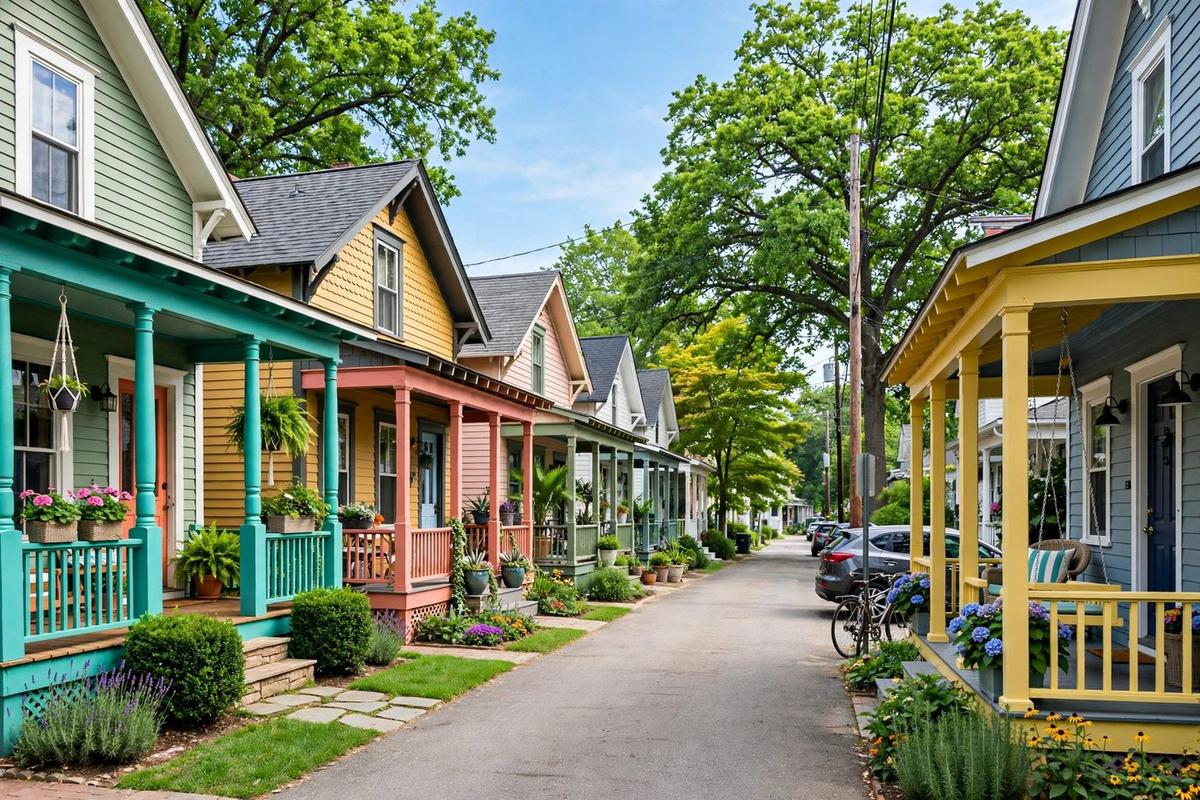
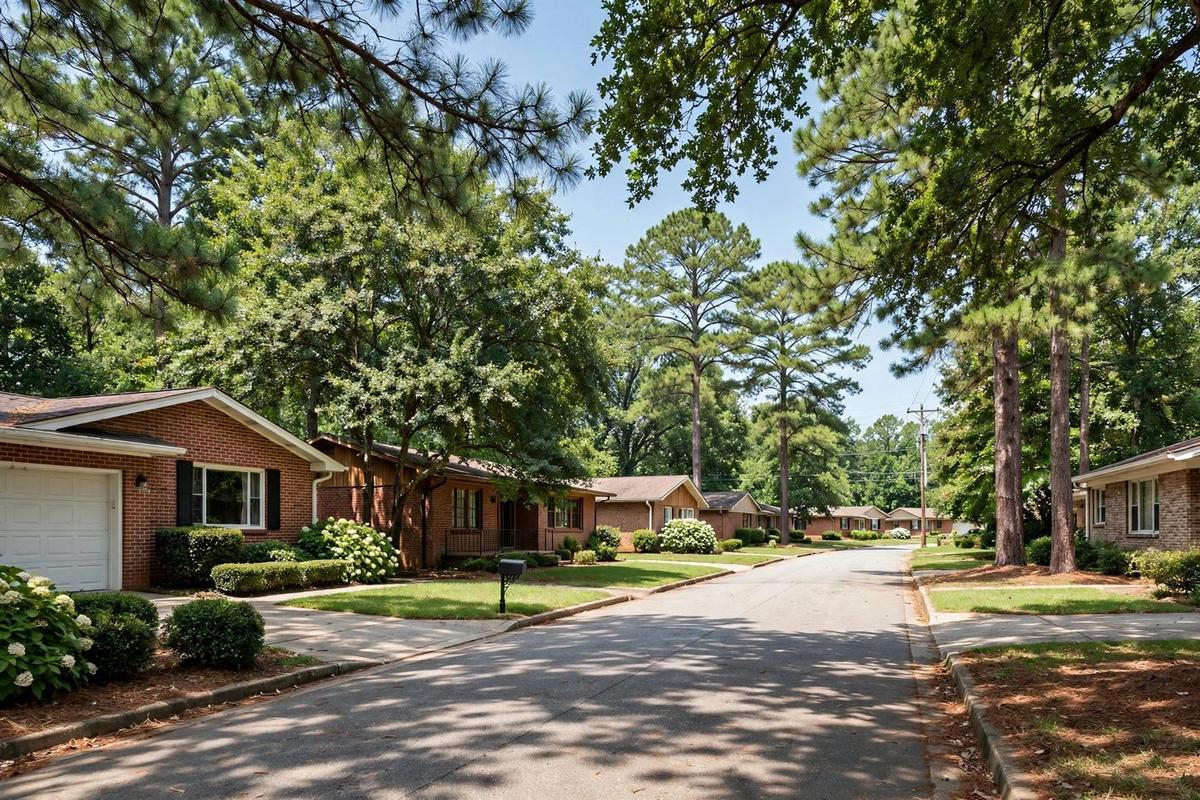
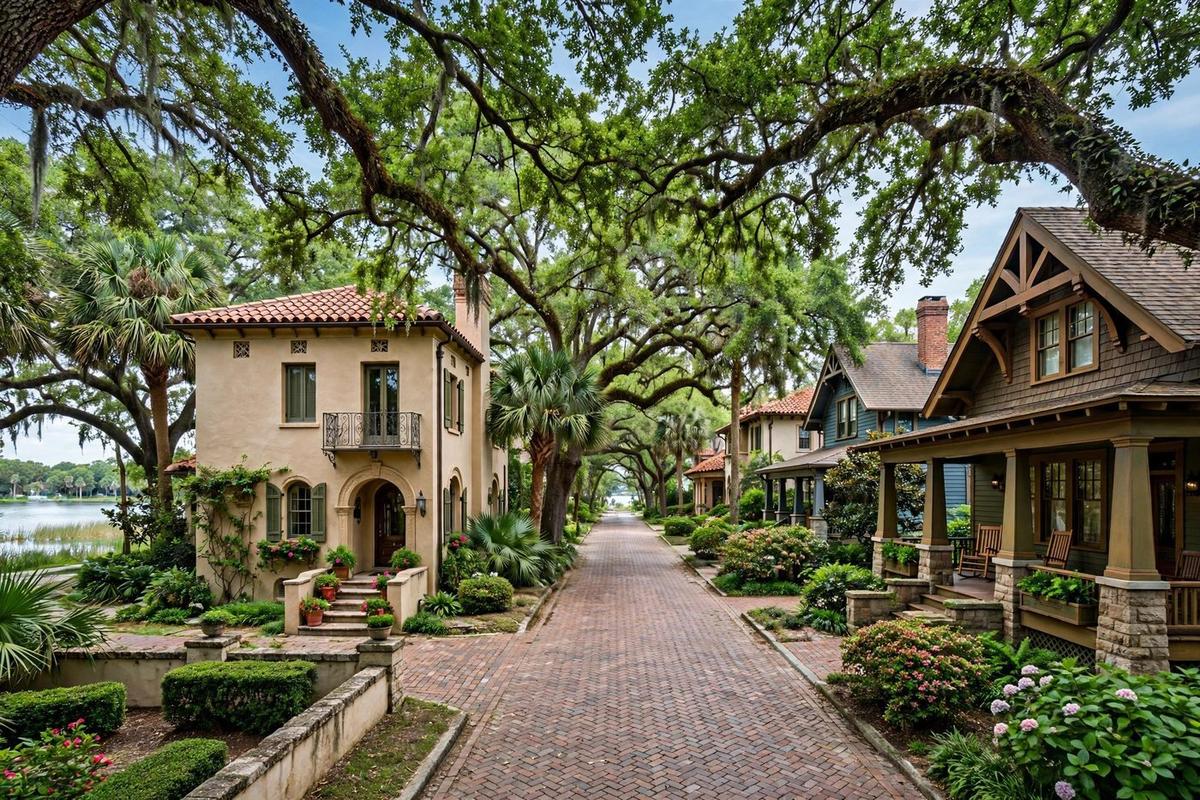
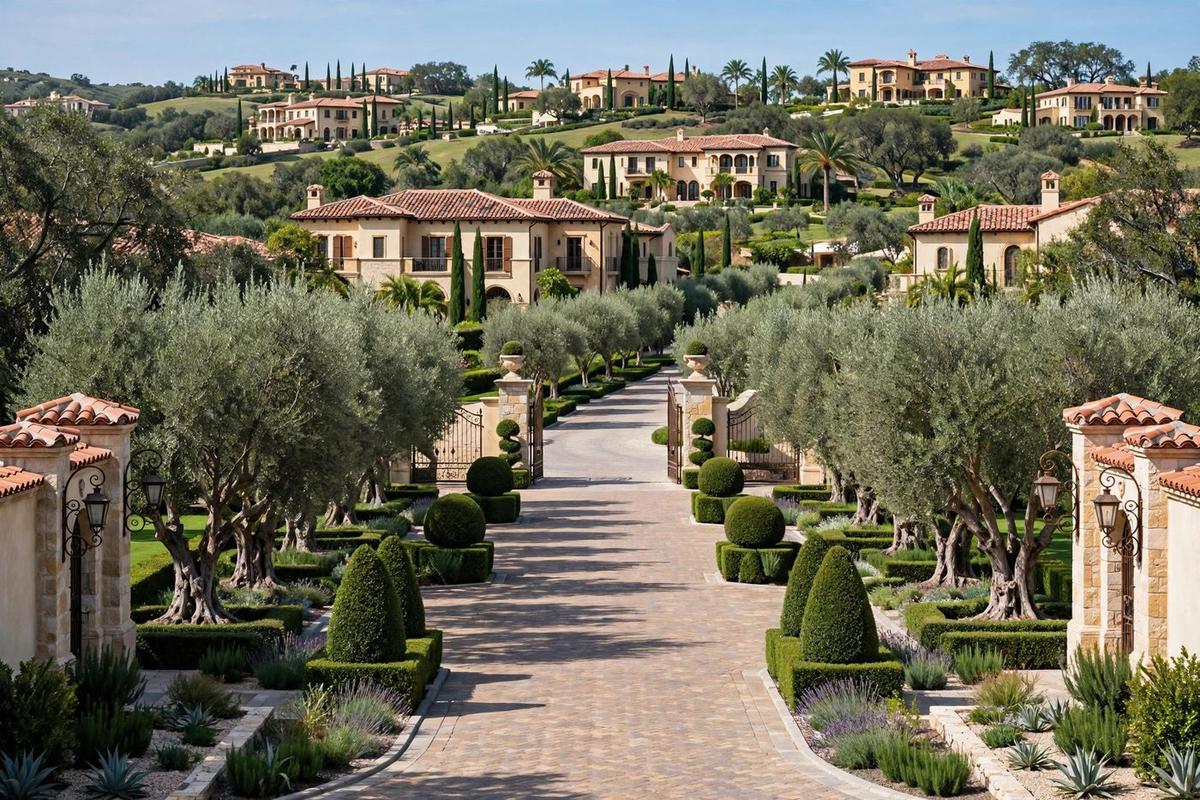
In the sample compiled for this report, 14 of 31 older homes in Montverde's 34756, the Bella Collina local submarket, were acquired by builders and replaced with new construction, a builder-demand rate of 45.2%, ranked 38th of 189 neighborhoods in the study (Legacy Off-Market, 2026). The older homes that changed hands sold for, on average, 37.7% of what new construction commands on a comparable lot. Bella Collina is not a typical builder market: it is a gated luxury golf community on Lake Apopka, with Italian-named streets, Vinci Way, Vetta Drive, Bolsena Drive, Volterra Point, and a buyer pool choosing between established luxury homes and custom new builds behind the same gates. In a community like this, the family-versus-builder question is not abstract. It is the entire pricing decision, complicated by HOA dynamics most sellers underestimate.
Key Findings
- 45.2% builder-demand rate, ranked #38, 14 of 31 sampled homes built in 1980 or earlier in 34756 were acquired by builders and replaced.
- 37.7% price ratio, older homes sold for roughly 38% of new-build prices on comparable lots.
- 10,000 sq ft minimum lot, the study's largest minimum; estate-scale parcels behind the gates.
- Gated-community dynamics, HOA approvals, questionnaires, and architectural review change both the listing process and the buyer pool.
- One buyer-pool question, family or builder: the answer determines the pricing strategy.
What does the 45.2% builder-demand rate mean inside a gated luxury community?
It means nearly half of sampled older homes were redeveloped, even behind the gates. Fourteen of thirty-one: 45.2%, ranked 38th of 189 neighborhoods in the study. (Rank weights sample depth and the price-ratio signal alongside the rate, it describes the quality of the evidence, not just the acquisition count.) The luxury redevelopment cycle runs through nearby ranks too: Birmingham ranked 36th of 189 neighborhoods with a 100.0% builder-demand rate, and Sedgefield / Madison Park ranked 39th with a 66.7% rate.
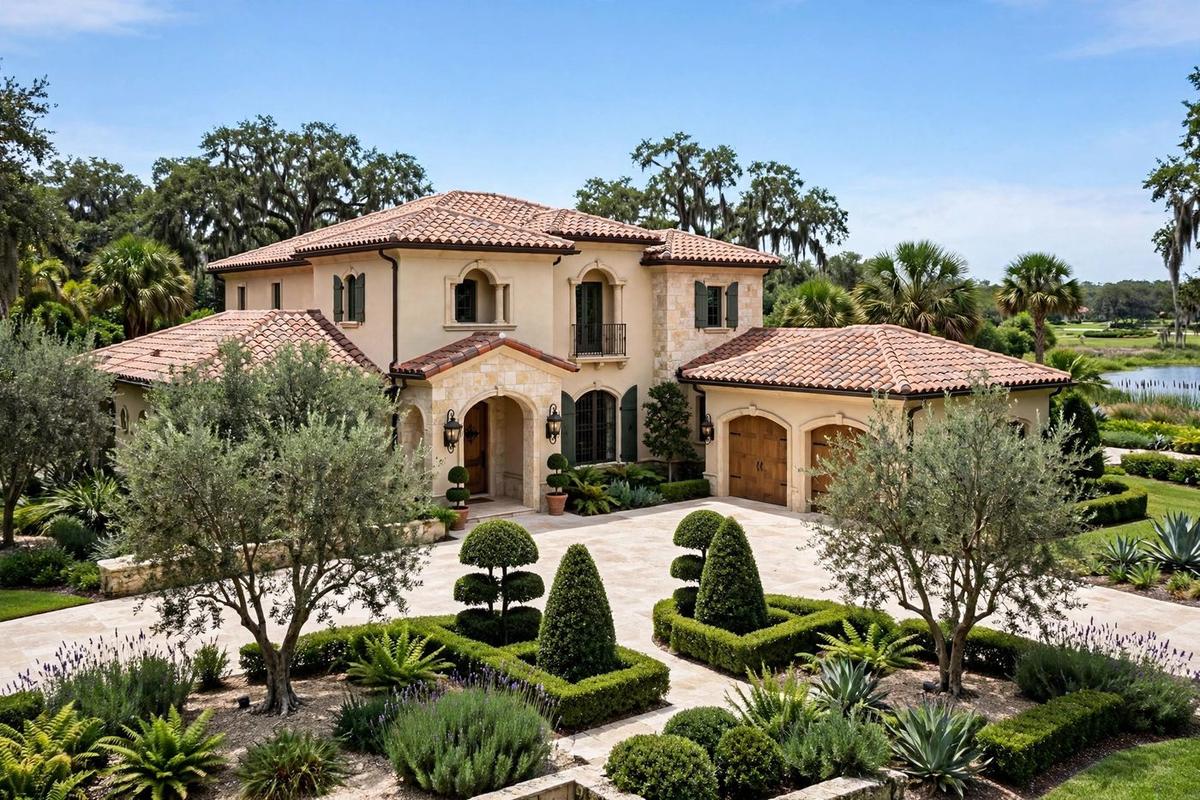
The surprise, for sellers who assume gates protect the existing stock, is that luxury communities redevelop aggressively. Bella Collina's older luxury homes, large, Mediterranean-influenced, built to the tastes of an earlier luxury cycle, face the same obsolescence as any aging stock, amplified by luxury buyers' expectations. A 2005 estate with dated finishes competes against new custom construction with current design, smart systems, and energy performance. Builders and custom-home buyers purchase the older estate for the homesite: the gate, the golf, the lake frontage, the street. The structure is the part that gets updated out of existence.
The community's own records reflect the turnover: parcel data shows Bella Collina West and East lots across Volterra Point, Vinci Way, Vetta Drive, and Bolsena Drive changing hands and carrying assessments that track redevelopment-grade values (Lake County Property Appraiser, 2026). This is not distress. It is the luxury cycle: each generation of buyer rebuilds to its own standard.
Two honest cautions. First, the 31-home sample was built to find builder acquisitions; the true community-wide redevelopment share is lower than 45.2%. Second, "older" in Bella Collina often means 1990s-2000s construction, not 1950s ranches, the refresh here is a luxury rebuild, not a clearing of obsolete stock. The economics differ, which is what the price ratio explores next.
Which buyer pays more, a family or a builder?
It depends on the home's position in the luxury cycle, and misjudging it is the expensive mistake. This is the headline question because in Bella Collina it is genuinely close.
The family buyer pays the shelter premium: the value of a finished, livable luxury home behind the gates, the golf membership lifestyle, the lake, the security, the address. A well-kept, tastefully updated estate sells to a family that wants to move in, not manage a construction project. In a community where the lifestyle is the product, that buyer pool is deep, and the premium for turnkey is real.
The builder (or custom-home buyer acting as their own developer) pays the residual land value: the finished custom home's price minus construction, site preparation, financing, and margin. On estate lots with lake or golf frontage, the residual can exceed what a family will pay for the existing structure, particularly when the existing home needs a full luxury renovation to meet current buyer expectations.
The decision turns on renovation math. If bringing the home to current luxury standards costs $400,000 and lifts the family-buyer price by $250,000, the family buyer won't pay for the renovation, but the builder doesn't need it. The home is worth more as a homesite than as a project. Conversely, if the home is genuinely current, updated within the last decade, systems sound, design not dated, the family premium usually beats the land residual, because the builder's margin comes out of the spread.
The honest test: get contractor pricing for what "current" costs, then compare the renovated family-buyer price against the land residual. In Bella Collina, that comparison, not sentiment about the home, is the pricing decision. The same family-versus-builder question shapes 12 South / Belmont, ranked 37th of 189 neighborhoods with a 40.0% builder-demand rate.
What is the lot itself worth? How do builders do the math?
The residual method, at luxury scale. Start with the finished custom home's sale price on a comparable Bella Collina lot, luxury new construction in the community trades in the multi-millions. Subtract luxury construction costs: custom finishes, pools and outdoor living, smart systems, landscaping at estate scale. Subtract removal of the existing estate, larger structures cost more to clear. Subtract architectural review compliance, permits, financing, and carry over a longer build timeline. Subtract the builder's margin. The residual is the supportable land price.
The 10,000 sq ft sample minimum, the largest in the study, matters here. Estate-scale parcels support the sprawling single-story luxury product buyers want, and in a golf community, the lot's position (golf frontage, lake views, cul-de-sac privacy) moves the residual more than raw square footage. Two 12,000 sq ft lots can carry residuals hundreds of thousands apart based on frontage alone.
Taxes belong in the seller's math too. Lake County parcel records show the community's assessments track luxury values closely, one recent notice showed total taxes near $28,000 on a taxable value around $2.17 million (Lake County Property Appraiser, 2026). Those carrying costs, plus HOA dues, make the hold expensive: every month of market time on an estate burns five figures. The residual the builder pays has to clear the seller's alternative, and the seller's alternative bleeds monthly.
Should you fix it up, or sell as-is?
In the luxury cycle, the renovation trap is the most expensive version in this study. "Fix up or sell as-is?" is the most-asked question type in the seller research, and Bella Collina's numbers make it perilous.
Luxury renovation costs are not kitchen-and-bath costs. Bringing a 2005 estate to current luxury standards, stone, millwork, systems, outdoor living, pool refinish, routinely runs $300,000 to $600,000. And the return profile is binary: if the buyer is a family seeking turnkey, a genuine current-standard renovation can capture the shelter premium. If the buyer is a builder or custom-home buyer who will redevelop, the entire $400,000 returns $0, the finishes leave with the walls.
With a 45.2% sample builder-demand rate, the probability of the zero-return outcome is nearly half, the highest luxury-market redevelopment probability in this batch. The probability-weighted return on pre-sale luxury renovation is therefore poor unless the seller is certain of the family buyer pool. And certainty is rare: the family buyer for a $2 million estate is selective, and "renovated to 2024 standards" depreciates fast in luxury.
The honest exception: a light, targeted refresh, paint, landscaping, staging, minor cosmetic updates, can help a well-kept home compete for the family buyer without risking the six-figure renovation. But the full luxury renovation before sale is a speculation, not an investment. In a community where nearly half the sampled older homes were redeveloped, it is a speculation against the odds.
The gated-community wrinkle: HOAs, questionnaires, and the buyer pool
Bella Collina's gates change the transaction mechanics in ways sellers discover late. This is the wrinkle the headline promises, and it affects both paths, listing and off-market.
For listings, the HOA is a second counterparty. Architectural review governs exterior changes. HOA questionnaires, the resale documents lenders require, can stall or kill financed deals; one real seller situation in the research involved an HOA that wouldn't complete the questionnaire for an institutional cash buyer, freezing the transaction. Estoppel fees, transfer fees, and approval timelines add weeks and thousands to every deal. None of this appears in the list price. All of it comes out of the seller's time and proceeds.
For off-market sales, the HOA cuts both ways. A direct cash buyer needs no lender questionnaire, one common HOA friction disappears entirely. But the buyer still needs HOA compliance for any redevelopment: architectural review of the new build, construction rules, timelines. A serious land buyer in Bella Collina has navigated the HOA before and prices that navigation into the offer. An out-of-area intermediary who hasn't is guessing.
The verification from the earlier sections applies with a community-specific addition: ask the buyer about their HOA experience. A direct buyer who has closed inside Bella Collina or comparable gated communities can describe the architectural review process from experience. One who can't is learning on your timeline.
How do you verify a direct cash buyer?
Proof of funds, recorded closings, clear contract terms, plus HOA fluency. The standard three verifications, in order: proof of funds in the buyer's own name dated within 30 days (not a pre-approval, not a "private lender" letter); recorded prior closings in the buyer's entity name, checkable in Lake County records (Lake County Clerk of Court, 2026), deeds, not testimonials; and a contract the buyer closes in its own name, with earnest money of 1% or more forfeited by walking. Read the contract's terms before you sign.
In Bella Collina, add the fourth check: gated-community experience. Ask which HOA-governed communities the buyer has closed in and how they handled architectural review. An intermediary who shops contracts fast, before complications surface, is uniquely fragile behind gates, where HOA timelines and questionnaires slow everything down. A buyer who can't discuss the HOA process specifically is not a buyer. They're a middleman hoping the gate stays open.
What does a listing really net, and how fast can a direct sale close?
The ledger at luxury scale, where every line item is larger. On a $1,800,000 estate sale, a plausible Bella Collina number, a 5% to 6% commission is $90,000 to $108,000 (National Association of Realtors, 2025). Florida seller closing costs, title, documentary stamps, prorations, add roughly 1.5% to 2.5%. Inspection and appraisal credits on a large estate commonly run $25,000 to $75,000: pools, roofs, and complex systems give buyers leverage. HOA transfer and estoppel fees add thousands more. Carrying costs, mortgage or equity opportunity cost, property taxes (five figures annually per the parcel records), insurance (Florida luxury insurance is its own crisis), HOA dues, pool and landscape maintenance, run $10,000 to $18,000 a month. Four to nine months of market time for luxury estates is normal: $40,000 to $162,000 of hold expense before any price reduction.
Add the midpoints and a $1,800,000 list nets in the $1.4M-to-$1.5M range after a full cycle, a $300,000-to-$400,000 gap between price and proceeds. That net, not the price, is what an off-market offer should be measured against.
A direct cash sale closes in 7 to 21 days with the seller setting the date, no lender, no appraisal, no HOA questionnaire for a mortgage, no months of showings behind the gates. For a seller carrying $14,000 a month in taxes, insurance, dues, and maintenance, every month of market time is $14,000 of the listing's price transferred to the carry. The off-market number, with zero commission and zero months of hold, should be compared against the listing's net after the full cost of achieving it.
What does selling off-market change for a Bella Collina seller?
Five structural advantages, priced at luxury scale. Behind the gates, every cost of listing is larger, which makes every off-market saving larger too.
First, privacy: zero showings, zero open houses, no public marketing period. No listing photographs of the estate on the portals, no procession of lookers through a gated community that values discretion, no days-on-market for the neighbors to discuss at the clubhouse. The transaction stays between two parties.
Second, timing: a direct purchase typically closes in 7 to 21 days from signed contract, versus 4 to 9-plus months for a listed luxury estate, and the seller sets the date, including a delayed closing or a short leaseback when the next home is not ready. At $10,000 to $18,000 a month in carrying costs, the months saved are the largest line item in the whole comparison.
Third, no commissions. A listing pays agents on both sides, typically 5% to 6% of the price combined (National Association of Realtors, 2025), which is $90,000 to $108,000 on a $1,800,000 estate. A direct sale has no agents, so nothing is owed.
Fourth, no closing costs. Seller-side costs, title, documentary stamps, prorations, typically run 1% to 2%. Commissions plus closing costs commonly exceed $110,000 on a $1,800,000 sale, the price level used in this report's listing example. A direct purchase has none of these line items.
Fifth, no inspections or repairs. The sale is as-is in the full sense: no inspection contingency, no $10,000 to $30,000 in repair credits or price reductions when the inspector works through a large estate's pools, roofs, and complex systems, no renegotiation round. The buyer underwrites the property as it stands.
Methodology and limitations
This report draws on four evidence sources. First, the builder-demand sample assembled for the 189-neighborhood study: 31 homes in 34756 built in 1980 or earlier, 14 acquired by builders and replaced, with older homes selling at 37.7% of new-build prices on comparable lots (Legacy Off-Market, 2026). Second, public records: Lake County Property Appraiser parcel and TRIM records for the Bella Collina community, used to confirm assessments, turnover, and tax levels rather than any single parcel's outcome. Third, market records: dated sold and new-construction listings for 34756 from Redfin and Zillow. Fourth, the seller-question research, 348 distinct real questions from home sellers, which selected the questions answered here. The study's ranking and sampling rules are published on its methodology page.
Not done: no title work on any property, no physical inspection of any home, and no verification of any sale beyond its listing record. Luxury price points cited are illustrations from dated listings and parcel records, not appraisals. HOA rules, fees, and review processes vary and were not independently verified. The residual-land math is a simplified model; real builder underwriting adds financing structure, entitlement risk, and carry assumptions not modeled here.
The central caveat is the sample. Thirty-one older homes in the age band builders target cannot describe every parcel in 34756, and the sample was built to find builder acquisitions, so 45.2% describes the sample, not the community. Read it as evidence of an active luxury redevelopment market, not as a census.
Conclusion
So which buyer pays more in Bella Collina, a family or a builder? On the record assembled here, the honest answer is: it depends on where your home sits in the luxury cycle, and the cost of guessing wrong is the highest in the study. A current, well-kept estate captures the family premium: the lifestyle behind the gates is the product, and turnkey commands it. A dated estate on a prime homesite captures the builder's residual: the land, the frontage, and the gate are worth more than the structure. The 37.7% price ratio says the land component dominates on average. The 45.2% builder-demand rate says nearly half the sampled sellers already made the builder's choice.
The mechanics are the same as everywhere else, at luxury scale. The residual math prices the lot. Pre-sale luxury renovation is a speculation against nearly even odds. The listing's net, after commission, concessions, HOA friction, and $10,000-to-$18,000 monthly carrying costs, is the only honest comparison for any offer. A direct buyer closes in weeks with no lender questionnaire. And the difference between that buyer and a paper buyer is three verifications plus HOA fluency.
Legacy Off-Market buys directly from sellers in 34756 and the other 188 neighborhoods in this study, then places each deal with a vetted builder; every offer is backed by proof of funds and recorded closings. Sellers who want a number on their property can reach the acquisitions team at 401-219-4207 or aidansowa@outlook.com.
Behind the gates, is your home the product, or is the homesite?
Frequently Asked Questions
How do I know if Legacy Off-Market buys in my ZIP code?
The company buys in 189 neighborhoods across 37 states, and Bella Collina ranks 38th in the study. Enter your ZIP in the coverage checker on the company site to confirm, or call 401-219-4207.
Will the HOA complicate an off-market sale?
Less than a financed listing. A cash buyer needs no lender questionnaire, which removes a common HOA friction point. Redevelopment still requires architectural review, so ask the buyer about their experience with gated-community HOAs specifically.
Should I renovate my Bella Collina home before selling?
A full luxury renovation ($300K to $600K) is a speculation: it pays only if the family buyer materializes, and returns $0 if the buyer redevelops. A light cosmetic refresh is low-risk. The full renovation is a bet against nearly even odds.
Will I net less selling off-market than listing?
A $1,800,000 listing typically nets $1.4M to $1.5M after commission, concessions, HOA costs, and months of five-figure carrying costs. An off-market sale skips every one of those deductions and closes in weeks. Compare the nets, not the prices.
How fast can an off-market sale close?
Seven to 21 days from signed contract, with the seller choosing the date. A listed luxury estate normally needs 4 to 9-plus months including market time, at $10,000 to $18,000 a month of carry.
What does Legacy Off-Market need from me to make an offer?
The address, your timeline, and permission to review public records. No showings, no staging, no open houses, no waiting on a buyer's lender. Call 401-219-4207 or email aidansowa@outlook.com.
Sources
- Lake County Property Appraiser, 2026. Parcel and TRIM records, Bella Collina / Montverde FL. Official record.
- Legacy Off-Market, 2026. Company coverage and ZIP lookup. Market data.
- Legacy Off-Market, 2026. Builder-demand sample, 189-neighborhood study: 31 homes sampled in 34756, 14 acquired by builders, avg. older-home price 37.7% of new build. Market data.
- National Association of Realtors, 2025. Typical seller commission structures, Orlando metro market. Industry report.
- Redfin, 2026. Recently sold homes and new construction, ZIP code 34756, Montverde FL. Market data.
- U.S. Census Bureau, 2025. QuickFacts: Montverde town, Florida. Government data.
- Zillow, 2026. Home values and recently sold, 34756. Market data.