In the sample compiled for this report, 25 of 36 older homes in South Miami's 33143, including the High Pines streets, were acquired by builders and redeveloped with new construction, a builder-demand rate of 69.4%, ranking 14th of 189 neighborhoods in this study (Legacy Off-Market, 2026). The older homes that changed hands sold for, on average, 20.6% of what new construction commands on a comparable lot. South Miami is the ZIP in this batch where the two-buyer market is most visible: good schools and a genuine neighborhood draw a real live-in buyer pool, yet more than two-thirds of sampled older homes were still bought for their lots. For a seller, the question is not whether the land has value, it plainly does. It is whether the listing process captures it, or gives it away.
Key Findings
- 69.4% builder-demand rate, ranked #14, 25 of 36 sampled homes built in 1980 or earlier in 33143 were acquired by builders and redeveloped, the 14th-highest composite rank among the 189 neighborhoods studied.
- 20.6% price ratio, older homes sold for barely a fifth of new-build prices on comparable lots, matching the widest old-to-new gaps in the study.
- 5,250 sq ft minimum lot, the smallest parcel in the sample; South Miami's postwar grid runs compact, which concentrates land value per square foot.
- The two-buyer market is on full display, strong schools draw live-in buyers, yet land buyers still won more than two-thirds of sampled transactions.
- The listing decision is a math problem, commissions, concessions, and carrying time decide whether the MLS or an off-market sale nets more, and the ledger favors knowing both numbers.
What does the builder-acquisition record in 33143 actually show?
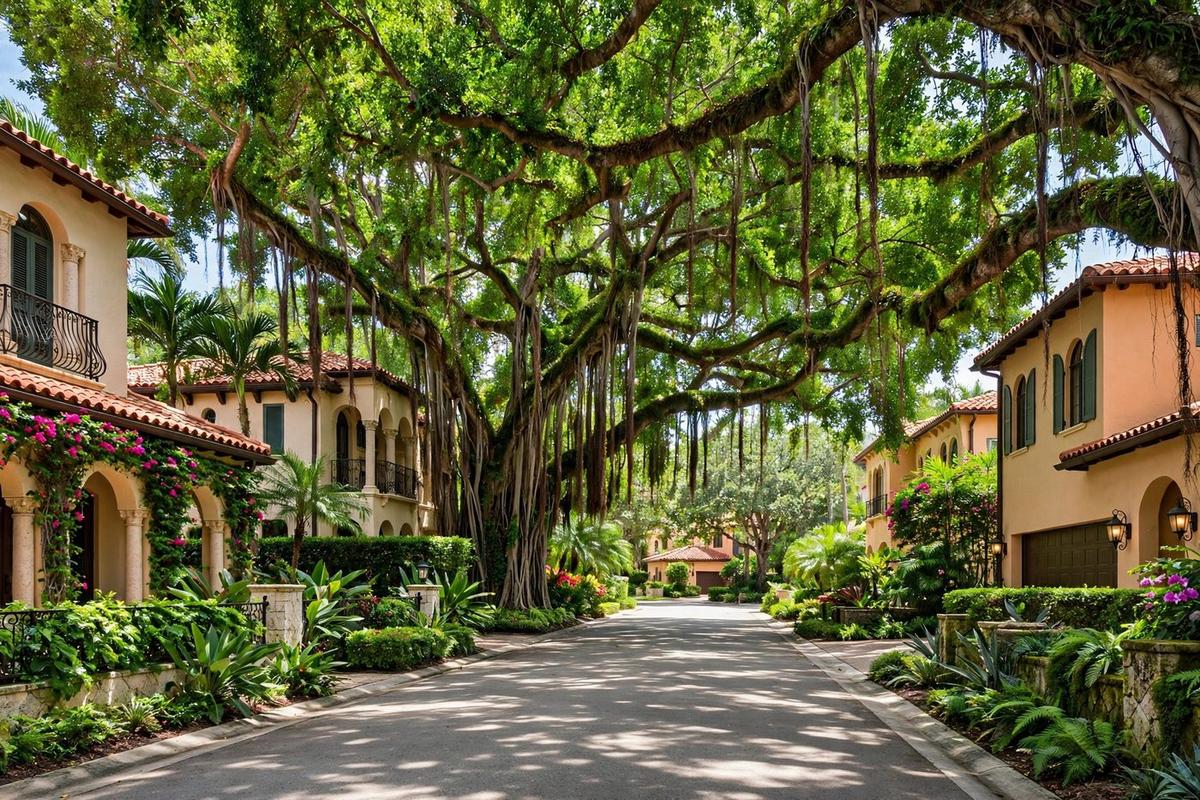
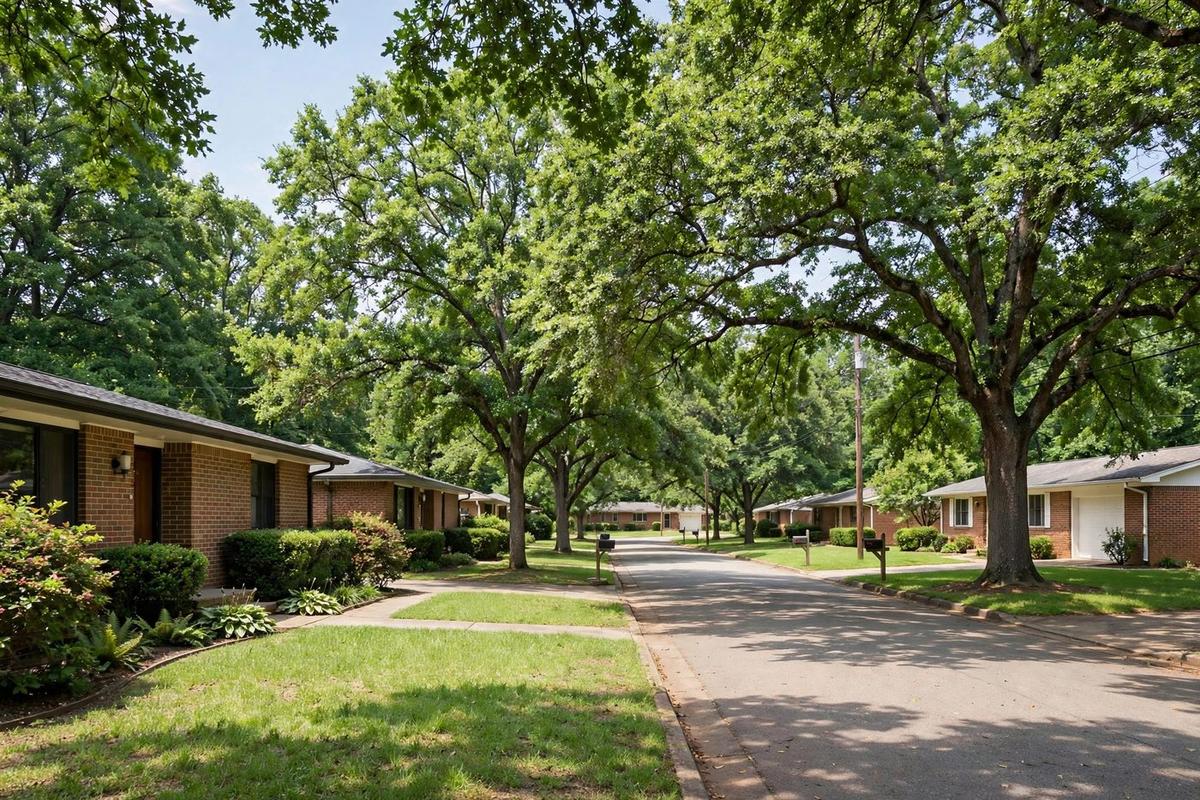
It shows a family suburb where builders compete directly with families, and usually win the older homes. Of 36 homes in the 33143 sample built in 1980 or earlier, 25 went to builders, 69.4%, and the ZIP ranks 14th of 189 neighborhoods on the study\'s composite ranking. South Miami's appeal is easy to state: strong public schools, a real downtown on Sunset Drive, and 1950s and 1960s ranch streets under a mature tree canopy, minutes from the University of Miami and the Dadeland job centers. That appeal draws two kinds of buyers to the same listing, the family that will live in the ranch, and the builder who will replace it.
The 69.4% figure is the lowest builder-demand rate among the Miami-Dade ZIPs in this study's top 20, and the reason is instructive: where the housing stock is genuinely livable and the schools are strong, the live-in buyer pool is deep enough to save roughly a third of the older homes. But "save" is doing work in that sentence, those homes sold to occupants at occupant prices, which the next section shows are still a fraction of new-build values. The builder's bid sets the floor. The family's bid sometimes clears it.
One caution keeps this finding honest: a builder-demand rate describes what buyers did with homes they already bought, not what any single seller will receive. The price record, and which buyer shows up for a given house, is the next section.
South Miami sits between two instructive comparisons. Greensboro local submarket ranks 13th of 189 neighborhoods with an 87.5% builder-demand rate, and Coconut Grove ranks 15th with an 83.3% rate. In all three, the residual-land math decides the seller's number, whether the buyer is a custom builder or a family with renovation plans. North Hills ranks 16th of 189 neighborhoods with an 85.7% builder-demand rate, where the same two-buyer competition plays out inside Raleigh's Beltline.
How wide is the gap between an older home and a new build?
Among the widest in the study, even with a real live-in buyer pool. In the 33143 sample, older homes sold for an average of 20.6% of the price of new construction on comparable lots, the same ratio as West Palm Beach's 33405, despite South Miami's stronger occupant demand. In concrete terms: where a new build sells for $2,400,000, the older home nearby changed hands for roughly $494,000. Nearly 80% of the new home's value sits in the land, the school zone, and the right to build.
This is the finding that should reshape how sellers think. A deep live-in buyer pool does not close the old-to-new gap; it only changes who loses the bidding. The family buying the 1958 ranch to live in it pays the occupant price, the 20.6% number. The builder pays the residual land value. In South Miami those two numbers are close enough that families sometimes win, which is why the builder-demand rate is "only" 69.4%. But the seller's proceeds in either case are set by the land, not the structure.
Averages hide the High Pines divide. Streets in High Pines and the most desirable school pockets carry new-build comp sets well above the ZIP average, while blocks nearer the commercial corridors trade lower. The ratio's direction, though, is uniform: in 33143, the market does not pay for the ranch. It pays for the lot in a top school zone, with the structure valued at whatever the winning buyer type assigns it, near zero for the builder, modest for the family.
What is the lot itself worth?
In South Miami, the school zone is part of the land value, and the residual math shows it. This is the question sellers ask most in every market in this study: how do off-market buyers actually price land? Start with the "as-new" value. Recent new construction in South Miami and High Pines has sold in the $1.9M to $3.5M range depending on street, lot size, and school-zone pocket (Redfin, 2026). Subtract construction cost, South Florida builds carry hurricane-code premiums, subtract permits, impact fees, financing, and the builder's margin, then subtract site preparation.
Worked as an illustration, not a promise: a $2,400,000 new-build sale, minus roughly $1,050,000 in hard and soft construction costs, minus a builder margin near 20%, leaves a residual land value in the neighborhood of $850,000 to $950,000, before site-preparation costs of $25,000 to $45,000. That residual is the number a land buyer negotiates against, and it is typically far above what the same property lists for when marketed as a ranch house.
Three things move the number in 33143. School zoning is first: the South Miami school assignment is capitalized directly into the lot price, and builders underwrite it explicitly. Second is lot size: at a 5,250 sq ft minimum, width constrains the floor plan, and wider or corner lots carry real premiums. Third is the street: High Pines and the interior canopy streets command new-build premiums that rarely appear in older-home listings. A seller who knows the residual, including the school-zone component, negotiates from the builder's own arithmetic. A seller who lists "a charming ranch near good schools" is giving the land story away in the listing copy while pricing the structure.
Should you fix it up or sell as-is?
In 33143, this question has a genuine two-sided answer, which is exactly why sellers get it wrong. "Sell as-is or fix it up?" is the most-asked question type in the seller research behind this series, and South Miami is one of the few markets where renovation sometimes pays: the live-in buyer pool is real, the schools are a durable draw, and an updated ranch can sell to a family at a genuine occupant premium.
But the probabilities still govern. A $120,000 renovation might lift the sale price by $90,000 to $110,000 for the family buyer, a partial return before months of disruption. If the buyer is a builder, it returns $0. With 69.4% of sampled older homes going to builders, the probability-weighted return on pre-sale spending is negative in the expected-value sense, even though the minority outcome, selling updated to a family, is the one sellers picture. Renovation is a bet that the seller's house lands in the 30.6%, placed with the seller's own capital, at risk.
The honest screen is condition and street. A well-kept ranch on a prime school-zone street, with updated systems, has a real shot at the occupant premium, and the seller should get a candid read on that before spending. A functionally obsolete rental-grade ranch on an average block does not; its buyer is the builder, and every renovation dollar is site preparation-bound. The costly mistake is renovating the second house on the assumption it is the first.
What does listing on the open market really cost?
In South Miami, the listing ledger has a specific shape: strong demand, but older-home friction at every step. The full accounting looks like this.
First, the commission: typically 5% to 6% of the sale price. On a $750,000 sale, that is $37,500 to $45,000 off the top (National Association of Realtors, 2025). Second, seller-side closing costs, title, documentary stamps, prorations, commonly another 1% to 2%. Third, concessions: South Miami's 1950s and 1960s housing stock means inspections routinely surface roof age, electrical, plumbing, and insurance issues; credits and reductions of $15,000 to $40,000 on older inventory are normal.
Fourth is carrying cost over market time. South Miami demand is real, but older homes that do not fit the new-build buyer pool still take 60 to 120 days, and price reductions are common when the insurance quote lands during the buyer's due diligence. Every month costs mortgage or equity carry, taxes, insurance, utilities, and maintenance, $4,000 to $7,000 a month on a $750,000 property. Three to four months burns $12,000 to $28,000 in hold expense.
Add the midpoints and a $750,000 list price nets the seller something in the low-to-mid $600,000s after a normal cycle, before any price reduction. Compare that net-proceeds figure, not the list price, against an off-market offer. The clock in the headline is the carrying-cost clock, and it runs whether the seller watches it or not.
How do you handle a cash buyer, and how do you tell one from a wholesaler?
Verify funds, verify closings, and never sign an assignable contract you do not understand. "How do I handle cash buyers?" is among the most common real questions sellers ask, and in a market where builders bid against families, the off-market pitch arrives constantly, from both real buyers and intermediaries.
The distinction is structural. The honest framing is this: Legacy Off-Market is a wholesaler that sources off-market deals to builders, buying your property directly from you off-market with its own capital and placing the deal with a vetted builder. A wholesaler signs a purchase contract with no means or intent to close, then shops the contract to a real buyer for a fee, profiting from the spread between the offer and the end buyer's price. The wholesaler's model requires paying the seller less than a direct buyer would, because the fee comes out of the seller's equity.
Three verifications separate them. First, proof of funds in the buyer's name, dated within the last 30 days, not a pre-approval, not a letter from a "private lender." Second, a record of actually closed purchases: recorded deeds in the buyer's entity name, checkable in county records (Miami-Dade County Clerk of Court, 2026). Third, the contract itself: a direct buyer closes in the name on the contract, with no assignment clause, and posts a meaningful earnest-money deposit, typically 1% or more, forfeited if it walks away. An assignment clause plus a token deposit is the signature of a contract that was never meant to close.
In 33143, wholesalers have a specific play: they pitch the confused seller a price between the occupant number and the builder's residual, then shop the contract to the builders who would have paid the residual directly. The seller's loss is the wholesaler's fee. Ask the three questions. Legitimate buyers welcome them.
Is it a bad time to sell an older home in South Miami?
For a home that is a candidate for builder acquisition, the school-zone land market runs on a longer cycle than the resale headlines. "Is it a bad time to sell?" is a perennial seller question, and in South Miami it usually means mortgage rates and resale inventory. That frame fits the occupant market. The land market, which set the price on 69.4% of sampled transactions, clears on new-build sale prices, construction costs, and the supply of lots in top school zones.
Those fundamentals remain constructive. New construction in South Miami sells to equity-rich buyers, the school assignment is a durable demand anchor across rate cycles, and the permit record shows builders still replacing the postwar stock (Miami-Dade County Property Appraiser, 2026). What changes with delay is the structure's side of the ledger: roofs age, insurance reprices, and the occupant buyer pool narrows, while the land value, anchored to the school zone, holds.
That yields the two-part answer. It can be a bad time to list an aging ranch on the MLS, where it will absorb months of market time and inspection friction while the carrying-cost clock runs. It is a structurally ordinary time to sell the same property off-market to a land buyer, whose bid is anchored to new-build comps in the school zone rather than resale sentiment.
What are the five concrete gains of an off-market sale?
In a ZIP where builders and families bid on the same ranches, the off-market route changes the economics, not just the buyer, in five specific ways. First, privacy: zero showings, zero open houses, no public marketing period, no school-zone gossip about the sale. Second, flexible timing: 7 to 21 days to close versus 60 to 120-plus days for a listed older home, with a leaseback if the family needs to stay through the school term. Third, no commissions: none of the typical 5% to 6% (National Association of Realtors, 2025), roughly $31,000 on a $555,000 older-home sale. Fourth, no seller-side closing costs: none of the usual 1% to 2%, so the 6% to 8% that commissions plus closing costs consume, over $37,000 on that $555,000 transaction, stays with the seller. Fifth, no inspections or repairs: no $10,000 to $30,000 in repair credits or price reductions, a true as-is sale, the right structure when the likeliest buyer is a builder.
Methodology and limitations
The report stands on three source types. First, Legacy Off-Market's builder-demand sample for the 189-neighborhood study: 36 homes in 33143 built in 1980 or earlier, 25 acquired by builders and redeveloped, with an average older-home sale price of 20.6% of new-build prices on comparable lots (Legacy Off-Market, 2026). Second, county records: the Miami-Dade County Property Appraiser's parcel and permit data, used to confirm site preparation and new-construction activity directionally. Third, market data: dated sold listings from Redfin and Zillow for 33143, the source of the new-build price ranges cited. The 348 seller questions in the research behind this series determined which questions get answered; they are not evidence.
What was not done: no title search, no inspection of any individual home, and no verification of any new-build sale beyond its listing record. The price ranges illustrate from dated listings rather than appraising, and the residual-land arithmetic is a simplified model.
The central limitation is the sample. Thirty-six homes selected as likely builder acquisitions cannot describe every parcel in 33143. The 69.4% figure describes the sample, which was assembled to find builder acquisitions, so treat it as evidence of a strong two-buyer off-market builder market, which the permit record supports, not as a census of the ZIP code.
Conclusion
So should you list your South Miami home or sell the lot beneath it? On the record assembled here, the market has largely decided: 69.4% of sampled older homes were bought for their lots, and older homes changed hands at 20.6% of new-build prices. The school zone, the canopy streets, the proximity to the region's job centers, the market prices all of it into the land. The 1950s ranch is priced at whatever the winning buyer assigns it, which for the builder is site preparation cost and for the family is a fraction of new construction.
The throughline is consistent. The two-buyer market is real here, and it is the reason sellers must run both ledgers: the occupant premium, if their house can credibly chase it, against the builder's residual, net of nothing. The listing's full cost, commission, concessions, carrying time, is the number every off-market offer should be measured against. And the wholesaler's spread is the tax on sellers who do not verify.
Legacy Off-Market buys directly in 33143 and the other 188 neighborhoods in this study, as a principal, not an intermediary, with proof of funds and recorded closings behind every offer. South Miami sellers can reach the acquisitions team at 401-219-4207 or aidansowa@outlook.com.
When more than two-thirds of older homes were bought for the dirt beneath them, is your listing selling the house, or selling the months it takes to learn it was the lot all along?
Frequently Asked Questions
How do I know if Legacy Off-Market buys in my ZIP code?
The company buys in the 189 neighborhoods ranked in this builder-demand study, with 33143 (South Miami / High Pines, Florida) ranked 14th. Enter your ZIP in the coverage checker to confirm, or call 401-219-4207.
Will I get less selling off-market than listing with an agent?
Work from net proceeds. A listed ranch nets its price minus commission, closing costs, inspection concessions, and months of carrying cost. The off-market offer deducts none of that.
Do I need to make repairs before selling off-market?
No. Off-market sales are as-is. With builders and families competing for the same lots, money spent on finishes helps neither buyer and anchors the seller to the wrong price.
How fast can an off-market sale close?
Seven to 21 days is typical off-market, versus 60 to 120-plus days for a listed older home. The seller chooses the closing date, and a leaseback can carry the family through the school term.
How is an off-market buyer different from a wholesaler?
A direct buyer buys in its own name with its own capital and forfeits a meaningful earnest deposit by walking away. A wholesaler profits by assigning your contract to someone else. Verify proof of funds, recorded closings, and a non-assignable contract.
What does Legacy Off-Market need from me to make an offer?
The address, your timeline, and permission to pull public records. No showings, no staging, no open houses. Call 401-219-4207 or email aidansowa@outlook.com.
Sources
- Legacy Off-Market, 2026. 189-neighborhood builder-demand study: 36 homes sampled in 33143, 25 acquired by builders, avg. older-home price 20.6% of new build. Market data.
- Legacy Off-Market, 2026. Coverage checker and company site. Market data.
- Miami-Dade County Property Appraiser, 2026. Parcel and permit records, South Miami FL. Official record.
- National Association of Realtors, 2025. Profile of Home Buyers and Sellers: typical seller commission structures, Miami-Dade market. Industry report.
- Redfin, 2026. Recently sold homes and new construction, ZIP code 33143, South Miami FL. Market data.
- U.S. Census Bureau, 2025. QuickFacts: South Miami city, Florida. Government data.
- Zillow, 2026. Home values and recently sold, 33143. Market data.