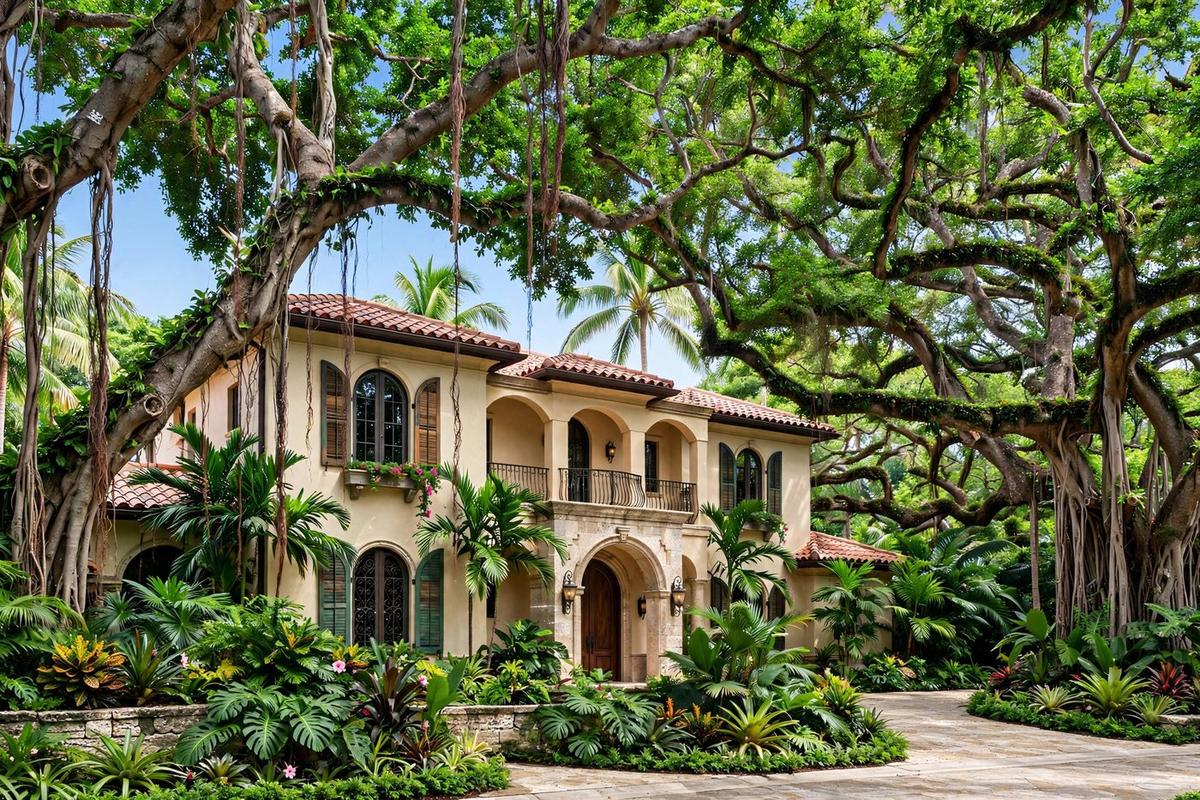
In the sample compiled for this report, 25 of 30 older homes in Miami's 33133, Coconut Grove, were acquired by builders and redeveloped, a builder-demand rate of 83.3%, ranking 15th of 189 neighborhoods in this study (Legacy Off-Market, 2026). The older homes that changed hands sold for, on average, 20.1% of what new construction commands on a comparable lot, the widest old-to-new gap of any ZIP in this batch. The Grove is Miami's oldest neighborhood, and its banyan canopy and bayfront streets are what the market pays for. The bungalow beneath the canopy is increasingly what the market removes. For sellers, the Grove presents a specific hazard the record names plainly: the renovation trap, where love for the neighborhood's character meets a buyer pool pricing the lot.
Key Findings
- 83.3% builder-demand rate, ranked #15, 25 of 30 sampled homes built in 1980 or earlier in 33133 were acquired by builders and redeveloped, the 15th-highest composite rank among the 189 neighborhoods studied.
- 20.1% price ratio, older homes sold for barely a fifth of new-build prices on comparable lots, the widest old-to-new gap in this ten-ZIP batch.
- 4,500 sq ft minimum lot, the smallest parcel in the sample; the Grove's historic platting runs tight, concentrating the canopy premium per square foot.
- The canopy premium accrues to the land, buyers pay for the banyans, the bay breeze, and the Grove address; the structure captures little of it.
- The renovation trap is the local hazard, Grove sellers over-improve bungalows the buyer pool will acquire for redevelopment, converting equity into debris the builder clears away.
What does the builder-acquisition record in 33133 actually show?
It shows Miami's oldest neighborhood being rebuilt lot by lot under its own canopy. Of 30 homes in the 33133 sample built in 1980 or earlier, 25 were acquired by builders, 83.3%, and the ZIP ranks 15th of 189 neighborhoods on the study's composite ranking. Coconut Grove's housing stock is among the oldest in Miami-Dade: Bahamian-influenced cottages, 1920s bungalows, and mid-century homes on streets where the tree canopy is itself a landmark. Builders are not buying the history. They are buying the address, the bayfront proximity, the canopy streets, the village center, and replacing the structure with new construction that the market prices at multiples of the old.
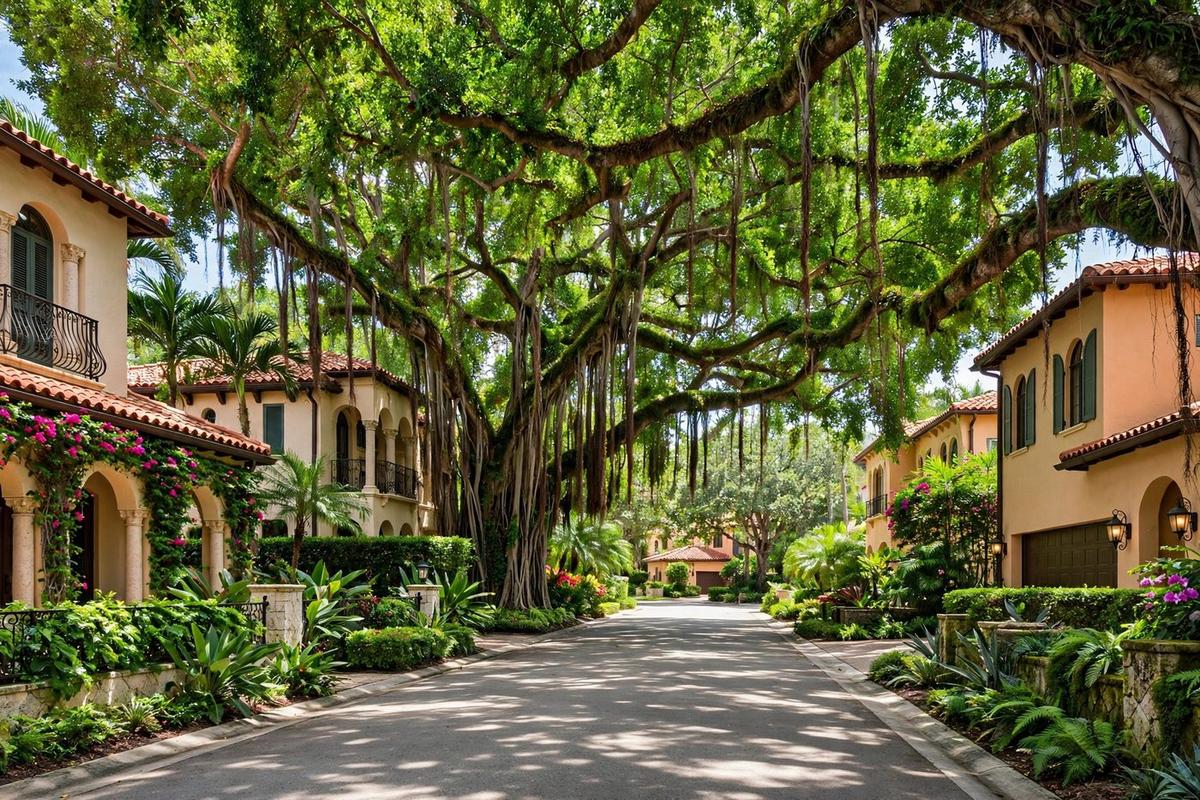
The pattern runs street by street. On the Grove's interior blocks, new two- and three-story homes rise behind preserved banyans, their designs negotiated around the trees that give the neighborhood its premium. The canopy is the amenity, and notably, it survives the acquisition: mature trees are protected, prized, and priced into the new-build comps. What does not survive is the bungalow. The record is unambiguous about which of the two the market values.
One caution keeps this finding honest: a builder-demand rate describes what buyers did with homes they already bought, not what any single seller will receive. That requires the price record, which is the next section.
The Grove's canopy streets have parallels. South Miami / High Pines ranks 14th of 189 neighborhoods with a 69.4% builder-demand rate, and North Hills ranks 16th with an 85.7% rate. Each report in this series runs the same residual math; the Grove's version is simply priced at a higher altitude. Kierland / Scottsdale Airpark / Magic ZIP ranks 17th of 189 neighborhoods with an 85.2% builder-demand rate, the desert version of the same lot-first market.
How wide is the gap between an older home and a new build?
The widest in this batch, and the number that defines the Grove market. In the 33133 sample, older homes sold for an average of 20.1% of the price of new construction on comparable lots. In concrete terms: where a new build sells for $5,000,000, the older bungalow nearby changed hands for roughly $1,005,000. Four-fifths of the new home's value is the Grove itself, the canopy, the bay, the address, plus the right to build. The structure's contribution is the remaining fifth, and for the builder-buyer it is zero.
Averages hide the bayfront divide. The 20.1% figure blends bayfront and near-bay parcels, where new-build comps reach deep into eight figures, with interior Grove blocks where they do not. On the water streets, the structure's share of the transaction rounds to a rounding error. On interior blocks, a livable bungalow retains a genuine occupant premium. But the ratio's message is uniform in direction: the Grove premium lives in the land.
The honest distinction is between the Grove people love and the Grove the market prices. Sellers often anchor to the neighborhood's charm, the canopy, the village, the history, and price the bungalow as though charm were structural. The buyer pool separates the two cleanly: it pays the canopy premium for the lot, every time, and treats the bungalow as a lot with site-preparation costs in more than four out of five sampled transactions.
What is the lot itself worth?
In the Grove, the canopy has a price, and the residual math captures it. This is the question sellers ask most in every market in this study: how do off-market buyers actually price land? Start with the "as-new" value. Recent new construction in Coconut Grove has sold in the $3.5M to $8M range depending on bay proximity, lot size, and canopy-street position (Redfin, 2026). Subtract construction cost, high-end Grove builds with tree-preservation engineering carry real premiums, subtract permits, impact fees, financing, and the builder's margin, then subtract site preparation and clearing.
Worked as an illustration, not a promise: a $5,000,000 new-build sale, minus roughly $2,200,000 in hard and soft construction costs, minus a builder margin near 20%, leaves a residual land value in the neighborhood of $1,700,000 to $1,900,000, before site preparation of $30,000 to $50,000 and tree-protection work during construction. That residual is the number a land buyer negotiates against.
Three things move the number in 33133. Bay position is first: direct bayfront and near-bay streets command residuals multiples of interior blocks. Second is the canopy itself, mature tree cover that survives into the new build is priced into the comps, and lots where the canopy is intact carry premiums. Third is lot size: at a 4,500 sq ft minimum, the Grove's tight historic platting means width and assemblage potential matter enormously. A seller who knows the residual, canopy included, negotiates from the builder's own arithmetic. A seller who prices "a charming Grove bungalow" is selling the wrong asset class.
Should you fix it up or sell as-is?
In the Grove, this is the renovation trap, and it has a specific local shape. "Sell as-is or fix it up?" is the most-asked question type in the seller research behind this series, and Coconut Grove is where the wrong answer costs the most, because Grove sellers love their neighborhood, and love renovates.
The trap works like this. A seller spends $150,000 restoring a 1925 bungalow, heart-pine floors, period details, a designer's kitchen, and lists it as "a piece of Grove history." The buyer pool that pays for restored history exists, but it is a sliver of the market. The modal buyer, per the record, acquires the lot for redevelopment: 83.3% of sampled older homes were acquired by builders. The $150,000 returns $0 to that buyer, and worse, the renovation anchors the seller to a price the land market will not pay, producing months of market time while the seller grieves the gap.
There is a genuine exception, and the Grove's historic character makes it real: a designated historic home, architecturally significant and properly restored, sells to the preservation buyer at a true premium. But "old and charming" is not "historic and significant," and most Grove bungalows are the former. The honest screen is architectural merit plus designation, not affection. Spending restoration dollars on a non-designated bungalow the record says will be acquired for redevelopment is the most expensive possible expression of neighborhood love.
What does listing on the open market really cost?
In the Grove, the listing ledger includes a line item most sellers miss: the cost of pricing the wrong asset. The full accounting looks like this.
First, the commission: typically 5% to 6% of the sale price. On a $1,600,000 sale, that is $80,000 to $96,000 off the top (National Association of Realtors, 2025). Second, seller-side closing costs, title, documentary stamps, prorations, commonly another 1% to 2%. Third, concessions: Grove's aging housing stock means inspections surface roof, electrical, plumbing, and termite issues routinely; credits of $25,000 to $60,000 on older inventory are normal.
Fourth is carrying cost over market time, and Grove market time for mispriced bungalows is long. A bungalow listed at its "charm price", above the land residual, can sit six to twelve months while the seller discovers the buyer pool's actual number. Every month costs mortgage or equity carry, taxes, insurance, utilities, and maintenance, $7,000 to $12,000 a month on a $1.6M property. Eight months burns $56,000 to $96,000 in pure hold expense. Fifth is the price reduction itself: the eventual capitulation from charm price to land price, which the carrying costs were incurred to avoid learning.
Add the midpoints and a $1,600,000 list price nets the seller something in the low $1.4Ms after a normal cycle, before the reduction the record suggests is coming. The net-proceeds figure, not the list price, is what an off-market offer should be measured against.
How do you handle a cash buyer, and how do you tell one from a wholesaler?
Verify funds, verify closings, and never sign an assignable contract you do not understand. "How do I handle cash buyers?" is among the most common real questions sellers ask, and the Grove's high residuals make it prime territory for every variety of off-market operator.
The distinction is structural. A direct buyer purchases the property itself, with its own capital, and closes in its own name. Legacy Off-Market is a wholesaler that works on the seller's side of that equation: we buy your home directly from you off-market, then place the deal with a vetted builder, so your sale has one committed counterparty instead of your contract being shopped around. A wholesaler of the other kind signs a purchase contract with no means or intent to close, then shops the contract to a real buyer for a fee, profiting from the spread between the offer and the end buyer's price. The wholesaler's model requires paying the seller less than a direct buyer would, because the fee comes out of the seller's equity.
Three verifications separate them. First, proof of funds in the buyer's name, dated within the last 30 days, not a pre-approval, not a letter from a "private lender." Second, a record of actually closed purchases: recorded deeds in the buyer's entity name, checkable in county records (Miami-Dade County Clerk of Court, 2026). Third, the contract itself: a committed buyer closes in the name on the contract, with no assignment clause, and posts a meaningful earnest-money deposit, typically 1% or more, forfeited if it walks away. An assignment clause plus a token deposit is the signature of a contract that was never meant to close.
In the Grove, the wholesaler's spread is the widest in the batch, because the gap between a charm-priced listing and the builder's residual is the largest. That spread is the seller's money until the seller signs it away. Ask the three questions. Legitimate buyers welcome them.
Is it a bad time to sell an older bungalow in the Grove?
For a bungalow that is a candidate for a builder acquisition, the Grove's land market runs on a longer cycle than the resale headlines. "Is it a bad time to sell?" is a perennial seller question, and in the Grove it usually means luxury-market sentiment and rates. That frame fits the occupant market for restored homes. The land market, which set the price on 83.3% of sampled transactions, clears on new-build sale prices, high-end construction costs, and the finite supply of canopy lots.
Those fundamentals remain constructive. New construction in the Grove sells to equity-rich buyers whose demand has proven durable, the canopy supply is fixed by definition, and the permit record shows builders still replacing the bungalow stock (Miami-Dade County Property Appraiser, 2026). What erodes with delay is the structure: aging roofs, systems, and termite exposure narrow the occupant buyer pool, while the land value, anchored to the canopy and the bay, holds.
That yields the two-part answer. It can be a bad time to list an aging bungalow at its charm price on the MLS, where it will absorb months of market time while the carrying-cost clock runs toward the land-price capitulation. It is a structurally ordinary time to sell the same property off-market to a land buyer, whose bid is anchored to new-build comps rather than sentiment about the bungalow. In the Grove, waiting does not improve the house. It only ages it under the canopy.
What does an off-market sale change for a Grove seller?
The Grove's renovation trap has a mirror image in the listing process: months of exposure for buyers who want the lot. Selling off-market reverses that in five ways. First, privacy: zero showings, zero open houses, no public marketing period, which matters in a village-scale neighborhood where everyone knows the house. Second, timing on your terms: 7 to 21 days to close against 60 to 120-plus days for a listed older bungalow, with a leaseback if needed. Third, no commissions: none of the typical 5% to 6% (National Association of Realtors, 2025), about $64,000 on a $1,150,000 older-home sale at Grove prices. Fourth, no seller-side closing costs: none of the typical 1% to 2%, so the 6% to 8% normally taken by commissions plus closing costs, over $80,000 on that $1,150,000 transaction, is retained in full off-market. Fifth, no inspections or repairs: no $10,000 to $30,000 in repair credits or canopy-related price reductions, a true as-is sale for the buyer pricing the address, not the bungalow.
Methodology and limitations
Three kinds of evidence support this report. First, Legacy Off-Market's builder-acquisition sample for the 189-neighborhood study: 30 homes in 33133 built in 1980 or earlier, 25 acquired by builders and redeveloped, with an average older-home sale price of 20.1% of new-build prices on comparable lots (Legacy Off-Market, 2026). Second, county records: the Miami-Dade County Property Appraiser's parcel and permit data, confirming the direction of builder acquisition and new-construction activity. Third, market data: dated sold listings from Redfin and Zillow for 33133, behind the new-build price ranges cited. The 348 seller questions behind this series chose which questions the report answers; they are not quoted as evidence.
No title search was run, no bungalow was inspected, and no new-build sale was verified beyond its listing record. The price ranges are illustrations from dated listings, not appraisals, and the residual-land math is a simplified model.
The central limitation is the sample. Thirty homes, chosen for older-home characteristics, cannot describe every parcel in the Grove. The 83.3% figure describes the sample, which was constructed to study builder acquisitions, so read it as evidence of a lot-by-lot rebuild under the canopy, which the permit record corroborates, not as a census of 33133.
Conclusion
So when does a Coconut Grove bungalow become a building site? On the record assembled here, it already has: 83.3% of sampled older homes were acquired by builders, and older homes changed hands at 20.1% of new-build prices, the widest gap in this batch. The market pays for the canopy, the bay, and the Grove address, and it pays them to the land. The bungalow is treated as a lot with site-preparation costs in more than four out of five sampled transactions. A seller who lists the charm invites the renovation trap, months of market time, and the eventual capitulation to the land price. A seller who prices the lot meets the buyer the record says is coming, on the buyer's own arithmetic.
The throughline is consistent. The builder-acquisition record is the dominant fact of this ZIP. The canopy premium accrues to the dirt, not the dwelling. The listing's full cost, commission, concessions, carrying time, and the charm-price reduction, is the number every off-market offer should be measured against. And the wholesaler's spread is the tax on sellers who do not verify.
Legacy Off-Market sources off-market deals in the Grove and across the other 188 neighborhoods covered by this study directly from sellers, then places each deal with a vetted builder. Grove sellers can start the conversation at 401-219-4207 or aidansowa@outlook.com.
When more than four out of five bungalows were bought for the land beneath the canopy, what is your listing selling, the house, or the months it takes to learn it was the lot?
Frequently Asked Questions
How do I know if Legacy Off-Market buys in my ZIP code?
The company buys in the 189 neighborhoods ranked in this study of off-market builder acquisitions, with 33133 (Coconut Grove, Florida) ranked 15th. Enter your ZIP in the coverage checker to confirm, or call 401-219-4207.
Will I get less selling off-market than listing with an agent?
Compare net proceeds. A Grove listing at $1,150,000 sheds commission, closing costs, inspection concessions, and carrying costs across a long market time. The off-market offer carries none of those.
Do I need to make repairs before selling off-market?
No. The sale is as-is by definition. In the Grove, where the record shows bungalows being replaced, renovation spending is the trap the report names: equity the builder never pays for.
How fast can an off-market sale close?
An off-market close usually completes in 7 to 21 days, against 60 to 120-plus days for a listed older bungalow. You pick the date, and a leaseback can bridge the move.
How is an off-market buyer different from a wholesaler?
The direct buyer closes in its own name with its own funds and loses a real deposit by walking away. The wholesaler assigns your contract to the true buyer for a fee. Demand proof of funds, recorded prior closings, and a non-assignable contract.
What does Legacy Off-Market need from me to make an offer?
Just the property address, your timeline, and permission to review public records. No showings, no staging, no open houses. Call 401-219-4207 or email aidansowa@outlook.com.
Sources
- Legacy Off-Market, 2026. 189-neighborhood study of off-market sales to builders: 30 homes sampled in 33133, 25 acquired by builders, average older-home price 20.1% of new build. Market data.
- Legacy Off-Market, 2026. Coverage checker and company site. Industry report.
- Miami-Dade County Property Appraiser, 2026. Parcel and permit records, Miami FL. Official record.
- National Association of Realtors, 2025. Typical seller commission structures, Miami-Dade market. Industry report.
- Redfin, 2026. Recently sold homes and new construction, ZIP code 33133, Miami FL. Market data.
- U.S. Census Bureau, 2025. QuickFacts: Miami city, Florida. Government data.
- Zillow, 2026. Home values and recently sold, 33133. Market data.